
Estatua de bronce de Neruda - Zhao Lihong / 赵丽宏
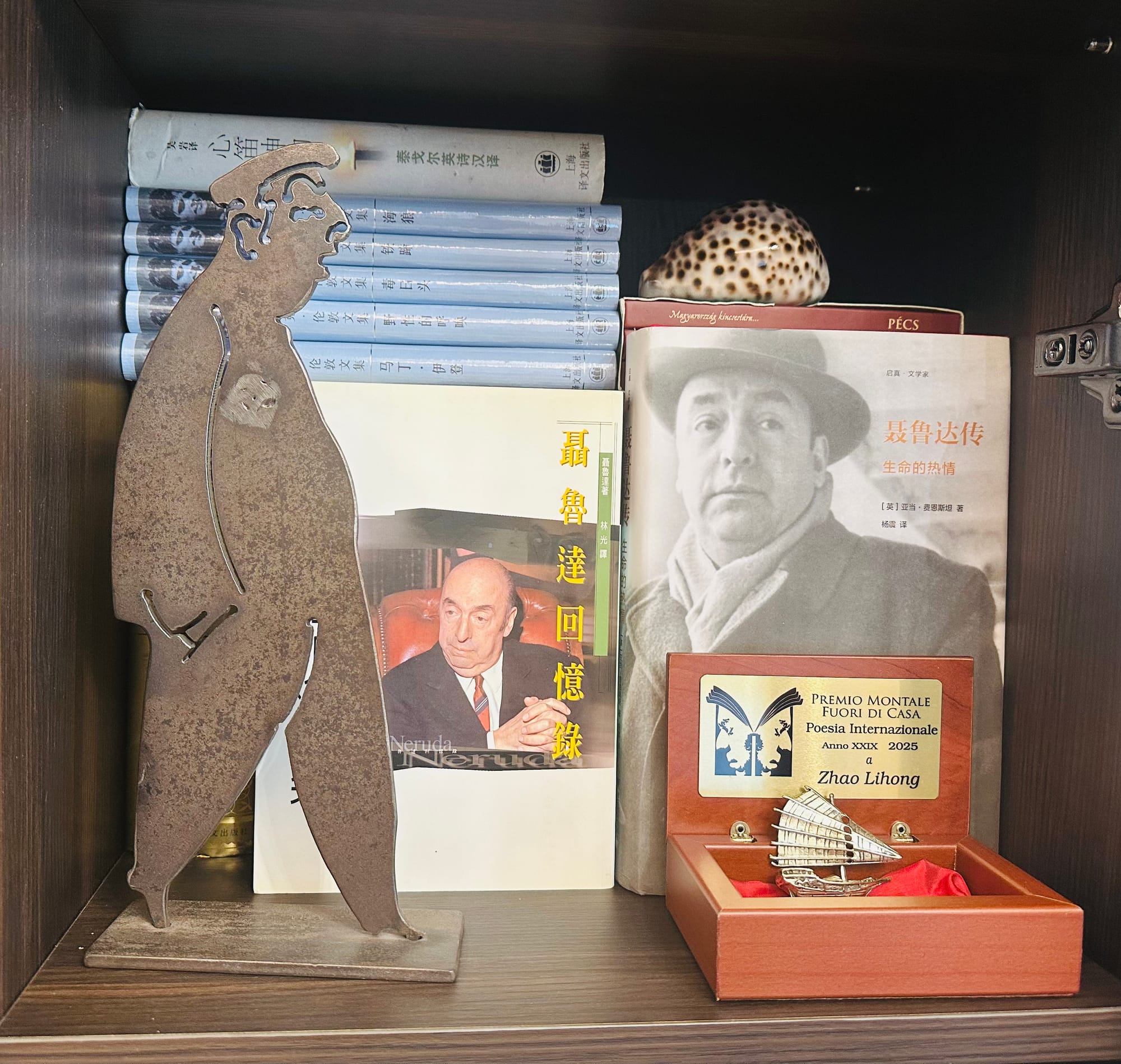
En mi biblioteca se encuentra una estatua de bronce de Neruda que traje hace tres años de su casa en Isla Negra. La casa de Neruda en Isla Negra está situada junto al mar, es un edificio original con forma de barco.
Estatua de bronce de Neruda
Zhao Lihong
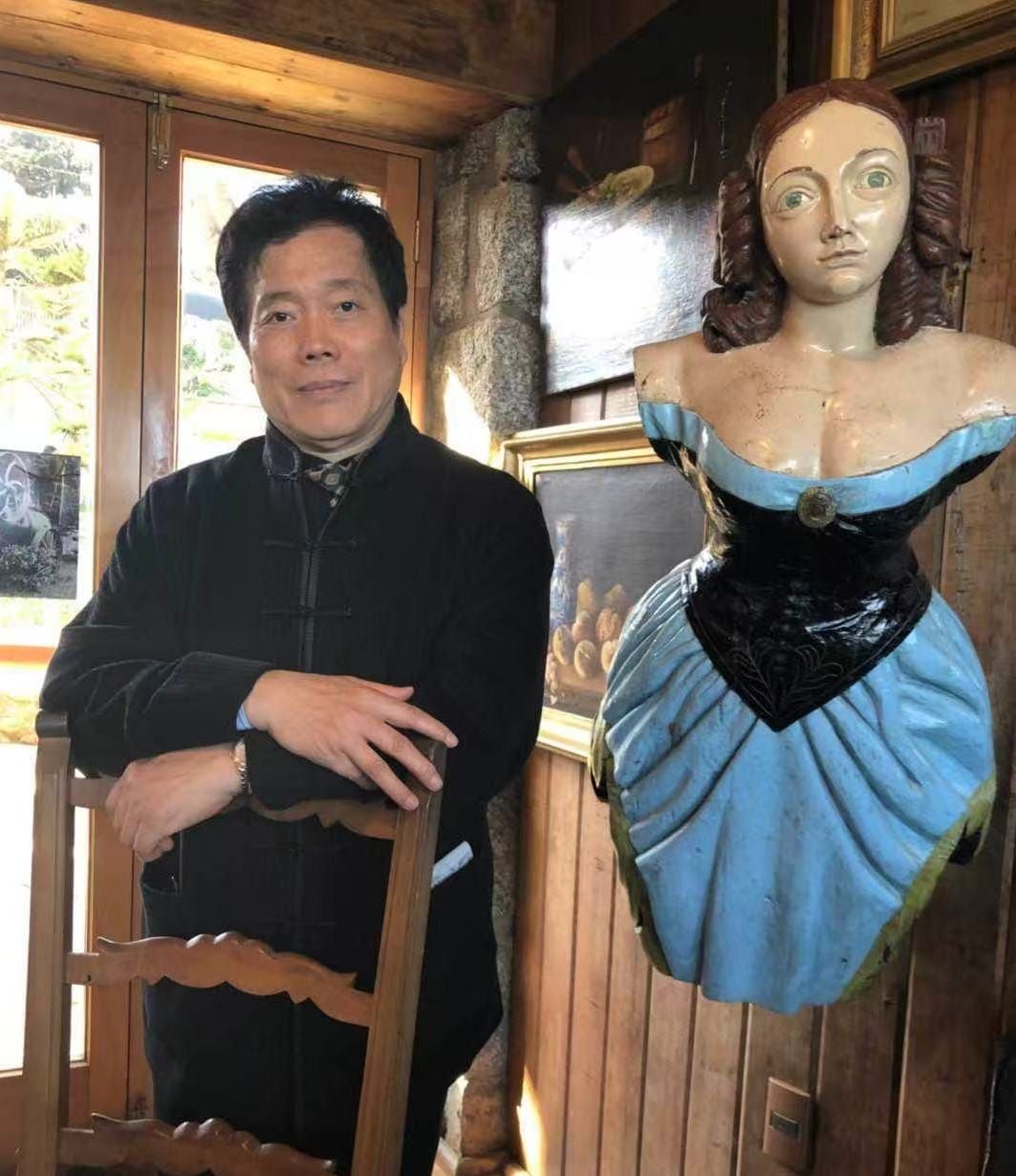
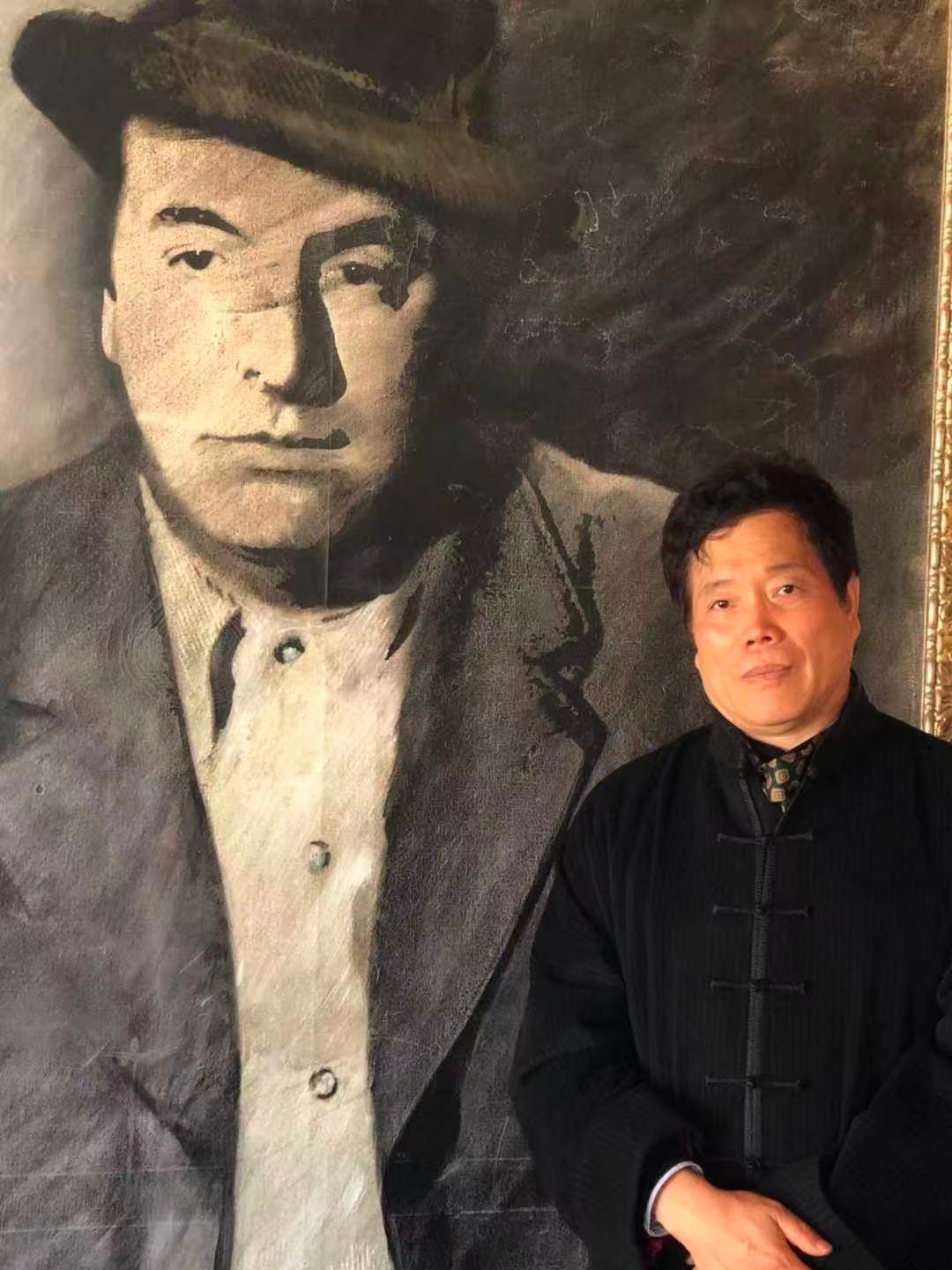
En mi biblioteca se encuentra una estatua de bronce de Neruda que traje hace tres años de su casa en Isla Negra. La casa de Neruda en Isla Negra está situada junto al mar, es un edificio original con forma de barco. El amor de Neruda por la vida, su lamento por el océano, sus reflexiones sobre el mundo y su pasión y talento poéticos, están grabados en cada rincón de la casa. Conchas marinas de colores, esculturas, pinturas y botellas de vino —obras de arte de todos los rincones del mundo— se reflejan entre sí en mesitas de noche, escaleras, alféizares y armarios. Y esas sonrisas y contemplaciones capturadas en fotografías en blanco y negro, son innumerables notas a pie de página de la poesía de Neruda. En un pequeño restaurante con vistas al mar, descubrí que las vigas de madera del techo estaban talladas con letras de todos los tamaños: los nombres de los amigos poetas de Neruda de todo el mundo. En Isla Negra, a menudo extrañaba a sus amigos poetas que estaban lejos, y cuando su añoranza era intensa, grababa con un cuchillo esos nombres inolvidables en las vigas… El momento más inolvidable durante mi visita a Chile fue en la antigua residencia de Neruda en Isla Negra, donde la Fundación Pablo Neruda organizó una lectura de poesía para mí. Escuchar a poetas chilenos recitar un poema chino en español entre las olas del Pacífico fue una experiencia onírica.
La estatua de bronce de Neruda que traje es un pequeño relieve, un perfil del poeta caminando con paso ligero. Se basó en una fotografía de Neruda que vi en Isla Negra: era alto y robusto Neruda, con gran abrigo y boina, paseando contra el viento marino en la playa frente a su residencia con forma de barco; un perfil contemplativo. La estatua de Neruda reposa silenciosamente en la estantería frente a mí. Detrás se encuentra la autobiografía de Neruda Confieso que he vivido. Me encanta este libro. Mientras lo leía, su narrativa me conmovió profundamente por su sinceridad. Tras haber experimentado las vicisitudes de la vida, conserva un corazón infantil, tan honesto como el de un joven, que valientemente revela su alma a los demás. Esta es la cualidad de un gran escritor. En este instante, me vienen a la mente algunos versos de la poesía de Neruda; se han transformado en sonidos mágicos, que resuenan en mi corazón y en mi estudio:
Piedra sobre piedra; hombre, ¿dónde estás?
Aire sobre aire; hombre, ¿dónde estás?
Tiempo sobre tiempo; hombre, ¿dónde estás?
Escrito en el mes de invierno del año Xin Chou en Si Bu Zhai
The Bronze Statue of Neruda
Zhao Lihong
On my bookshelf stands a bronze statuette of Neruda, which I brought back three years ago from his old homeon Isla Negra. Neruda's home on Isla Negra sits by the sea—a singular ship-shaped building. His love of life, his outpourings to the ocean, his reflections on the world, the poet's passion and genius—all are crystallized in every inch of that house. Iridescent shells, sculptures, paintings, wine bottles, artworks from every corner of the earth gleam and echo among the corners of walls, bedheads, stairways, windowsills, and cabinets; and those smiles and contemplations frozen in black-and-white photographs are countless footnotes to Neruda's verses. In a small dining room facing the sea, I noticed that the wooden beams of the ceiling were carved with letters large and small—the names of Neruda's poet friends from around the world. When he missed them intensely, he would take a knife and engrave their unforgettable names into the beams right there in his island home... The most memorable moment of my visit to Chile was at Neruda's Isla Negra house, where the Neruda Foundation of Chile held a poetry reading for me. Listening to Chilean poets reciting a Chinese poet's work in Spanish, against the unceasing roar of the Pacific surf—it was like a dream.
The bronze statuette I brought back is a small relief—a profile of the poet striding forward. It was modeled after a photograph of Neruda that I had seen on Isla Negra: the tall, stout poet, wearing a flowing overcoat and a beret, walking against the harsh sea wind on the beach in front of his ship-shaped dwelling—a pensive silhouette. The bronze Neruda now stands quietly on my bookshelf, and behind it, among the books, is Neruda's autobiography, I Confess That I Have Lived. I love this book; as I read, I am often moved by his narration—because of his sincerity. After weathering all the vicissitudes of the world, he still retains a childlike heart, as candid as a young youth, bravely laying bare his soul for others to see. This is the essential quality of a great writer. At this moment, a few lines of Neruda's poetry come to mind—they have transformed into a wondrous voice, lingering in my heart and echoing through my study:
Stone upon stone, and where is man?
Air upon air, and where is man?
Time upon time, and where is man?
Written in the winter month of the Xin Chou year in Si Bu Zhai
聂鲁达的铜像
赵丽宏
在我的书柜中,有一尊聂鲁达的铜像,这是三年年前我从聂鲁达的黑岛故居中带回来的。聂鲁达的黑岛故居坐落在海边,是一幢奇特的船形建筑。聂鲁达对生命的热爱,对海洋的倾诉,对世界的思索,诗人的爱恋和才华,凝固在黑岛故居的每一寸空间。五光十色的贝壳、雕塑、绘画、酒瓶,来自地球各个角落的艺术品,在墙角、床头、楼梯、窗台和壁柜间交相辉映,还有那些定格在黑白照片中的微笑和沉思,是聂鲁达诗篇的无数注脚。在面向大海的一间小餐厅中,我发现屋顶的木梁上,刻满了大大小小的字母,这是聂鲁达在世界各地的诗人朋友的名字,他在黑岛经常想念远在天涯海角的诗友,思念迫切时,便用刀在房梁上镌刻下一个个刻骨铭心的名字……访问智利最让我难忘的时光,是在聂鲁达的黑岛故居,智利聂鲁达基金会在那里为我举办了一场诗歌朗诵会。在太平洋汹涌不息的涛声中,倾听智利诗人们用西班牙语朗诵一个中国人的诗歌,这是梦幻一般的情景。
我带回来的聂鲁达铜像,是一尊小小的浮雕,是诗人疾步行走的侧影。这是根据聂鲁达的一幅照片创作的,我在黑岛见过这幅照片,身材高大壮硕的聂鲁达穿一件宽大的风衣,戴一顶贝雷帽,迎着凌厉的海风,在他的船形居所前的海滩上散步,是一个沉思者的侧影。聂鲁达铜像,此刻静静地站在我面前的书柜中,铜像的背后的书中,有聂鲁达的自传《我承认,我历尽沧桑》。我喜欢这本书,在阅读的过程中,不时被他的叙述感动,原因是因为他的真诚。在历尽世间的沧桑之后,依然保存着赤子之心,坦诚得如一个青春少年,勇敢地把自己的灵魂亮给别人看。这是一个伟大作家的应有的品格。此刻,想起了聂鲁达的几句诗,它们化成了神奇的声音,在我的心里萦绕,也在我的书房里回荡:
石块垒着石块;人啊,你在哪里?
空气接着空气;人啊,你在哪里?
时间连着时间;人啊,你在哪里?
辛丑冬月于四步斋
*
Faro y Sal
—A Neruda
Tu voz fue en otro tiempo como el rugido del océano,
haciendo eco por todo el mundo.
La marea subió y las olas se alejaron en la distancia
dejando tras de sí la sal brillante en la playa silenciosa.
Dejaste sal en la tierra,
y se cristalizó en los corazones del pueblo.
Esos cristales, semejantes a gemas,
recogieron tu profunda sabiduría,
ocultando los secretos de la vida
y el espíritu de una era de rápidos cambios.
Buscar la verdad,
entregarse al amor,
anhelar la paz:
ese es el eterno sabor del mar.
He contemplado innumerables veces tu Isla Negra,
imaginando los arrecifes firmes contra las olas.
La Isla Negra no es negra;
reúne todos los colores del mundo,
formando los colores primordiales de la emoción humana:
sinceridad, integridad, libertad, romanticismo.
Donde estabas, sigues estando;
donde meditabas, sigues meditando;
donde cantabas, tus canciones aún resuenan.
Eres el faro de la isla, reflejando el vasto océano del tiempo.
El paso de los años no puede apagar tu luz.
Veo tu luz clara irradiando,
que ilumina cada rincón oscuro del corazón de las personas.
Verano de 2018 en Santiago de Chile
The Lighthouse and the Salt
— To Pablo Neruda
Your voice once rang like the roar of the sea,
surging and echoing across the vast world.
The tides rolled their whitecaps far away,
leaving behind glistening salt on the silent shore.
You gave that salt to the earth,
and also crystallized it in human hearts—
those gem-like grains,
gathering your immense wisdom,
holding the secrets of life,
and the turbulent spirit of an era—
the search for truth,
the devotion to love,
the yearning for peace—
the eternal taste of the great ocean.
How often I have gazed toward your Isla Negra from afar,
imagining the reef that stands unyielding against the waves.
Black Island is not black—
it gathers all the colours of the world,
blending them into the primary hues of human feeling:
sincerity, integrity, freedom, romance.
The ground you stood on—you still stand there.
The place where you pondered—you still ponder there.
Where you sang—your songs still resound.
You are the lighthouse on that island,
illuminating the sea of time.
The flowing years cannot quench your light—
I see your clear radiance spreading still,
reaching into every shadowed corner of the human soul.
Santiago, Chile, Summer 2018
灯塔和盐
——致聂鲁达
你的声音曾经如大海的涛声
汹涌回荡在辽阔的世界
海潮翻卷着浪花远去
寂静海滩上留下晶莹的盐
你把盐留在大地
也凝结在人心
那些宝石一样的结晶
汇聚你博大的智慧
隐藏着生命的秘密
还有那风云变幻的时代气息
求索真理
沉迷爱情
向往和平
那是大海永恒的滋味
我曾经无数次遥望你的黑岛
想象在海浪中屹立不倒的礁石
黑岛并非黑色
她汇聚了世上所有的色彩
汇聚成人类情感的原色
真诚,正直,自由,浪漫
你站过的地方,你依然站着
你沉思过的地方,你依然在沉思
你歌唱过的地方,你的歌还在回响
你是岛上的灯塔
映照着岁月大海
流逝的时光无法湮没你的亮光
我看到你澄澈的光芒正在辐射
照亮人心中每一个幽暗的角落
2018年夏日于智利圣地亚哥
*
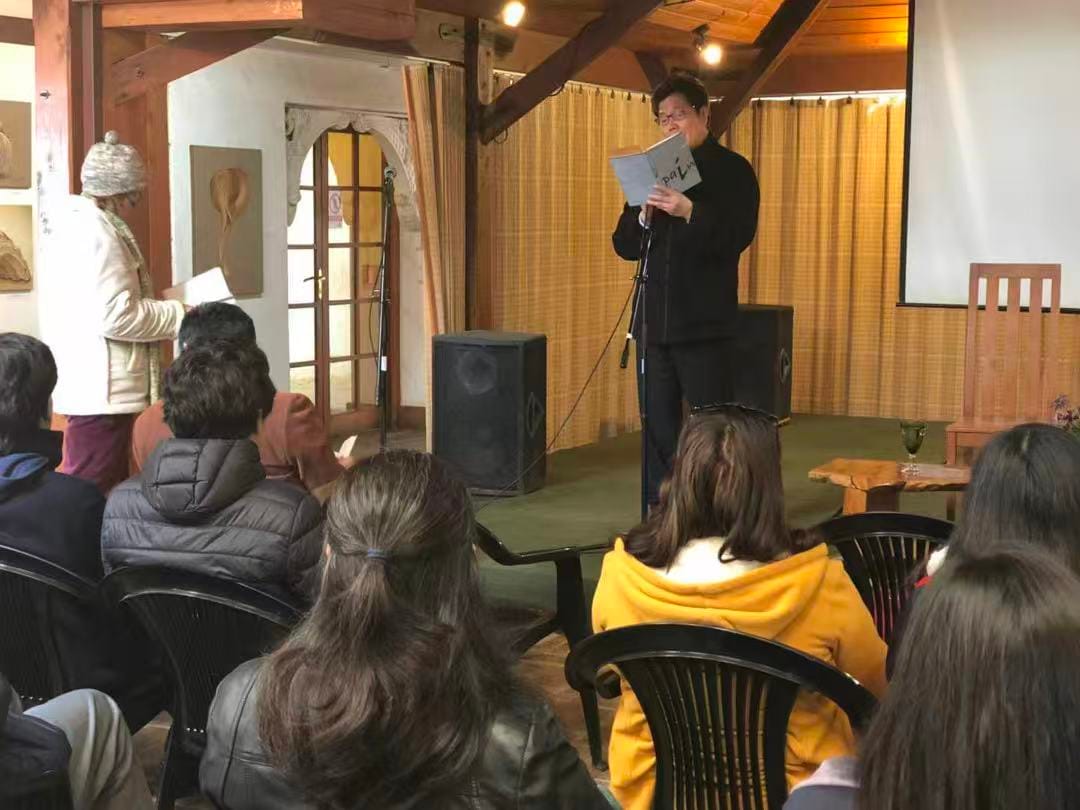
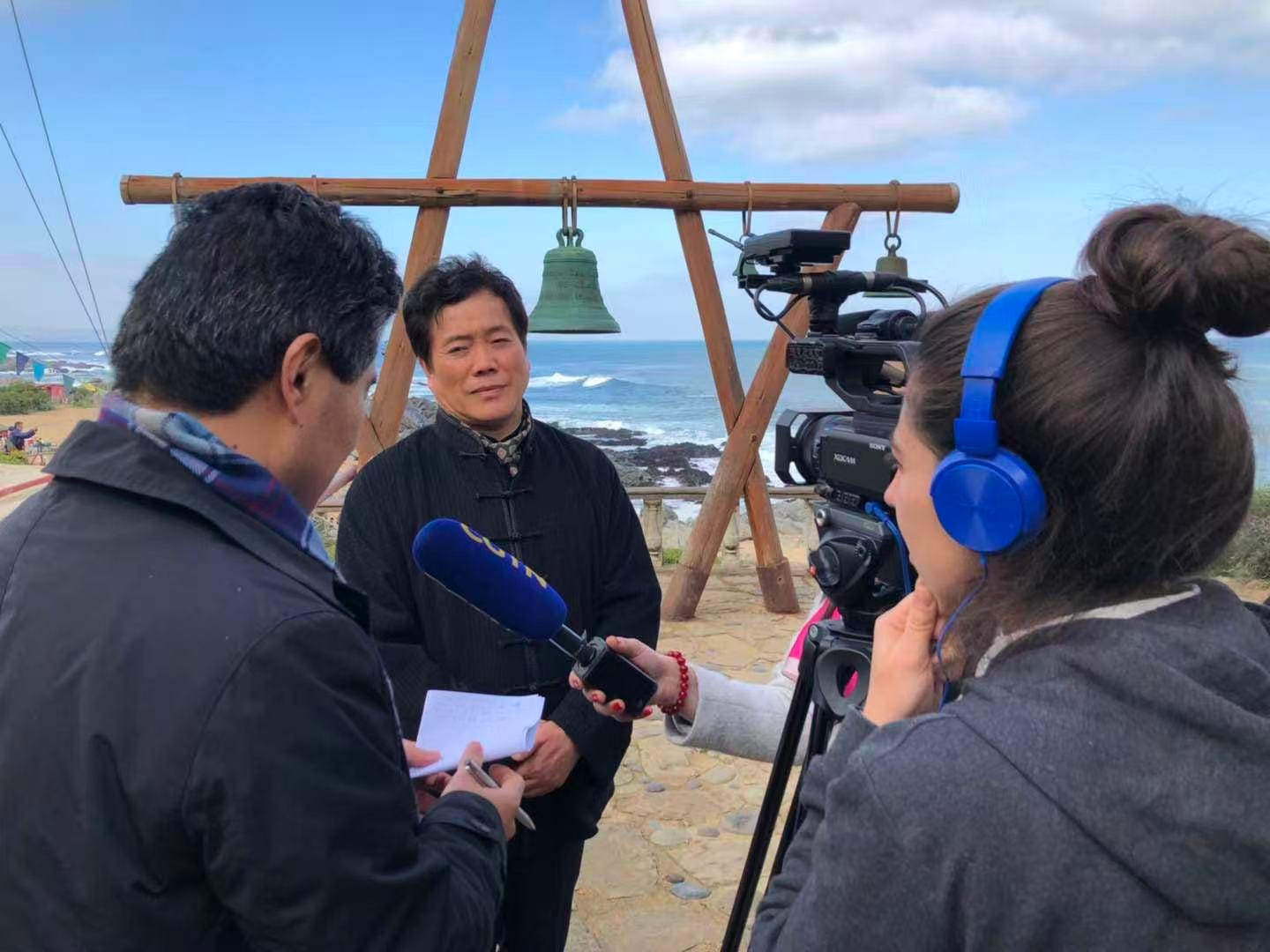
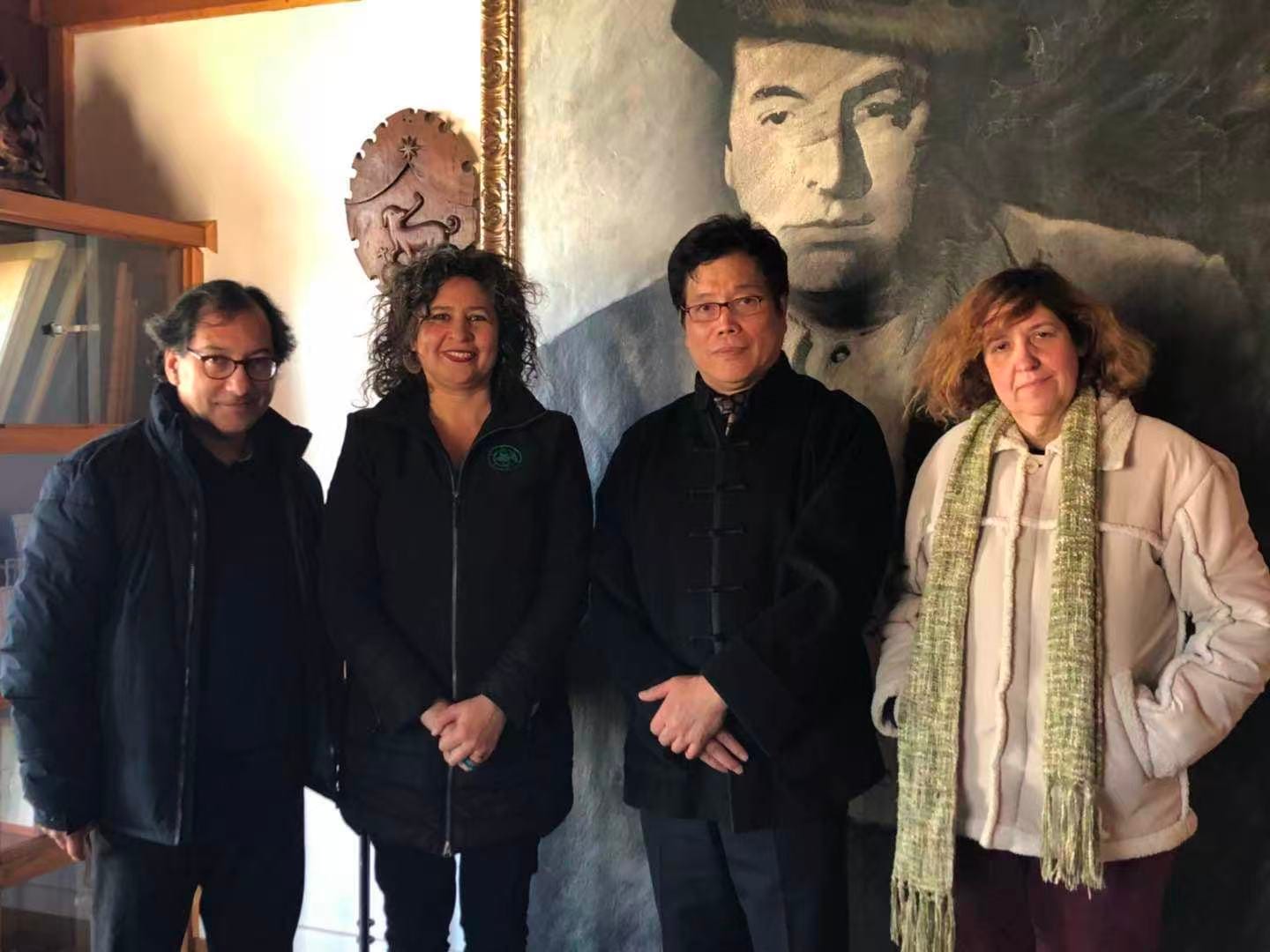
Recitando poesía en la casa natal de Neruda
El 24 de julio de 2018, la Fundación Neruda de Chile organizó una lectura de poesía en mi honor en Isla Negra, la casa natal de Neruda. Recité los poemas originales en chino, mientras que un poeta chileno recitó las traducciones al español. Esta fue la primera vez que un poeta chino recitó poesía en la casa natal de Pablo Neruda.
Día tras día,
Las olas del océano rugían sin cesar fuera de la ventana del estudio,
Las huellas de Neruda en la playa
fueron borradas por las mareas que siempre regresan
……
Recité poesía en la antigua residencia del poeta.
El ritmo del idioma chino,
como dedos que rozan las teclas libremente,
acariciando cada objeto como un piano:
caracolas, maquetas de barcos, muñecas, botellas de vino,
el mascarón de proa de un barco desgastado por el tiempo,
el busto desnudo de una hermosa mujer;
todas encarnaciones del océano perdido.
Palabras chinas
resonaban en los nombres
de poetas grabados en las vigas.
Aquellas letras, grabadas con un cuchillo,
Es el anhelo del maestro por sus amigos,
aún resonando sin fin
……
En las ondulantes estanterías,
las palabras del mundo convergían como arroyos,
formando un vasto océano
que tejía una magnífica sinfonía.
Y el lchino, que rara vez lo visita,
como un destello de melodía clara de una cítara ancestral,
se veía realzado por el rugido de las olas del mar,
que giraban en la brisa marina libre e indómita.
……
Quizás mi chino
no le resulte desconocido al maestro de la Isla Negra.
Los ecos persistentes del chino en la sala aún no se han desvanecido,
cuando el español irrumpe
como una aullante brisa marina que cruza el océano,
girando instantáneamente en la sala y fusionándose con mi chino.
Dos lenguas completamente distintas
se encuentran milagrosamente en el salón de la poesía,
chocando, entrelazándose, interpelándose, respondiéndose,
fusionándose en una cálida e íntima armonía.
……
Vamos, dejemos que la magia de las Musas
convierta las piedras silenciosas en campanas resonantes,
transforme los desiertos desolados en jardines,
haga brotar capullos en las hojas secas de la hierba,
haga que las olas ondulen como copos de nieve en el mar silencioso,
deje que las gaviotas y los carboneros canten juntos,
deje que los peces de las profundidades se eleven hacia el cielo,
y deje que las olas incesantes fuera de la puerta
se conviertan en un eco eterno y persistente de poesía.
Escrito el 2 de mayo de 2023
Chanting Poems at Neruda's Residence
Note: On July 24, 2018, the Neruda Foundation of Chile hosted a poetry recital for me at Neruda's former residence on Isla Negra. I recited my original works in Chinese, while Chilean poets read the Spanish translations. This was the first recital held at Neruda's residence for a Chinese poet.
Day after day, the ocean waves
Roar ceaselessly outside the study window.
The footprints Neruda left on the beach
Have long been smoothed by the ebbing and flowing tides.
…
I chant poems in the poet's former residence—
The cadence of Chinese
Like freely touching fingers
Caressing each instrument-like object:
Seashells, ship models, dolls, wine bottles,
The ship’s prow sculpture weathered by storms,
The bare-breasted bust of a beauty—
An embodiment of the lost sea.
Chinese words
Strike against the beams
Carved with the names of poets,
Letters engraved with a knife—
Remembrances of friends by the former host—
Still resounding powerfully,
Endlessly echoing.
…
On the undulating, forest-like bookshelves,
Scripts from around the world converge like streams,
Merging into a vast river-sea,
Weaving into a magnificent symphony.
Yet rarely visited Chinese,
Like a clear melody from an ancient zither,
Lifted by the river-sea’s roar,
Swirls freely in the untamed sea breeze.
…
Perhaps my Chinese
Is not unfamiliar to the host of Isla Negra.
Before the echoes of Chinese fade in the hall,
Spanish arrives in a whirlwind,
Like howling sea winds crossing oceans,
Instantly swirling through the hall,
Meeting my Chinese.
Two entirely different languages
Wonderfully encounter each other in the hall of poetry—
Colliding, intertwining, calling, responding,
Blending into an intimate and warm harmony.
…
Come, let us use the Muse’s magic
To turn silent stones into ringing bells,
To transform desolate wilderness into gardens,
To let withered grass sprout buds,
To make still seas surge with snowflake-like waves,
To let seagulls and mountain finches sing wing to wing,
To let fish from the ocean’s depths soar high into the sky,
To let the ceaseless ocean waves outside the door
Become the endless lingering echo of poetry.
…
(Written on May 2, 2023)
在聂鲁达故居吟诗
题记:2018年7月24日,智利聂鲁达基金会在聂鲁达黑岛故居为我举办诗歌朗诵会,本人用汉语朗读原作,智利诗人用西班牙语诵读译作。这是聂鲁达故居第一次为中国诗人举办朗诵会。
海涛就这样日复一日
在书房的窗外永不停息地轰鸣
聂鲁达留在海滩上的脚印
早已被去而复返的潮汐抚平
……
我在诗人的故居吟诗
汉语的韵律
如自由触键的手指
抚摸着每一件如琴的器物
海螺,船模,玩偶,酒瓶
历尽风涛的船头雕塑
裸露着身体的美女胸像
是迷途的海洋化身
汉语的词汇
撞击着房梁上
一个个诗人的名字
那些用刀刻勒出的字母
是昔日主人对朋友的思念
至今依然铿锵有声
绵延不绝
……
丛林般起伏的书架上
全世界的文字如溪流汇集
聚合成浩浩荡荡的江海
交织成轰轰烈烈的交响乐
而难得来访的汉语
如一缕古琴的清韵
被江海的涛声烘托着
在自由无羁的海风中瓢旋
……
也许,我的汉语
在黑岛主人耳中并不陌生
厅堂里中文余韵未落
西班牙语便风风火火赶来
如呼啸的海风穿越大洋
瞬间便在厅堂回旋
和我的汉语会合
两种完全不同的语言
在诗的厅堂里奇妙邂逅
碰撞、缠绕、呼唤、应答
融合成亲切温暖的和声
……
来吧,让我们一起用缪斯的魔术
把沉默的石头变成响铃
把荒凉的野漠变成花园
让枯萎的草叶上结出蓓蕾
让静默的海面泛起雪花般的排浪
让海鸥和山雀比翼放歌
让大海深处的鱼儿高高飞上天空
让门外的日夜不息的海涛
成为永无尽头的诗之余韵
……
(写于2023年5月2日)
-Traducción al español de Enrique Solinas
Zhao Lihong nació en Shanghái en 1952. En 1970 comenzó a escribir poesía y prosa, y en 1982 se graduó de la carrera de Literatura China en la Universidad Normal del Este de China. Actualmente es director de la Asociación de Escritores Chinos, vicepresidente de la Asociación de Escritores de Shanghái, director de la revista Literatura de Shanghái y editor en jefe de Los Poetas de Shanghái. Es profesor adjunto en la Universidad Jiao Tong y profesor consulto de la Universidad Normal del Este de China. Ha publicado más de setenta libros entre poemarios, ensayos y reportajes. Entre sus obras más destacadas traducidas al español se encuentra Aflicciones (Ediciones Lastarria. Chile, 2017). Aflicciones (Ediciones Salvajes. Argentina, 2024). Una barca hacia el cielo (Editorial Expendio. Chile, 2025). Su trabajo ha sido reconocido con numerosos galardones, como el Premio Internacional de Literatura Bing Xin, el Premio Wenjin, el Premio al Buen Libro de China, el Premio a la Colección de Prosa Sobresaliente de la Nueva Era y el Premio a la Contribución Destacada en Literatura y Artes de Shanghái. Su obra ha sido traducida a diversos idiomas como inglés, francés, ruso, italiano, español, búlgaro, ucraniano, serbio, rumano, polaco, húngaro, japonés, coreano, árabe, persa, entre otros.
Zhao Lihong is a Chinese poet, essayist and novelist. Born in Shanghai in 1952, he is currently the chairperson of the Shanghai International Poetry Festival. He has authored over a hundred books including poetry collections, essays and novels. His representative works include poetry collections such as The Boat in the Sky, Pains and Metamorphosis. His works have won awards such as the New Era Excellent Essay Collection Award, China Good Book Award and Wenjin Book Award. In 2013, he was awarded the Smederevo Golden Key International Poetry Award in Serbia. In 2014, he received the Shanghai Literature and Art Outstanding Contribution Award and was appointed as an honorary academician of the Beijing Normal University-Hong Kong Baptist University United International College (UIC). In 2019, he won the Mihai Eminescu International Poetry Award in Romania and was elected as an academician of the French Academy of Sciences, Arts and Humanities. In 2024, he received the International Bing Xin Literature Award Gold Prize. In 2025, he won the Montale Literature Award in Italy and the KS International Poetry Award in South Korea. His works have been translated into English, French, Russian, Italian, Spanish, Bulgarian, Ukrainian, Serbian, Romanian, Polish, Hungarian, Japanese, Korean, Arabic, Persian and many other languages and published overseas.
赵丽宏,中国诗人、散文家、小说家。1952年生于上海。现为上海国际诗歌节主席。著有诗集、散文集、小说等各种专著共一百余部。代表作有诗集《天上的船》《疼痛》《变形》等。作品曾获新时期优秀散文集奖、中国好书奖、文津图书奖。2013年荣获塞尔维亚斯梅德雷沃金钥匙国际诗歌奖。2014年获上海市文学艺术杰出贡献奖,同年被授予北京师范大学-香港浸会大学联合国际学院(UIC)荣誉院士。2019年获罗马尼亚“米哈伊·爱明内斯库国际诗歌大奖”,同年被选为法国科学、艺术人文学院院士。2024年获国际冰心文学奖金奖。2025年获意大利蒙塔莱文学奖、韩国KS国际诗歌奖。作品被翻译成英、法、俄、意、西班牙、保加利亚、乌克兰、塞尔维亚、罗马尼亚、波兰、匈牙利、日、韩、阿拉伯、波斯等多种文字在海外出版。