
uno siempre se enamora de janis joplin - Luis Benítez / 路易斯·贝尼特斯
uno siempre se enamora de janis joplin / vive buscándola y encontrándola / antes de que ella cumpla los 27 / cualquiera sea la edad que tenga / de verdad sea cierto o mentira / y siempre hay pedacitos de ella /
Luis Benítez / 路易斯·贝尼特斯
uno siempre se enamora de janis joplin
一片飘在空中的羽毛
那片飘在空中的羽毛
是否就是我们尚未知晓的隐喻?
它如此专注于显示威严与轻盈,
意欲何为?
那片羽毛难道就是穿越物质时
漂浮在空中的神圣之物?
它是一只鸟的残骸,
还是别的什么东西?
这东西轻轻飘落在我们身上,
默默为大地祈福。
如此浩大的慷慨
在空中可是闻所未闻。
a feather in the air
Might that feather in the air
be a metaphor unknown to us?
What does it suggest?
Concentrated on being formidable and light.
Is that feather the sacred floating
in the substance it traverses?
Is it the remnant of a bird
or a sign of something else?
Something falls humbly toward us
blesses the earth in silence.
No other boundless generosity
will be there in the air.
Una pluma en el aire
¿Sin saberlo nosotros, esa pluma flotando
en el aire no será una metáfora?
¿Ella qué insinúa concentrada
en ser formidable y liviana?
¿Esa pluma es lo sagrado flotando
en la materialidad que recorre?
¿Es vestigio de un pájaro
o señal de otra cosa?
Algo que cae hacia nosotros humildemente,
bendiciendo silenciosamente la tierra.
Ninguna otra desmedida
generosidad habrá en el aire.
*
詹妮丝·乔普林,你的宿命之爱
詹妮丝·乔普林,你的宿命之爱
你若想找她,总能找到她
赶在她27岁前的
任何岁数
都行
不管这是不是真的
她身上总有一些碎片
譬如婴儿的哭闹
出现在桌子的另一头
坐在床沿
自言自语
詹妮丝在忖度你
而你也在揣摩詹妮丝
究竟会看上谁呢
会不会总有一天找到你
詹妮丝·乔普林是你恒久的爱
是命中注定
仿佛仅此就已足够
想想你们共同经历的这一切
以及你们俩看到窗外世界
那分崩离析的样子
仿佛仅此就已足够让你们走到一起
地球总是朝着你们的方向转动
周而复始
即便
到了你们没能走到一起
你也还是坚贞不渝地爱着詹妮丝·乔普林
you always fall in love with janis joplin
you always fall in love with Janis Joplin
you seek her and you always find her
before she turns 27
at any age
really whether it is a truth or not
there are always pieces of her
something of cry baby
is on the other side of the table
whispering to herself
seated at the edge of the bed
janis contemplates you
as you wonder
who is janis looking for
and if she will find him some day
you always fall in love with janis joplin
because it was meant to be
as if that was enough
considering
what you both have gone through
and the way you both see the world
furiously rotting
behind the windows
as if that was enough
because the earth always turns in your direction
again and again although probably
you two will never meet
you always fall in love with janis joplin
uno siempre se enamora de janis joplin
uno siempre se enamora de janis joplin
vive buscándola y encontrándola
antes de que ella cumpla los 27
cualquiera sea la edad que tenga
de verdad sea cierto o mentira
y siempre hay pedacitos de ella
algo de llora nena está allí
del otro lado de la mesa
o murmurando para sí
sentada al borde de la cama
janis te contempla
y te preguntas a quién
estará buscando janis
y si dará con él algún día
uno siempre se enamora de janis joplin
porque siempre le estuvo destinado
como si con eso alcanzara
habida cuenta de todas
por las que tú y ella han pasado
por cómo ven ambos el mundo
descomponerse furiosamente
detrás de las ventanas
como si eso solo fuera suficiente
porque la tierra gira siempre en dirección a ustedes
una y otra vez aunque posiblemente
nunca jamás se encuentren
uno se enamora siempre de janis joplin
*
礼仪与礼节的遗忘
人最容易忘记的是声音。
就像一连串录音带渐渐磨损那般,
那个神秘的存在总有一天
会以免受自己尖叫的侵扰为由
而将它们彻底抹掉
除此之外,没有别的意思
她只是盲目地履行一份协议而已
并不理解其中的必要性。
于是,欢乐和幸福的时刻便一个个消失,
一起消失的还有那些在共同生活时
看起来就像又一个朦胧而平凡
但后来却变得无比珍贵的瞬间。
试图抓住它们,就如同抓住
空气、大海和沙子一般。
光阴从我们指尖滑落,
从不催促自己。
对我们而言,不可原谅的
只是例行公事。
于是,那个名字一会儿出现,一会儿消失,
一如林子里全身心嬉戏玩耍的孩童
叫他的时候,他连影子都不见了。
遗忘礼仪的规则规定如下:
脸庞必须是最后消失的东西,
人必须悄无声息地离去,
走路不能发出声音
悄悄叮嘱
房门要轻轻关上,
因为它不必再回到
那个我们曾逗留其中
而今却已空空荡荡的房间。
etiquette and ceremonial of oblivion
the first thing you forget is the voice.
like a series of recordings wearing out their tapes
and that mysterious entity that erases them forever one day
to protect us from our own screams
and with no other intention but to blindly obey
a protocol
whose necessity she does not understand.
then, one by one, moments of joy and happiness fade away,
and so do those that, when lived together
seemed just like another instant
of all that was hazy and ordinary
only to become invaluable later.
to try to hold on to them is to hold on to the air,
the sea the sand time fleeing through our fingers without haste
certain of itself.
what is unforgivable to us
is merely routine for it.
then the very name appears and disappears
like a child laughing as he plays among the trees of the mind
being there and not there when he is called.
the rules of the etiquette of oblivion
dictate that the face
must be the last thing to vanish,
and he compels it to leave in silence,
with quiet steps warning it
to close that door carefully
because it must not return
to the room where we remained
standing over the void.
etiqueta y ceremonial del olvido
lo primero que se olvida es la voz.
como una serie de grabaciones
que van gastando sus cintas
y que esa misteriosa entidad
borra definitivamente un día
por protegernos de nuestros propios gritos
o sin otra intención que obedecer
ciegamente a un protocolo
cuya necesidad ella misma desconoce.
luego se desvanecen unos tras otros
los momentos de alegría o desdicha
y también los que al vivirlos juntos
parecían un instante más de todo
lo nebuloso y cotidiano después lo invalorable.
intentar aferrarlos es aferrar el aire
el mar la arena el tiempo que huye
entre los dedos sin prisa seguro de sí mismo.
cuanto es para uno imperdonable
para él resulta su rutina.
después el mismo nombre
aparece y desaparece
como un niño que juega riendo
entre la arboleda de la mente
a estar y no estar cuando llamado.
las normas de etiqueta del olvido
le indican que el rostro sea lo último en irse
y él lo obliga a retirarse en silencio
a paso quedo advirtiéndole
que cierre con cuidado esa puerta.
que ya no debe volver
al salón donde quedamos
de pie sobre el vacío.
*
该有的没有了
你不是诗,
没有人是。
诗句捕捉到的那些不可言说之物,
不过是影子罢了,
一个目光,一道伤痕,一缕空气。
诗文肯定不在这里,
即使变老了也不会出现在这里,
因为时间不会给任何东西做加法:
它只会带走当下认为不可改变的东西。
人们无法叙述诗歌,
因为它不可言说:
它的舌头有时会因
一句短语存疑而结巴,
等到回头再推敲时,
却发现它早已无处可寻。
最后的边际——世界的尽头——
对文字一窍不通,但却
热衷于驾着它们
穿越我们的世界,
仅仅为了让它们的光芒在手中
闪耀片刻,
而那支射向远方的弩箭,
早已成为纸上的响雷,
剩下的只无声的嘲弄一片。
what should be there is not
You are not poetry,
No one is.
What the verse catches of the unspeakable
is barely a shadow,
a glimpse, a scratch, air.
It is not here, certainly,
and it will not be here when these lines grow old,
because time adds nothing:
it only takes away what the present believed immutable.
One cannot speak of poetry
because it is the unutterable:
its tongue sometimes stammers
at the suspicion of a phrase which
when we return to look for it,
proves impossible to find.
Last frontier, the end of a world
that knows nothing of words, yet loves
riding upon them
and crossing into our world
to make its lightning flare in the hand
for a single instant,
while its bolt strikes far away
and of that thunder on the paper
only its mocking silence remains.
Lo que para estar, no está
Poesía no eres tú,
no lo es nadie.
Lo que el verso
atrapa de lo inefable
apenas sombra es,
asomo, rasguño, aire.
No está aquí, sin duda,
ni lo estará cuando
estos trazos envejezcan,
porque el tiempo no agrega,
sólo quita lo que el presente
creyó que era inmutable.
No se puede decir poesía
porque es lo impronunciable:
su lengua balbucea, a veces,
en la sospecha de una frase
que, al volver, buscándola,
resulta inencontrable.
Última frontera, confín
de un mundo que no conoce
las palabras, pero que gusta
de montarse en ellas
y pasar al nuestro
por hacer fulgurar, sólo un instante,
su relámpago en la mano,
mientras su rayo lo descarga lejos
y de aquel trueno, en el papel,
burlón, apenas su silencio queda.
*
无生命之物的邪性
一个隐藏在物体中的神明
不再回应。屏幕不再亮起,
屋里也不再点灯。
这一切将我们带回到洞穴,
夕阳西下时的忧郁情绪。
正是世界的凄凉
以及未知的恐惧
才使得人群中最足智多谋、
最令人畏惧的那一位
回归时面带微笑
他们从未离去:
他们在等一个补缺的机会
没有经验,也没有万象灵师
来帮我们,
甚至连电话都打不通。
我们一遍又一遍地尝试,
尽管知道这是一场徒劳且孤独的仪式。
我们才是
在无生命之物面前祈祷
请求原谅
并唤醒他的那个人。
the evilness of the inanimate
A god hidden in the object
does not answer anymore. The screen does not light up
the lights of the house do not turn on.
Everything takes us back to the cave
the misery of mood at sunset.
It is the bleakness of the world
and the terror of the unknown
that one, the wisest
the most feared of all
of those who return smiling.
They've never gone:
they were waiting for a flaw
inexperience, and no engineer
(the shaman of things)
by our side:
the telephone does not work.
We try again and again
although we know it is a useless and lonely ritual.
We are the ones who pray
before the inanimate
asking for forgiveness
for waking him up.
La maldad de lo inanimado
El dios escondido en el objeto
ya no responde. No se ilumina
la pantalla, no se encienden las luces
de la casa. Todo nos devuelve
a la cueva, la miseria del ánimo
cuando era el ocaso.
Es la intemperie del mundo
y el terror a lo desconocido
-aquel, el más sabido,
de todos el más temido-
que retornan sonriendo.
Nunca se han ido:
sólo esperaban el desperfecto,
la impericia, y que ningún ingeniero
(el chamán de las cosas)
hubiese a nuestro lado:
no funciona el teléfono.
Volvemos una y otra vez a intentarlo
sabiendo que es inútil y un rito desolado.
Somos el que reza
ante lo inanimado
pidiéndole perdón
por haberlo despertado.
(Versiones al chino por Xi Yueping)
(English versions by Araceli Lacore)
***
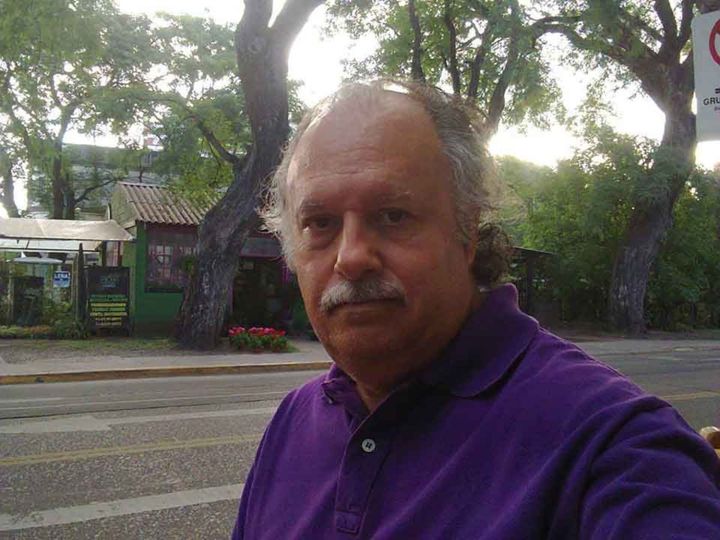
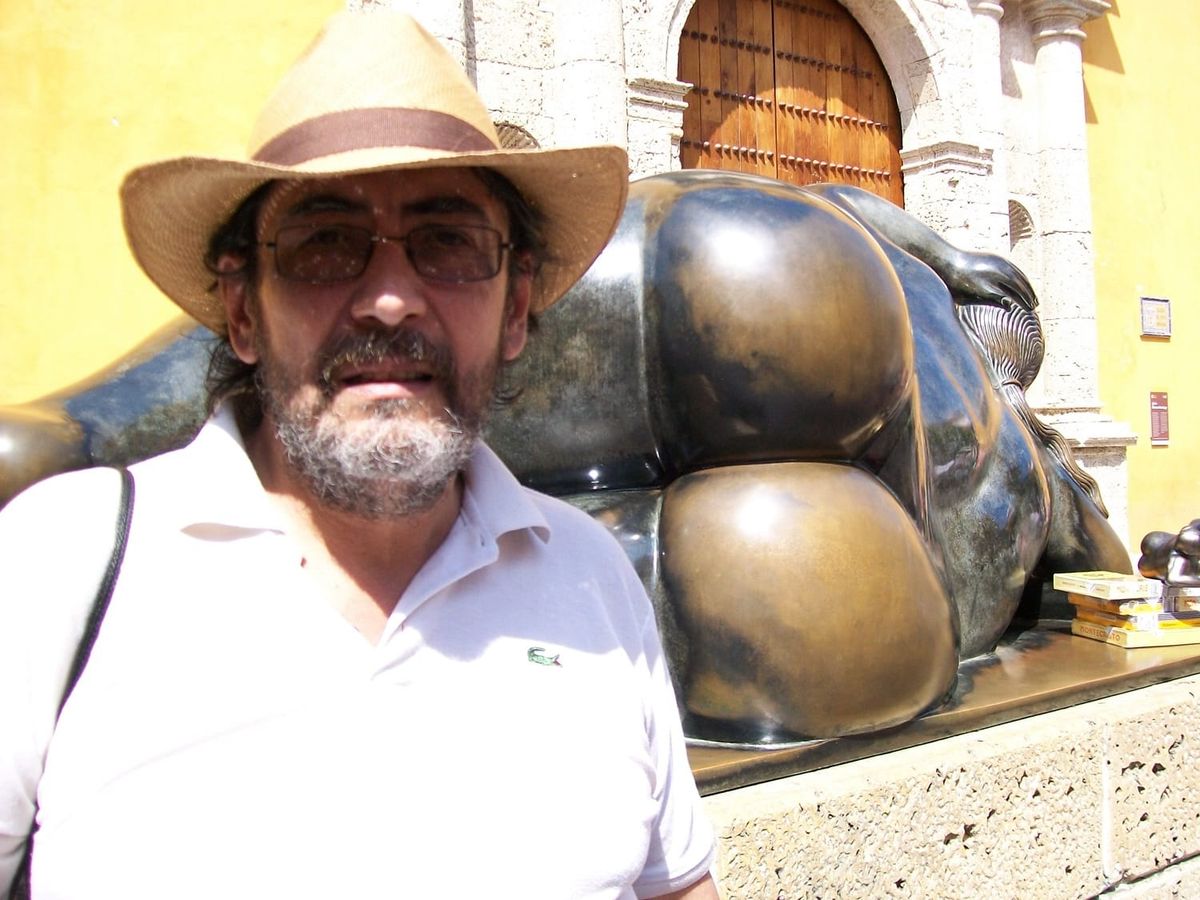
路易斯·贝尼特斯1956年11月10日生于布宜诺斯艾利斯。其诗歌、散文和小说共出版有50部作品,发行地包括阿根廷、智利、法国、意大利、墨西哥、罗马尼亚、西班牙、瑞典、委内瑞拉、英国、美国和乌拉圭。据总部位于伦敦的《秘符之术》杂志报道,他被认为是当代阿根廷诗歌领域最具影响力的代表人物之一,也是拉丁美洲这一文学流派中的重要领军人物,曾获法国巴黎索邦大学下属的“诗人之门”协会授予的“诗歌同伴奖”称号。他是阿根廷笔会中心、阿根廷诗人协会以及阿根廷共和国作家协会的会员。此外,他的文学作品还曾荣获多项大奖,如曾于:1991年法国巴黎获得“诗人之门”国际诗歌奖;1996年阿根廷布宜诺斯艾利斯获得阿玛利亚·拉克罗泽·德福尔塔巴特基金会诗歌奖;1996年意大利西西里岛获得图斯科洛鲁姆诗歌奖;2003年布宜诺斯艾利斯获得“金笔奖”;2003年参加巴黎第十届国际诗歌大赛并获奖;2007年墨西哥阿瓜斯卡连特斯获得“马塞多尼奥·帕洛米诺”国际出版作品奖。还曾于2024年获得由国际诗歌翻译与研究中心、《国际诗歌译介》(多语种)期刊及世界诗歌杂志联盟董事会在中国重庆市颁发的国际最佳诗人与翻译家奖;于2025年获联合国丝绸之路论坛及丝绸之路国际联合会(阿联酋迪拜)颁发的美国诗人奖。于2026年7月获英国威尔士第七采石场出版社“月度诗人”称号。
Luis Benítez was born in Buenos Aires on November 10, 1956. His 50 books of poetry, essays, and fiction have been published in Argentina, Chile, France, Italy, Mexico, Romania, Spain, Sweden, Venezuela, UK, USA and Uruguay. According to the London-based Ars NotoriaMagazine, he is considered one of the most prominent voices in contemporary Argentine poetry and a leading figure in the genre throughout Latin America. He has received the title of Compagnon de la Poèsie from the Association La Porte des Poètes, based at the Université de La Sorbonne in Paris, France. He is a member of the Argentine PEN Center, the Association of Argentine Poets, and the Society of Writers of the Argentine Republic. Among other awards, his literary work has received La Porte des Poètes International Poetry Prize, Paris, France, 1991; Amalia Lacroze de Fortabat Foundation Poetry Award, Buenos Aires, Argentina, 1996; Tuscolorum di Poesia Prize, Sicily, Italy, 1996; Letras de Oro Prize, Buenos Aires, 2003; Accesit 10éme. Concours International de Poésie, Paris, 2003; “Macedonio Palomino” International Prize for Published Works. Aguascalientes, Mexico, 2007; International Best Poets & Translators Prize, awarded by The International Poetry Translation and Research Centre, The Journal of Rendition of International Poetry [Multilingual], and The Board of Directors of World Union of Poetry Magazines, Chongqing, People's Republic of China, 2024, and American Poet of the Year Award, awarded by the United Nations World Silk Road Forum and the Silk Road International Federation, Dubai, United Arab Emirates, 2025. Poet of the Month, The Seventh Quarry Press, Wales, UK, July 2026.
Luis Benítez nació en Buenos Aires el 10 de noviembre de 1956. Sus 45 libros de poesía, ensayo y narrativa han sido publicados en Argenti¬na, Chile, España, Estados Unidos, Francia, Inglaterra, Italia, México, Rumania, Suecia, Venezuela y Uruguay. Según la londinense Ars Notoria Magazine es considerado como una de las voces más destacadas de la poesía argentina contemporánea y referente del género a nivel latinoamericano. Ha recibido el título de Compagnon de la Poèsie de la Association La Porte des Poètes, con sede en la Université de La Sorbonne, París, Francia. Miembro del Centro PEN Argentina, la Asociación de Poetas Argentinos (APOA) y de la Sociedad de Escritoras y Escritores de la República Argentina (SEA). Entre otros, su obra literaria ha recibido los siguientes reconocimientos nacionales e internacionales: Premio Internacional de Poesía La Porte des Poètes, París, Francia, 1991; Segundo Premio Bienal de la Poesía Argentina, Buenos Aires, Argen¬tina, 1992; Primer Premio Joven Literatura (Poesía) de la Fundación Amalia Lacroze de Fortabat, Buenos Aires, Argentina, 1996; Primer Premio del Concurso Internacional de Ficción, Montevideo, Uruguay, 1996; Primo Premio Tuscolorum di Poesia, Sicilia, Italia, 1996; Primer Premio de Novela Letras de Oro, Buenos Aires, Argentina, 2003; Accesit 10éme. Concours International de Poésie, París, Francia, 2003; Primer Premio Internacional para Obra Publicada “Macedonio Palomino”, Aguascalientes, México, 2007; Tercer Premio Municipal “Ricardo Rojas” de Novela, Buenos Aires, Argentina, 2022; International Best Poets & Translators Prize, otorgado por The International Poetry Translation and Research Centre, The Journal of Rendition of International Poetry [Multilingual], y The Board of Directors of World Union of Poetry Magazines; Chongqing, República Popular China, 2024; American Poet of the Year Award, otorgado por United Nations World Silk Road Forum y Silk Road International Federation, Dubai, Emiratos Árabes Unidos, 2025, y el Premio de Ensayo “Ernesto Goldar”, otorgado por el Ciclo Cultural Misterio y Palabra, Sociedad Argentina de Escritores (SADE), Buenos Aires, 2025.