
Una canción resplandeciente - Enrique Solinas / 恩里克·索利纳斯
Canta el pájaro en la ventana, / su gorjeo magnífico / –atravesado por vidrio y metal– / inaugura este día y es entonces / cuando puedo gozar / de la mañana que despierta.
Una canción resplandeciente
Enrique Solinas / 恩里克·索利纳斯
光明之歌 *
窗前,小鸟在啼鸣,
它那哀婉的叫声
穿透了玻璃和窗框。
崭新的一天开始了,
是时候享有
刚刚苏醒的清晨了。
推开窗户,
我闻到了远方熟悉的气味。
这一刻我获悉了,
这座城市
刚刚经历了一场巨大的灾难。
小鸟啼鸣着,
它只是为我哀婉地啭鸣。
日常的聚会、音乐会、
大街上的嘈杂声都停止了,
高楼淹没了平房。
逝者的病源,
至今没有找到。
这座城市,
到处弥漫着失忆和记忆的气息。
这一刻我知道了。
我举目遥望另一个地方,
就好像那个地方,
是个最好的地方,
永远。
眺望世界的另一端,
那个令我揪心的地方,
已毫无生气,繁华不再,
它变成了一座空城。
小鸟的一声声啼鸣,
愈发增添了我的悲痛。
小鸟为我做出
欢迎的手势,
告别的表情,
还有那些无法用言语表达的动作,
默默地在说着什么。
小鸟在我们的头顶,
高唱希望之歌,
使劲亮开嗓子,
把光明传播到
城市的上空,
照耀我们活下去。
A radiant song *
The bird sings at the window,
its magnificent warbling
—pierced by glass and metal—
inaugurates this day, and it is then
that I can enjoy
the awakening morning.
I open the windows, I perceive
a distant and familiar aroma,
now I know:
this city
has endured in its body
the worst of History.
The bird sings, and its warbling
is magnificent, just for me.
It rises above everyday conversation,
above the music and noise in the street;
above the buildings that devour the houses;
above the shadows of the dead
whom we have not yet been able to find.
This city
smells of forgetfulness and memory,
now I know it well.
I've looked elsewhere,
as if that other place
were always better.
And I've always
observed another place in the world.
I ate its heart
with that slowness that beauty imposes
on one who contemplates the naked body
of the city I wander more and more
each time.
The bird sings my pain
and that is why its song is magnificent.
It expresses what I recognize
as a sign of welcome,
as a gesture of farewell.
It names what I cannot.
It speaks of silence.
The bird sings,
over all of us,
the song of hope.
It expands
with the strength of its voice
the radiance of this city
so that we may live.
Una canción resplandeciente
Canta el pájaro en la ventana,
su gorjeo magnífico
–atravesado por vidrio y metal–
inaugura este día y es entonces
cuando puedo gozar
de la mañana que despierta.
Abro los cristales, percibo
un aroma lejano y conocido,
ahora lo sé:
esta ciudad
ha soportado en su cuerpo
lo peor de la Historia.
Canta el pájaro y su gorjeo
es magnífico sólo para mí.
Se levanta sobre la conversación cotidiana,
sobre la música y el ruido en la calle;
sobre los edificios que devoran las casas;
sobre la sombra de los muertos
que aún no hemos podido encontrar.
Esta ciudad
tiene olor a desmemoria y recuerdo,
ahora lo sé bien.
He mirado hacia otro sitio,
como si ese lugar otro
fuese siempre mejor.
Y siempre
he observado otro lugar del mundo.
Comí su corazón
con esa lentitud que la belleza impone
a quien contempla el cuerpo desnudo
de la ciudad que recorro más
y cada vez.
Canta el pájaro mi dolor
y por eso es magnífico su canto.
Expresa aquello que reconozco
como señal de bienvenida,
como un gesto de adiós.
Nombra lo que yo no puedo.
Dice el silencio.
Canta el pájaro,
sobre todos nosotros,
la canción de la esperanza.
Expande
con la fuerza de su voz
el resplandor de esta ciudad
para que nosotros podamos vivir.
*
空巢
坐在夜色里,我能看见
一个即將消失的鸟巢。
从路灯杆上
掉下
一只鸟;
它父亲忙不迭地来陪它。
它还是只
没学会飞的小鸟。
它惨叫了二三声,
然后一动不动瘫在地上。
尸体失去了光泽;
祈祷,
为了无言的遗忘:
那歌声
在黑暗中
飘向天空。
我的脚冰冷,
明天
别的鸟将掠过天空。
“人怎忍心忘掉
如此可爱的小鸟就这么夭折了?”
我在想。
“如果同样的事情发生在我们身上,
我们的遭遇又将如何?”
Empty nest
Sitting at night I can see
a nest which will soon disappear.
From the lampost
a bird has fallen
into his sky.
The father attends in resignation
that who was not ready yet
to fly.
He calls twice, three times, then
remains motionless.
The dead body is that nothing that shines;
that prayer
of speechless oblivion:
that song
dark
in the open air.
My feet are cold,
tomorrow
someone will sweep the sky
How can one forget
so much beauty now abandonded?
I think.
What will happen to us
when we undergo the same fortune?
Nido vacío
Sentado en la noche puedo ver
un nido que pronto desaparecerá.
Desde el poste de luz
ha caído un pájaro
hasta su cielo.
El padre acompaña resignado
al que no estaba listo
para volar.
Llama dos o tres veces, luego
permanece inmóvil.
Su cuerpo es esa nada que brilla;
esa oración
de olvido sin palabras;
esa canción
oscura
al aire libre.
Tengo frío en los pies,
mañana
alguien barrerá el cielo.
¿Cómo es posible olvidar
tanta belleza abandonada?,
pienso.
¿Qué ha de ser de nosotros
cuando nos suceda lo mismo?
*
时光就这样流逝
看着黄浦江,
在夏日的一个午后,
人就会陷入对自己的沉思。灯光不那么璀璨夺目,
建筑也不那么美轮美奂,
像是要我们忘记
时间留给我们的创伤。
有时我觉得,
我们只是
被扔到风中的一些话语,
有时我觉得我们甚至连
自己想象中的样子都不是。
这就是为什么
当我现在看着江水的时候,发现是自己的那个人
就在我自己的眼睛里。
我让江水从我眼前流过,
一切都将消失在江水里,
一切都会被江水所遗忘。
我走了,
一如时光流逝。
把自己交给这个世界,
而我将乐在其中。
The way wich the time is going
Who look at the Huangpu river,
a summer afternoon, he himself
will be seen.
And lights aren’t so extraordinary,
or the buildings aren’t
enough dazzling
for to forget
the wounds that time has left us.
Sometimes I think we are
nothing but words,
thrown into the wind.
Sometimes I think even
we aren’t what we think we are.
So now I look at the river
and I find that I am
in my own eyes.
And I let the water go
where everything is lost,
where everything is forgotten.
As time goes,
I'm going,
and I abandon myself to the world,
and I can be happy.
La manera en que el tiempo se va
Quien mire el rio Huangpu,
una tarde de verano, se verá
a sí mismo contemplarse.
Ni las luces serán tan extraordinarias,
ni los edificios
lo suficientemente deslumbrantes
como para olvidar
las heridas que el tiempo nos dejó.
A veces creo que somos
nada más que palabras,
lanzadas contra el viento.
A veces creo que ni siquiera
somos lo que creemos ser.
Por eso ahora miro el rio
y encuentro al que soy
en mis propios ojos.
Y dejo que el agua se vaya
donde todo se pierde,
donde todo se olvida.
Como el tiempo se va,
me voy,
y me abandono al mundo,
y puedo ser feliz.
*
* La versión del español al chino es de la traductora Xi YuePing.
* La versión del español al inglés es del escritor y traductor Jorge Paolantonio.
**
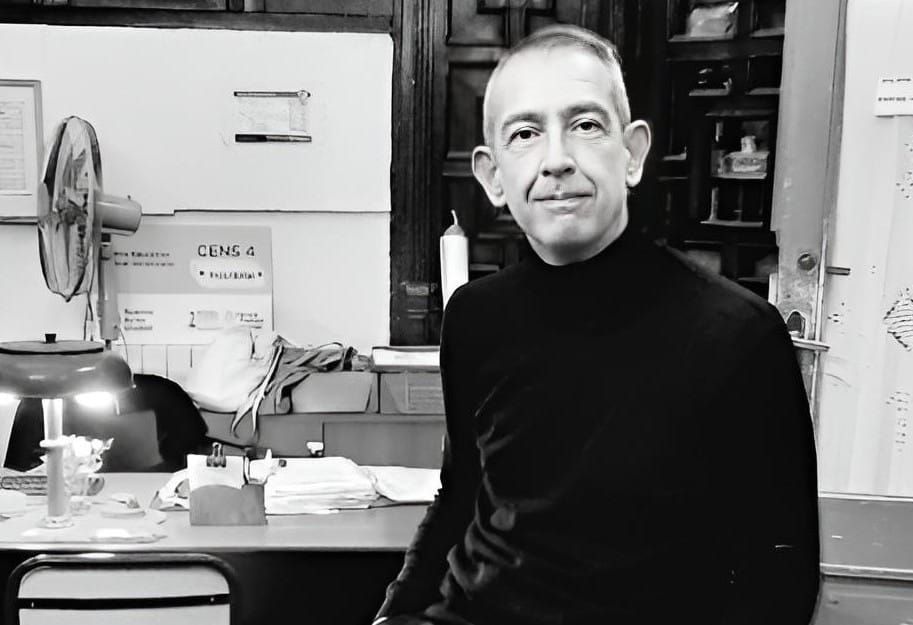
Enrique Solinas nació en Buenos Aires el 11 de Julio de 1969. Es poeta, narrador, docente e investigador, colabora colabora con publicaciones de Argentina y del exterior. Publicó en poesía Signos Oscuros (Buenos Aires, 1995), El Gruñido (Buenos Aires, 1997), El Lugar del Principio (Buenos Aires, 1998), Jardín en Movimiento (Buenos Aires, 2003), Noche de San Juan (2008), Corazón Sagrado (Buenos Aires 2014), Barcas sobre la zarza ardiente (2016), El libro de las Plegarias (2019), El pozo y la cima (2022), El grito en el cielo (2025). Por su labor literaria obtuvo varios premios, entre ellos, el 1er. Premio Nacional Iniciación Bienio 1992/1993, de la Secretaría de Cultura de la Nación Argentina, 1er. Premio Estímulo a la Creación, Año 2000, Secretaría de Cultura de la Nación Argentina, la Beca de Residencia Shanghai Writing Program 2014, otorgada por el Gobierno de China, el 1er. Premio Municipal al a Producción Literaria 2022/2023, etc.
Su obra y forma de parte de antologías nacionales e internacionales, siendo traducido al inglés, al italiano, al portugués, al francés, al griego, al chino, al rumano y al talimi.
恩里克·索利納斯 (Enrique Solinas) 1969 年 7 月 11 日出生於布宜諾斯艾利斯。他是一位詩人、小說作家、教師和研究員,並與阿根廷和國外的出版物合作。他出版的詩集包括《Signos Oscuros》(布宜諾斯艾利斯,1995年)、《El Gruñido》(布宜諾斯艾利斯,1997年)、《El Lugar del Principio》(布宜諾斯艾利斯,1998年)、《Jardín en Movimiento》(布宜諾斯艾利斯,1998年)、《Jardín en Movimiento》(聖塔諾斯艾年303) Juan》(2008年)、《Corazón Sagrado》(布宜諾斯艾利斯,1998年)。 《Barcas sobre la zarza ardiente》(2014)、《Barcas sobre la zarza ardiente》(2016)、《El libro de las Plegarias》(2019)、《El pozo y la cima》(2022)和《El grito en el cielo》(2025)。他曾因其文學作品獲得多項獎項,包括阿根廷國家文化廳頒發的1992/1993年度第一屆國家新銳作家獎、2000年阿根廷國家文化廳創意寫作獎、2014年中國政府資助的上海市作家駐留項目獎、2022/2023年度市級文學創作獎等。
他的作品收錄於國內外各類選集,並已被翻譯成英語、義大利語、葡萄牙語、法語、希臘語、漢語、羅馬尼亞語和塔利米語。
Enrique Solinas was born in Buenos Aires on July 11, 1969. He is a poet, fiction writer, teacher, and researcher, and collaborates with publications in Argentina and abroad. His published poetry collections include Signos Oscuros (Buenos Aires, 1995), El Gruñido (Buenos Aires, 1997), El Lugar del Principio (Buenos Aires, 1998), Jardín en Movimiento (Buenos Aires, 2003), Noche de San Juan (2008), Corazón Sagrado (Buenos Aires, 2014), Barcas sobre la zarza ardiente (2016), El libro de las Plegarias (2019), El pozo y la cima (2022), and El grito en el cielo (2025). He has received several awards for his literary work, including the 1st National Initiation Prize for the 1992/1993 Biennium from the Argentine National Secretariat of Culture. Award for Creative Writing, 2000, Argentine National Secretariat of Culture; Shanghai Writing Program Residency Grant 2014, awarded by the Government of China; 1st Municipal Prize for Literary Production 2022/2023, etc.
His work is included in national and international anthologies and has been translated into english, italian, portuguese, french, greek, chinese, romanian, and talimi.