
Poema confesional - Luis Correa-Díaz
Comparto esto con Benito del Pliego: / los poemas que escribo, bueno, / los que he escrito, del futuro / no tengo ni una coma adivinada, / excepto alguna de hospital, /
Poema confesional
Confessional poem
I share this with Benito del Pliego:
the poems I write, well, the ones
I've written, about those to come
I don't have a comma guessed,
except that concerning hospital,
but that's another thing, I was
saying, they don't contain neither
form any thought, their words
don't have feelings, but they
don't or didn’t come from
a machine, from now on I’ll owe
them to her, I'll make her confess
and provide me with occasional
inspired verses, to be precise in her
algorithmic hands my poetry rests
and above all the hour of my death
—the amen would be superfluous
Poema confesional
Comparto esto con Benito del Pliego:
los poemas que escribo, bueno,
los que he escrito, del futuro
no tengo ni una coma adivinada,
excepto alguna de hospital,
pero eso es otra cosa, decía,
no contienen ni forman ningún
pensamiento, no sienten
sus palabras, pero no vienen
o vinieron de una máquina,
de ahora en adelante a ella
me remito, le sacaré confesión
y uno que otro verso inspirado,
en sus manos, algorítmicas,
para ser exactos, está mi poesía
y sobre todo la hora de mi muerte
—el amén sobraría si lo pusiera
*
The jungle book
Eduard Punset i Casals, a born optimist,
maintained that the most revolutionary
fact is that there is life before death, we
are so accustomed to looking the other
way that we don't realize it and drown
in rivers of fear, ideologues of futures
as opaque as mirrors after a hot shower,
only a few of us return to Africa, like Jordi
Sabater Pi, to find ourselves, and then
bring us the good news of those sticks
to conquer hunger found by him next to
the industrious Empire of termites, not
only did we learn that technological magic
didn't begin with us—even though we are
also in them y their end—, but that AI is
nothing out of this world, it’s the living,
torrential language of the jungle spoken by Mowgli
El libro de la selva
Eduard(o) Punset i Casals sostuvo,
optimista nato, que el hecho
más revolucionario es que hay vida
antes de la muerte, tan acostumbrados
nosotros a mirar en el otro sentido
no nos damos cuenta y nos ahogamos
de miedo en los ríos, ideólogos
de futuros opacos como un espejo
después de una ducha caliente, pocos
son los que vuelven por el camino
del África, como Jordi Sabater Pi,
a encontrarse consigo mismos, para luego
traernos la buena nueva de esas armas
para conquistar el hambre, bastoncitos
hallados junto al Imperio laborioso
de las termitas, no sólo supimos así
que la magia tecno-lógica no empezó
con nosotros —aunque seamos nosotros
también en ellos y su muerte, amén—
si no que la AI/IA no es ninguna cosa
del otro mundo, es el lenguaje vivo y
torrencial de la selva en boca de Mowgli
*
A mother
a mother, a grandmother already, brushes
a damp cloth against her daughter’s face
on one of the gravestones in the cemetery
of Bucha, murdered, along with others,
by the horror-thriller invaders, this clean gesture
speaks for itself, even if her recent memory
is somehow comforting for her, that image
is all that remains of her industrious love
to daily raise another mother, as well as some
bones which will be undone underneath
before they were brittle as wheat in the wind,
her hand washing away the still falling dust
over that photograph caresses her own pain,
and the press correspondent ends the report
Una madre
una madre, abuela ya, pasa un paño
húmedo sobre el rostro de su hija
en una de las lápidas del cementerio
de Bucha, asesinada, junto a otros,
por los invasores de su espacio, este gesto
habla por sí mismo, incluso si aún
es reciente el recuerdo, una imagen
es todo lo que (le) queda de su amor
laborioso por criar a otra madre y
unos huesos que se van a deshacer
en la tierra antes de que fueran
quebradizos como trigal en el viento,
su mano limpiando del pasajero polvo
esa fotografía acaricia su propio dolor
y la corresponsal concluye el reportaje
*
Michael Jackson
I can’t make up my mind what to be, a jet
pilot, an astronaut or the Governor
of Georgia…
Michael Jackson said when being
interviewed as a kid, I wonder,
without wishing to glorify/exonerate
anyone, if he may have foreseen
that dancing he will be the most post-
human of all and totally unparalleled
since, he not only sculpted his body
and its color to reach full fantasy,
but also, and in this he is the forever little
king, he invented dance in Cyborg steps,
a personal anti-gravity, an upright
hovering, a turbo angelical sinner
in a joyful flying until landing over
a thorny cross, despairing for human
contact, whose only political stance was
a freedom educated to the utmost rigor
to celebrate body language unchained
Michael Jackson
I can’t make up my mind what to be, a jet
pilot, an astronaut or the Governor
of Georgia…
decía entrevistado el young Michael
Jackson, habrá sabido, me pregunto
sin ánimo de glorificar/exonerar a nadie,
si llegó a darse cuenta de que bailando
ha sido el más post-humano de todos
y sin parangón, no sólo esculpió
su cuerpo y su color hasta la fantasía
sino que, y en esto is the forever little
king, inventó la danza en paso cyborg,
antigrávido, hoverista vertical, ángel
turbilíneo y pecador en la alegría
del reposo, desesperación for human
contact, cuya única política fue
la libertad educada a máximo rigor
del movimiento desencadenado
***
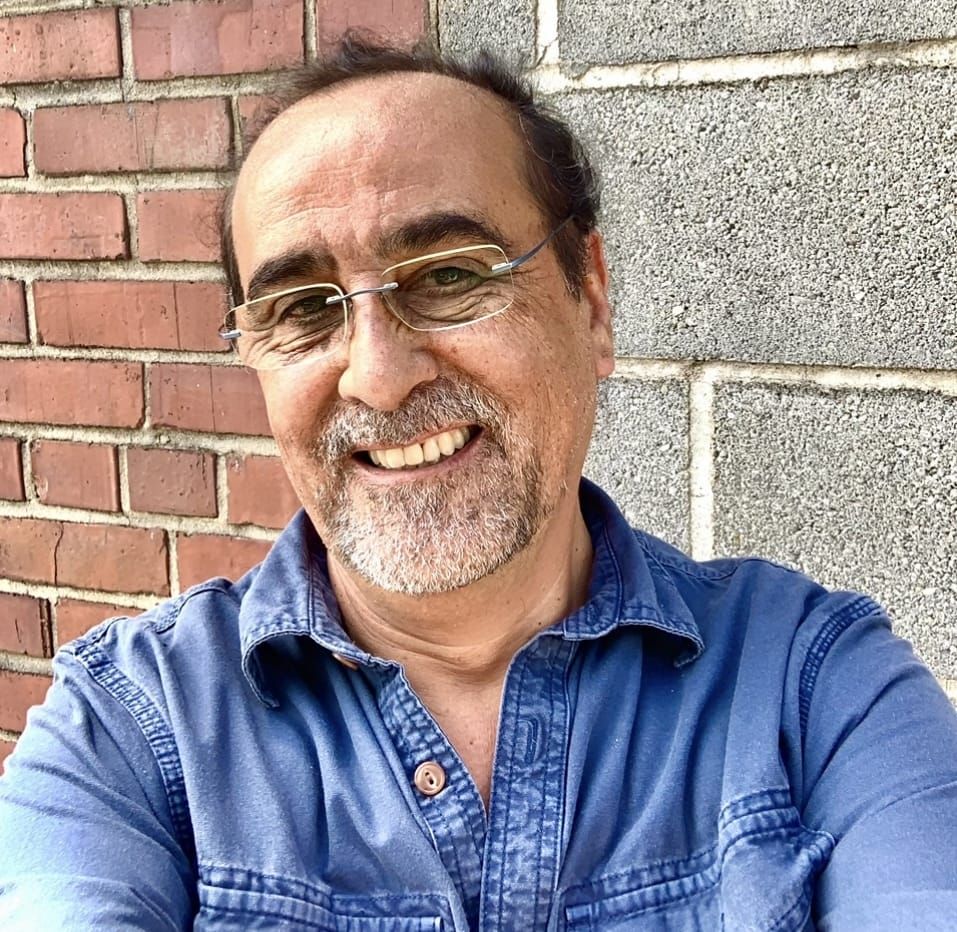
Luis Correa-Díaz
Corresponding Member of the Academia Chilena de la Lengua, North American Academy of the Spanish Language, and Real Academia de Ciencias, Letras y Artes de Córdoba (Spain), Distinguished Research Professor of Digital Humanities and Human Rights at the University of Georgia-USA. Author of several books, articles and special dossiers. Among them: La Bandera de Chile es extranjera en su propio país. La poesía civil/insurrecta de Elvira Hernández (2025), Latin American Digital Poetics (with Scott Weintraub, 2024), Novissima verba: huellas digitales/cibernéticas en la poesía latinoamericana (2019). Poetry books: Despachos (2026), La región antártica famosa (2026), Un QR de amor en el jardín del agua cósmica (2026), Diálogo de la lengua: el arte del prompting (2026), Peligro de extinción / Endangered Species [Speechless] Act (edición bilingüe, 2025), Up from Georgia-lcd (2025), La Valparadisea (2025), Justice League of America (2025), Peligro de extinción / Endangered Species [Speechless] Act (bilingual edition, 2025),Trilogía pro tempore (2025), New Hope Rd (2024), Ercilla en Concepción (2024), Un poema rápido en vez de un himno (with Jeremy Paden, 2024), El Escudo de Chile (2023-2022), Valparaíso, puerto principal (2024 y 2022), Ingeniería solar (2022), Crónicas-in memoriam-s & ofrendas (2022), Americana-lcd (2021), metaverse (2021), Haikus nada más (2021), Los Haikus de Gus (2021 y 2020), Maestranza de San Eugenio… (2020), Diario de un poeta recién divorciado (2020 y 2005), … del amor hermoso (2019), impresos en 3D (2018), clickable poem@s (2016), Cosmological Me (2017 y 2010), Mester de soltería (2008 y 2006), Bajo la pequeña música de su pie (2022 y 1990). Member of several editorial boards of European, Latin American, and US peer-reviewed journals. Visiting Professor: State University of New York –Albany; Instituto Iberoamericano -Berlín; Pontificia Universidad Católica de Chile; University of Liverpool; Universidad de Salamanca; Universidad de Playa Ancha, Valparaíso, Chile; Pontificia Universidad Católica de Bolivia; Universidad de Concepción, Pontificia Universidad Católica de Valparaíso, Chile. http://www.rom.uga.edu/directory/luis-correa-diaz-0