
Peces de ojos tristes - Marisa Martínez Pérsico / 玛丽莎·马丁内斯·珀西科
«Nunca compres pescado de ojos tristes» / me decía mi madre, al volver del mercado. / «La mirada sin brillo te advierte que son viejos». / «Que se han muerto hace mucho». /

Peces de ojos tristes
Marisa Martínez Pérsico / 玛丽莎·马丁内斯·珀西科
遗产
在工作中
电动刀片
砍掉我父亲的手指。
他们说,他捡起带血的拇指
一言不发地扔进了垃圾桶。
在家里,他告诉我们这是一个干净的
无痛伤口,甚至没有血迹。
他平静地过着,没有两根趾骨
但有时东西
会从他手里溜走
或者他试图去抓一个瓶子
但只抓住了光亮。
当有人问他
为什么不用左臂时
他说
这是他的抚摸方式:
用他以前的手指
感知物体的弯曲。
也许,一把刀
也剥夺了我的拇指。
这是我对失败依恋的
注解
我对失败的依恋,
一种固执的
持续的需要
去感受
曾经真实的空虚。
[钟离 译]
The Inheritance
At work
an electric blade
cut off my father’s finger.
They say he picked up his bloody thumb
and tossed it in the garbage,
without a word.
At home he told us it was a clean cut.
Painless. It didn’t even bleed.
He lived in serenity, without two phalanges
but at times things
would slip through his hands
or he would try to grab a bottle
but would just claw at the light.
When he was asked
why he didn’t use his left arm
he responded
that it was his way of touching:
to sense the curvature of an object
with his former finger.
Maybe, a blade
deprived me, too, of a thumb.
And that would explain
my attachment to downfalls,
the stubborn
constant need to feel
the emptiness
of what once was real.
(translated by Anthony Geist and students from U. of Washington)
La herencia
En el trabajo,
una cuchilla eléctrica
le cortó un dedo a mi padre.
Dicen que levantó su pulgar ensangrentado
y lo arrojó a la basura,
sin hablar.
En casa nos dijo que fue una herida limpia.
Indolora. Ni siquiera sangró.
Vivió en serenidad, sin dos falanges,
pero a veces las cosas
rodaban por sus manos
o quería agarrar una botella
y arañaba la luz.
Cuando le preguntaban
por qué no usaba más el brazo izquierdo
respondía
que era esa su forma de tocar:
intuir la curvatura de un objeto
con su dedo anterior.
Quizás, a mí también, una cuchilla
me privó de un pulgar.
Y eso explique
el apego a las caídas,
la obstinada
constancia de palpar
el vacío
de lo que fue real.
*
翻白眼的鱼
“千万不要买翻白眼的鱼。”
母亲每次从市场回来总会这么叮嘱我。
“鱼眼泛白是在提醒你,它们已经上了年纪。”
“已经死了很久了。”
从那时起,
只要出入鱼市和酒肆
我都会留意别人的眼睛,
并多看几眼它们凹陷的眼角膜
和破损的虹膜。
“翻白眼的鱼买不得,你可不要上当啊!”
母亲总会这么重复道。
我必须承认:
不止一次
——尽管我心知肚明——
我还是选择买下它们。
[奚跃萍 译]
Fish with Sad Eyes
«Never buy fish with sad eyes»
my mother used to tell me, upon returning from the market.
«Their gaze without sparkle warns you that they are old».
«That they died a long time ago».
Since then,
in fish markets and bars
when I look at other eyes
I linger on their sunken corneas
and worn-out irises.
«Don’t let them cheat you by selling you sad eyes»,
my mother would repeat.
I must confess
that on more than one occasion
–even though I knew better–
I chose to buy them.
(translated by Anthony Geist and students from U. of Washington)
Peces de ojos tristes
«Nunca compres pescado de ojos tristes»
me decía mi madre, al volver del mercado.
«La mirada sin brillo te advierte que son viejos».
«Que se han muerto hace mucho».
Desde entonces,
en las pescaderías y los bares
cuando miro otros ojos
me detengo
en las córneas hundidas
y en los iris gastados.
«Que no te engañen vendiéndote ojos tristes»
repetía mi madre.
Confieso
que en más de una ocasión
–y aunque sabía–
yo elegí comprarlos.
*
一颗珍珠的历史
一颗珍珠的生命
映照出了
那些在黑暗中
发光的生物。
如果某种废弃物破坏了
它的泡沫平衡,
它那由海洋的眼泪做成的毛发
就会在软体动物体内孵化。
得到希腊人和腓尼基人的赞许,
牡蛎对入侵者的反应是
用珠母贝将其覆盖。
接下来几年,它们在坏疽中溃烂,
最后通过钙处理和沉默完成治愈。
小女孩们出生了,通体白里透黄。
随着年龄的增长,她们变得愈发漂亮。
虽然她们已不再记得,她们都来自于贝壳碎片。
发生在珍珠身上的事情
也会发生在某些女人身上。
她们的过往
也即她们疼痛
和美丽的原因。
[奚跃萍 译]
Story of a Pearl
The life of a pearl
mirrors
that of other beings
that gleam through darkness.
Its hair made of ocean tears
hatches inside a mollusk
if some waste disrupts
its foam equilibrium.
Appreciated by the Greeks and Phoenicians,
The oysters respond to the intruder
covering it with nacre.
For years they fester in gangrene.
They heal with calcium treatments and silence.
Small daughters are born, milky and yellow.
The more they age, the more beautiful they become.
And although they do not remember, from debris they form.
What happens with pearls
also happens with certain women.
Their past
is the cause of their pain
and their beauty.
(translated by Anthony Geist and students from U. of Washington)
Historia de una perla
La vida de una perla
se parece
a la de algunas presencias
que brillan por oscuras.
Su cabello de lágrimas marinas
va gestándose adentro de un molusco
si un desecho quebranta
su equilibrio de espumas.
Apreciadas por griegos y fenicios,
las ostras reaccionan al intruso
cubriéndolo de nácar.
Supuran por años su gangrena.
Se curan con terapias de calcio y de silencio.
Nacen hijas menudas, de leche y amarillas.
Cuanto más envejecen más hermosas.
Y aunque no lo recuerdan, proceden de un detrito.
Sucede con las perlas lo que a ciertas mujeres.
Su pasado
es razón de su daño
y su belleza.
*
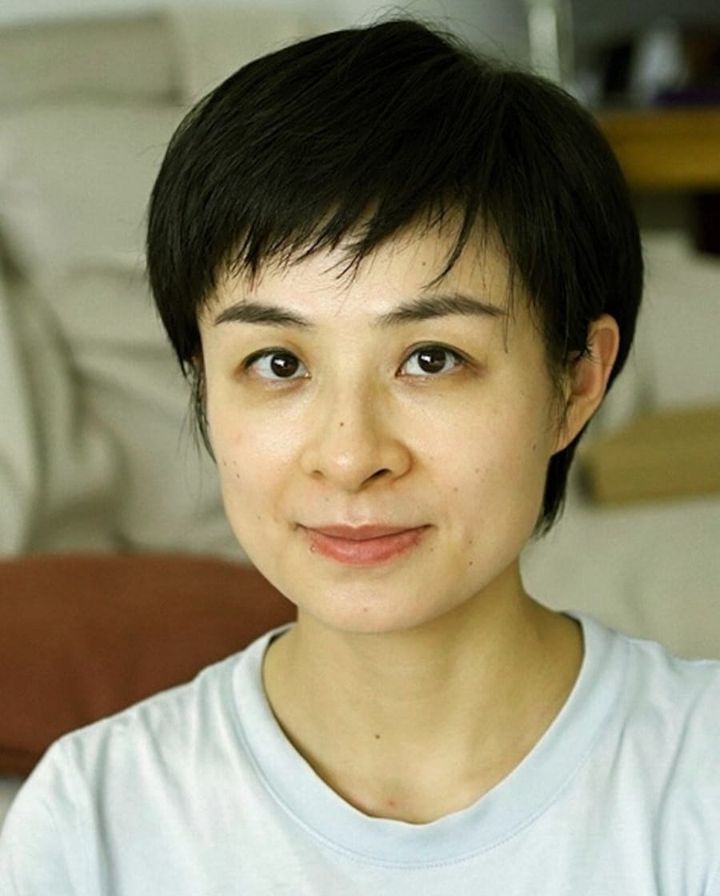
玛丽莎·马丁内斯·佩尔西科,1978年生于布宜诺斯艾利斯,阿根廷作家和研究者。自2010年起定居意大利。萨拉曼卡大学西班牙语和拉美文学博士,布宜诺斯艾利斯大学文学硕士,乌迪内大学西班牙语语言和翻译教授。出版诗集有:《叶子的声音》(阿根廷第一届国家普拉塔河奖,1998年)、《游吟诗》(阿根廷青年作家计划,2003年)、《模糊的书帖》(阿根廷青年作家计划,2004年)、《唯一的门是你的》(西班牙Verbum出版社,2015年)、《在括号内的天空》(西班牙,美国瓦尔帕莱索出版社, 2017年)、《芬兰》(西班牙/智利,里尔出版社,2021年)、《开篇和续篇》(西班牙,前言出版社,2021年)、《我们在旅行中购买的东西》(西班牙,第二十四届西罗·门迪亚拉丁美洲诗歌奖,甲虫/埃斯德鲁乌拉出版社,2022年)、《西班牙室内公园》(女王市政厅出版社, 2023年,第48届拉斐尔·莫拉莱斯国家诗歌奖,2023年)。
Marisa Martínez Pérsico (Buenos Aires, 1978) is an Argentinean writer and researcher that lives in Italy since 2010. PhD in Spanish an Latin-American Literature at University of Salamanca, graduate in Letters at the University of Buenos Aires, she is a professor of Spanish Language and Translation at Udine University. Her poetry books: The voices of the leaves (Argentina, 1998, “Río de la Plata” National Award), Travelling poetics (Argentina, Young Writers Programme, 2003), The obtuse sheets (Argentina, Young Writers Programme, 2004), The only door was yours (Spain, Verbum, 2015), The sky between parentheses (Spain, 2017, Valparaíso USA), Finland (Spain/Chile, Ril Editores, 2021), Beginnings and continuations (Spain, Pre-Textos, 2021), The things we buy on trips (Spain, XXIV Ciro Mendía Latin-American Poetry Prize Colombia, Escarabajo/Esdrújula Ediciones, 2022), The indoor parks, Spain, Ediciones Ayuntamiento Talavera de la Reina, 2023, 48th Rafael Morales National Award, 2023), Twilight of me in the night (Tanta Ceniza publishing house, Argentina, 2025).
Marisa Martínez Pérsico (Lomas de Zamora, Buenos Aires, Argentina, 1978) es una escritora e investigadora argentina radicada en Italia desde 2010. Doctora en Literatura Española e Hispanoamericana por la Universidad de Salamanca, licenciada en Letras por la Universidad de Buenos Aires, es profesora en la Universidad de Udine. Sus poemarios: Las voces de las hojas (Argentina, 1998, Primer Premio Nacional Río de la Plata), Poética ambulante (Argentina, Programa Jóvenes Escritores, Ediciones del Gobierno de la Provincia de Buenos Aires, 2003), Los pliegos obtusos (Argentina, Programa Jóvenes Escritores, Ediciones del Gobierno de la Provincia de Buenos Aires, 2004), La única puerta era la tuya (España, Verbum, 2015), El cielo entre paréntesis (España, 2017, Valparaíso USA), Finlandia (España/Chile, RIL Editores, 2021), Principios y continuaciones (España, Pre-Textos, 2021), Las cosas que compramos en los viajes (España, XXIV Premio Latinoamericano de Poesía Ciro Mendía Colombia, Escarabajo/Esdrújula Ediciones, 2022), Los parques interiores (España, Ediciones Ayuntamiento Talavera de la Reina, 48 Premio Nacional de Poesía Rafael Morales, 2023), Penumbra de mí en la noche (Tanta Ceniza Editora, 2025).