
Ovejas versus cisnes - Rolando Kattan / 罗兰多·卡坦
Las ovejas son en el mundo al revés las nubes que contemplan las estrellas cuando se tienden boca abajo en su oscuro patio.
Ovejas versus cisnes
Rolando Kattan / 罗兰多·卡坦
菠萝树
离开巴勒斯坦后,他想在这片土地找到菠 萝树。想象它枝叶茂密,如上帝在伊甸园
栽下的那棵。 他告别故土,盼着新的家园,却没找到心 中期待。
在这首诗里,我的祖父能从树冠采撷菠萝, 因为诗中能生出不存在的树、千年的果,
甚至从前的国。
但我坚持。我期待在此抽枝的不是树,是 希望——仍有某处,菠萝树繁茂如初。
The Pineapple Tree
After leaving Palestine, he wanted to find a pineapple tree in these lands, envisioned it densely-leafed like what God had planted in Paradise.
He left his land behind with hopes of a new one but didn’t find what he thought he might.
In this poem, my grandfather can gather pineapples from a treetop because in a poem anything can grow, imaginary trees, fruit a thousand years old, even a native country.
Still, I must insist. Here what I’d like once more to take root isn’t a tree, but the hope that somewhere there’s a place still brimming with pineapple trees).
El árbol de la piña
Al salir de Palestina, quería encontrar en estas tierras el árbol de la piña. Imaginaba un árbol frondoso, parecido al que situó Dios en el paraíso.
Abandonó su tierra con la esperanza de una nueva y no encontró lo que esperaba.
En este poema, mi abuelo, puede recolectar piñas de la copa de un árbol, porque en un poema pueden crecer incluso los árboles que no existen, los milenarios frutos y hasta el país natal.
Sin embargo, insisto. Lo que quiero que aquí retoñe no es el árbol, sino la esperanza de que todavía hay un sitio donde abundan los árboles de piña.
*
绵羊对天鹅
在颠倒的世界,绵羊是伏卧在幽暗院中凝 望星星的云。我们以为,绵羊是白昼时中 了温顺咒的神,入夜后便化作诘问、利齿 与陡坡,啃噬我们的指甲,在失眠的院中 肆意游荡。数羊便是念起咒语,抵御恶魔 的甲状腺。因而清晨总是催我们削尖铅笔, 好把牙齿装回口腔,将羊群照例赶回温顺 的羊圈。可当夜幕重临,绵羊用温顺的圆 眼睛看我,发问:为何我在你手中看见你 亡父的手?谁正睡在你床铺的空位?
你肋骨的二分点还痛吗?你曾种下的词 语——如同种下不可能的树——可会结 果?为何你梦见沙漏,既然万物终将化作 尘埃?
直到我遇见黑天鹅,云消失不见。我看见 天空的巨大湖面,每只天鹅伸长无限疑问 的美丽脖颈,展开翅膀拥抱我。在颠倒的 世界,黑天鹅是云漫步湖面时凝望的星星。我们以为,黑天鹅是温顺的天使,不问不答: 沉默着,在它们身旁,我们即是问题——这让你梦见沙漏,梦见时日化作的尘埃。
Sheep Versus Swans
In the world upside down, sheep are clouds pondered by stars when they lie down flat on their bellies in the dark yard. For us, sheep mean daytime. They are gods charmed by tenderness and night. They turn into questions, into teeth, into pending matters that bite our fingernails and casually walk around the insomniac’s garden. Counting sheep is a magic spell against a demon’s thyroid. That’s why in the morning we’re inspired to sharpen pencils, put our dentures in, and return the flock to the tame corral of routine. But then night comes back and the sheep look at me with their gentle, round eyes and ask: Why do we see your dead father’s hands in your own? Who is sleeping in the empty space of your bed?
How does an equinox ache in your ribs? Will your words—rooted like an impossible tree—flower once more? Why do you dream about an hourglass if everything turns to dust?
Then I discovered black swans and, instead of clouds, I saw the immense lake of sky. All the swans with their beautiful, infinite question-mark necks embracing me, spreading their wings. In the world upside down, black swans are stars pondered by clouds as they stroll along lakes. For us, a black swan is a gentle angel. No query, no response: in silence at their side, we become the question. They let you dream of hourglasses filled with dust, the lingering dust of your days.
Ovejas versus cisnes
Las ovejas son en el mundo al revés las nubes que contemplan las estrellas cuando se tienden boca abajo en su oscuro patio. Para nosotros las ovejas son de día, un dios hechizado de mansedumbre y de noche, se convierten en preguntas, en dientes y pendientes que nos muerden las uñas y andan a sus anchas en los patios del insomnio. Contar ovejas es un conjuro contra la tiroides de un demonio. Por eso las mañanas nos animan a sacarle punta a los lápices, a que vuelva la dentadura a la boca y llevar el rebaño de ovejas al manso corral de la rutina. Pero vuelve la noche y las ovejas me miran con sus ojos mansos y redondos y preguntan: ¿Por qué veo en tus manos las manos de tu padre muerto? ¿Quién duerme en el espacio vacío de tu cama?
¿Cómo duele un equinoccio en la costilla? ¿Retoñará, alguna vez, un fruto de las palabras que plantaste como un árbol imposible? ¿Por qué sueñas con relojes de arena, si todo se va haciendo polvo?
Hasta que descubrí los cisnes negros y en lugar de las nubes vi el inmenso lago del cielo y cada cisne con su hermoso cuello de pregunta infinita me abrazaba extendiendo las alas. Los cisnes negros son en el mundo al revés, las estrellas que las nubes contemplan cuando se pasean por los lagos. Para nosotros un cisne negro es un manso ángel que no interroga, ni responde: en silencio y junto a ellos, somos nosotros la pregunta y te deja soñar con relojes de polvo, con el polvo que va quedando de tus días.
*
惠特曼之后的荷马
我曾聆听赫克托耳的祈讲:
各位神灵,
请答应让这个孩子,我的儿郎,日后出
落得像我一样 ,
在特洛伊人中出类拔萃,
如我一样刚健,强有力地统治伊利昂。
将来,人们会说:
“此君远比他父亲高强。”1
我曾见过正义者眼中
无限映下的像。
那是惠特曼之前的年代
唯有胜利者得以加冕。
在森林中,诗歌指明
尊严的另一种方式——
树木缄默的话语。
我同所有失败者缔造祖国,
因渴求得胜的人
祈求他人的溃败。
惠特曼抚慰这种失衡:
为什么我要求
比今天更好地认识上帝呢? 2
我的孩子须在伤痕中
认出隐秘的美:
不只有宽恕能缝补伤口、使其愈合。
必用那倒下的树木建造房屋。
若为一段爱、一个韵脚蒙羞归来
又有何妨?
失败原是受救赎的国。
-------
1.西语原文引用墨西哥诗人阿方索·雷耶斯所
译《伊利亚特》第 476—479 行。中译参考陈
2.引用惠特曼《我自己的歌》,中译参考赵萝 蕤译本(花城出版社 2016 年版)。
Homer After Whitman
I was a witness to Hector’s plea:
Zeus and you other gods, please let my son,
be just like me—admired among the Trojans,
strong and successful on the battlefield,
and powerful enough to rule Troy.
I hope they say when he comes back from war,
‘This man is so much better than his father.’
I saw the reflection left by the infinite
in the glances of the just.
All this happened before Whitman,
when only the victor could reign.
In the forest, poetry showed
other ways toward dignity,
words quieted by the wood.
I choose a homeland with the conquered,
since those who seek victory
beg for another’s defeat.
Whitman soothes this imbalance:
Why should I wish to see God
better than this day?
There is a hidden beauty my children
must see in their wounds:
Forgiveness isn’t the only thing that sews and scars.
We must make a home from fallen trees.
What does it matter if they return humbled
by love, by a consonant.
Defeat is a redeemed kingdom.
Homero después de Whitman
Había presenciado la súplica de Héctor:
Otorgad clementes
que el hijo mío sea como su padre ha sido,
campeón escogido y orgullo de su gente;
que poderoso reine sobre la vasta Ilión;
que cuando vencedor vuelva de la pelea,
digan todos al verlo: «Vale más que el varón
a quien debe la vida».
Vi el reflejo que deja el infinito
en la mirada de los hombres justos.
Eran tiempos anteriores a Whitman
y solo podía reinar el victorioso.
La poesía señaló en el bosque
otras maneras de la dignidad,
las palabras que la madera calla.
Hago patria con todos los vencidos,
porque el que pide volverse victorioso
suplica por la derrota del otro.
Whitman consuela ese desequilibrio:
Por qué voy a empeñarme en que Dios
sea otra cosa mejor que este día.
Hay una belleza oculta que mis hijos
deben reconocer en sus heridas:
No solo el perdón cose y cicatriza.
Hay que hacer casa con árboles caídos.
Qué importa si regresan humillados
por un amor, por una consonante.
La derrota es un reino redimido.
[袁婧、戴潍娜译作]
[English Translation by Katherine M. Hedeen & Víctor Rodríguez Núñez]
***
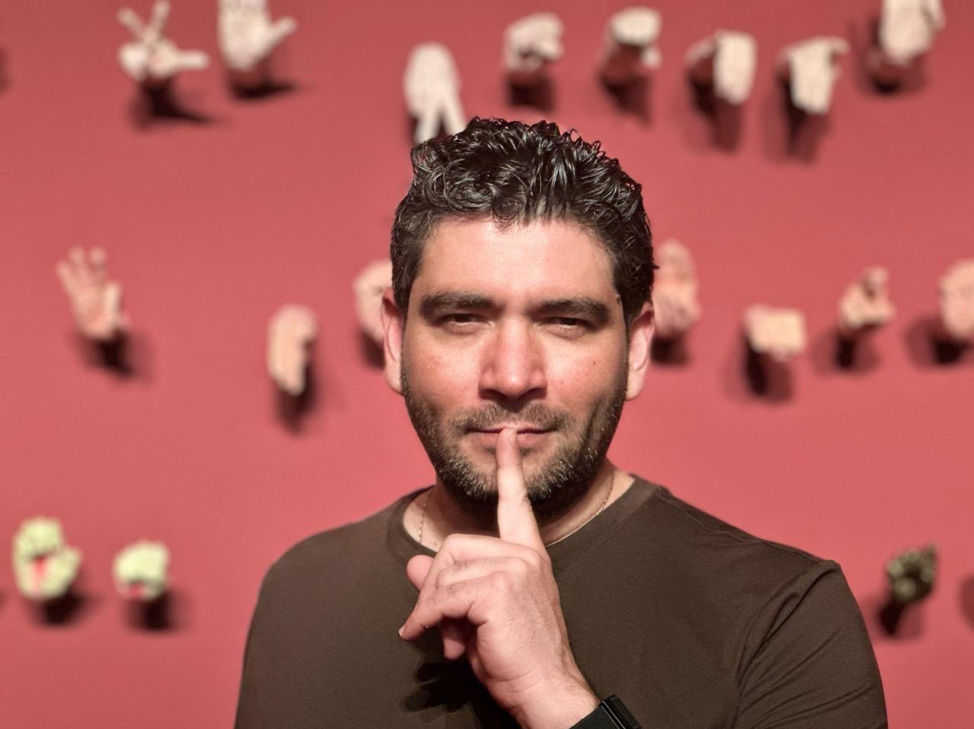
罗兰多·卡坦(洪都拉斯特古西加尔巴)是西班牙皇家语言学院的通讯院士,也是洪都拉斯语言学院的正式院士。他曾荣获第十五届克劳迪奥·罗德里格斯诗歌奖、第二十届美洲之家美洲诗歌奖、拉蒙·罗萨国家文学奖以及罗马尼亚科学院颁发的布科维纳诗歌奖。他的最新诗集有《松果树》(黑天鹅出版社,2016年)、《秋萤》(黑天鹅出版社,2018年)、《丛林中的国度》(拉斐尔出版社,2018)、《奇珍异宝陈列室》(拉瓜出版社,2020年)、《黑天鹅》(维索尔图书,2021年)、《渴望归处》(黑天鹅出版社,2023年)、《山中迷途》(天使出版社,2024年)和《天使的疏漏》(维索尔图书,2025年)。他的诗歌已在四十多个国家发表,并被翻译成十七种语言。戴潍娜与罗兰多·卡坦
Rolando Kattan (Tegucigalpa, 1979) is a prize-winning poet, publisher, and cultural activist. He has published ten books of poetry and his work has received prestigious awards in the Spanish-speaking world, including the Claudio Rodríguez Poetry Prize (2024) and the Casa de América Poetry Prize (2021), both in Spain. His poetry has been translated and published in fifteen languages and he has been invited to read throughout the world, in more than fifty countries. He is the publisher and editor of two independent poetry presses in Honduras: ManoNostra and Cisne Negro. He was co-organizer of the Honduran literacy project, Leer es Fiesta, which distributed twelve books at no cost to over 5000 readers. He regularly organizes cultural events in Tegucigalpa. He is a member of both the Royal Spanish Academy and the Honduran Academy of Language.
Rolando Kattan (Tegucigalpa, 1979). Miembro correspondiente de la Real Academia Española de la Lengua y miembro de número de la Academia Hondureña de la Lengua. Entre los premios a su obra destacan: XV Premio Internacional de Poesía Claudio Rodríguez (Omisión del ángel, Visor 2024), XX Premio Casa de América de Poesía Americana (Los cisnes negros, Visor, 2021), Premio Nacional de Literatura Ramón Rosa 2022, Premio Bucovina de Poesía 2023 y el Premio Nacional Malinalli para la Promoción de las Artes, los Derechos Humanos y la Diversidad Cultural 2026. Su poesía ha sido publicada en revistas, libros o antologías en más de cuarenta países y parcialmente traducida a diecisiete idiomas. Sus traducciones más notables incluyen los libros Animale non identificato (en italiano, 2014), Connivences (en francés, 2016), Un paese tra le fronde (en italiano, 2018), كتاب بلغة المندرين (en árabe, 2020); Die schwarzen Schwäne (en alemán, 2021); Czarne łabędzie (en polaco, 2021); Černé labutě (en checo, 2022); Vestă antiglonț (en rumano, 2024) y Bullet-Proof Vest: Poems (en inglés, 2026).