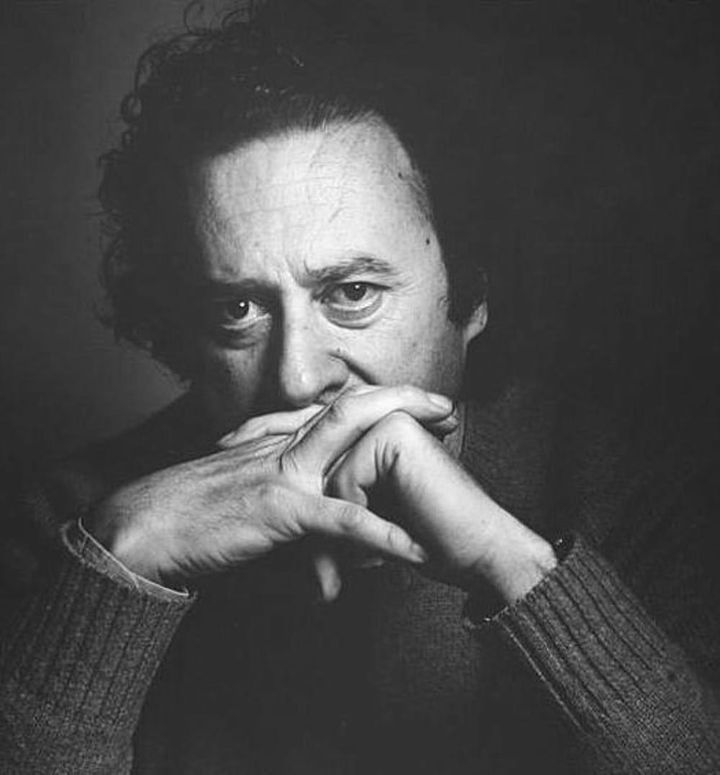

no toda locura es declive - Jeremy Paden
Había una vez en una calle sin salida una casa / con un mango en el patio nunca sin flor / y siempre con fruto, si sabes algo / de mangos, me dirás, deja ya de contar / esas magias del siglo pasado, mentiras / de las que dicen los que no pueden con la verdad.

no toda locura es declive
no toda locura es declive
alguna es vuelo, el subir
de un millón de alas
hasta oscurecerse el sol
alguna es abandono
de casa y nombre
y privilegios para errar
alguna es obsequio
pero ¿cómo sabremos
si la bacía que brilla
sobre la cabeza del barbero
que monta su burro
hacia el poblado vecino
nos fuera donada por los dioses
para protegernos de nigromantes?
o ¿si es la del pardillo barbero
y no de ningún otro infeliz?
¿debemos siempre batallar
por poseer meritoriamente
la locura que nos toca?
y ¿qué de la locura del saber
por fin quiénes somos?
¿quién podrá tolerar ese don?
not all madness is descent
some is flight the rise
of a million wings
that darken the sun
some is leave
of home & name
& rights to wander
some
is gift
but how are we to know
if the barber’s basin
that glints on the barber’s head
as he rides his donkey
to the next town
was bequeathed to us
by the gods to ward off
evil enchanters
or if it’s the happy barber’s
& no one else’s
must we always fight
to own by merit
the madness that is ours
& what of the madness
of finally knowing who we are
who can live with such a gift
*
pájaro cantor bajo una campana de cristal
para Víctor Jara
ya no podemos hablar
del ser
hablemos por lo tanto de un pájaro
bajo una campana de cristal
sobre una mesa
iluminado por un rayo de luz
desconocía que coleccionabas
avecillas y me acerqué a ti
canté sin artimaña
como una mendiga
que tira las últimas sobras de pan
a cualquier pájaro que la acompañe
me acerqué para cantar
mis chirridos y chasquidos
eran para ti
no eran para ti
¿por qué me has puesto
bajo vidrio?
un reloj alarma
en una bomba de aire
sin aire
no suena no importa
cuántas veces el martillo
golpea el metal
¿puede un pájaro cantor
cantar en un vacío?
me he convencido
que soy ave desértica
me he convencido
que puedo vivir sin agua
cantar sin aire
songbird in a bell jar
for Victor Jara
we can no longer speak
of being
let us speak then of a bird
in a bell jar on a table
in a shaft of light
unaware you collected
birds I came to you
without guile & sang
like a bag lady tossing
the last crumbs of her bread
to whatever bird will keep
her company I sang
my chirrup chirtle
was for you & not for you
why have you placed me
under glass
an alarm clock in a bell jar
with the air sucked out
does not sound no matter
how many times the hammer
strikes the metal plate
can a songbird
sing in a vacuum
I have told myself
I am a desert bird
I have told myself
I can live without water
I can sing without air
*
La casa con un mango en el patio
Había una vez en una calle sin salida una casa
con un mango en el patio nunca sin flor
y siempre con fruto, si sabes algo
de mangos, me dirás, deja ya de contar
esas magias del siglo pasado, mentiras
de las que dicen los que no pueden con la verdad.
En la esquina de ese callejón vivía una panadera
que hacía las mejores rosquillas. Eran años
de racionamiento y revolución, aun así encontraba
la harina y el azúcar, la canela y el aceite
y algunas mañanas rastreábamos los chelines
para comprarle sus bollos, calientitos y recién azucarados.
Si te digo que en el techo de esa casa vivía
una iguana regordita por comerse tantos mangos,
todavía no me creerás, pero se asoleaba cada mañana
en el muro bajo el mango y los vecinos,
quizá esto te convenza, querían desesperadamente
cazarla para hacer de ella una sopa de garrobo.
Cada tarde en esa casa se comía mango con sal,
chile y limón, ya no me importa si no me crees,
pero había una vez en una calle sin salida una casa
con un mango en el patio que siempre echaba brotes
nuevos cuando los últimos mangos de la cosecha
previa estaban verdes y duros como almendras.
Y de noche descendía sobre la casa una diablura
de ratas, mientras la madre brincaba en su cama de agua
el padre las perseguía por todo el hogar con su bate
de béisbol sin nunca dar el golpe de gracia,
noche tras noche las ratas y el palo por la casa,
y una noche el padre se resbaló y se dio contra la puerta,
Y despertó la horda de termitas y cucarachas
que vivían en la madera y que salieron como un río,
como si dentro de la puerta durmiera el ángel
con la copa de plagas. No, no vengo a contarte
cuentos de hadas, una vez había en una calle sin salida
una casa donde una iguana vivía en un paraíso de mangos.
The House with a Mango out Back
Once there was a house on a dead-end street
with a mango out back, never without flower
and always with fruit, if you know anything
about mangoes, you’ll tell me to stop with these
magical tales from the end of last century,
lies told by people who can’t handle the truth.
On the corner of that cul-de-sac lived a baker
who made donuts. These were years of ration
and revolution, still she found the flour
and the sugar, the cinnamon and the oil,
and some mornings we rustled up the change
to buy her buns, hot and freshly sugared.
If I tell you that in the roof of that house lived
an iguana fat from eating so many mangoes,
you’ll still not believe me, but it sunned itself
on the wall under the tree every morning
and the neighbors, maybe this will convince you,
wanted desperately to catch it for a soup.
Every afternoon in that house we ate green mango
with salt, chili, and limes, I don’t care if you still
don’t believe me, but once there was a house
on a dead-end street with a mango out back
that set its buds when the last mangoes of the previous
fruiting were still green and hard as almonds.
And every night a mischief of rats would descend
upon the house while the mother would scream and jump
on the waterbed as the father would chase them
with a bat, though the coup de grace never fell,
night after night, the rats and the bat through the house,
and one night the father slipped and slammed into the door,
And woke the swarm of termites and cockroaches
that lived in the wood and spilled out like a river,
as if inside the door slept the angel with the cup
of plagues, no, I’m not here to tell you fairy tales,
once there was a house on a dead-end street
where an iguana lived in a paradise of mangoes.
*
Tulipanes rotos
Un día nos afectará de nuevo de esta forma u de otra.
El olor amargo de los tulipanes, Zbigniew Herbert
Los hombres han despilfarrado fortunas
en la promesa de la belleza escondida
en bulbos como los de estos descendientes
de flores oriundas de las montañas de Tien-Shan,
el Semper Augustus, el Tulipán Virrey,
tesoros barrocos de la vieja ruta de la seda,
casualidades de una belleza huidiza, el bulbo
consumido lentamente por un virus, los síntomas:
coloración en los pétalos como de plumas o llamas.
Con guantes enlodados y palita en mano,
Ligeramente quita el mantillo y cava un hueco
de veinticinco centímetros en tierra arenosa
para sembrar estos bulbos que florecerán con rayas
de marfil marcando el turbante carmesí de la flor.
Mécelos antes de colocarlos en la tierra. Recita
los nombres al enterrarlos, éstos no son metáforas:
Locura de hielo, Soltero y tardío, Corazón que arde.
Broken Tulips
One day it will afflict us again in this or another form.
The Bitter Smell of Tulips, Zbigniew Herbert
Men have squandered fortunes on the promise
of beauty stored in corms like these descendants
of flowers from the mountains of Tien-Shan,
the Semper Augustus, the Viceroy Tulip,
baroque treasures from the old Silk Road,
fleeting accidents of beauty, the bulb
slowly consumed by a virus, the symptom:
feathered or flamed patterning in the petals.
With soiled gloves and trowel in hand, gently
brush the mulch away, dig down ten inches
into the sandy dirt and plant those bulbs
that will bloom with ivory streaks staining
the crimson turban of the head. Cradle
those shallot look alikes, recite the names
as you place them, these are not metaphors:
Ice Folly, Single Late, Burning Heart.
**
Jeremy Paden (Milán, 1974). Poeta, crítico literario y traductor estadounidense. Doctor en Literatura Latinoamericana por la Universidad de Emory. Nacido en Italia, criado en Centroamérica y el Caribe, ejerce como profesor de lengua y literatura hispana en la Universidad de Transylvania y como docente de traducción literaria en el programa de maestría de la Universidad de Spalding University, las dos instituciones están en Kentucky, EEUU. Es autor de varios libros de poesía en inglés y español, ha traducido a poetas latinoamericanos y españoles al inglés y poetas estadounidenses al castellano. traductor de poesía poetas de lengua española y autor de ensayos sobre la Hispanoamérica colonial. Entre sus libros más recientes figuran: world as sacred burning heart (3: A Taos Press, 2021), Imágenes del mundo flotante (Alcorce Ediciones, 2024) y how to recognize god's chosen (Accents Publishing, 2025). Entre sus libros traducidos están el poemario del poeta chileno Mario Meléndez Waiting for Perec (Action, Spectacle, 2025) y el poemario de Ada Limón, la expoeta laureada de los Estados Unidos, De las que duelen (Valparaíso Ediciones, 2024). Su sitio web es https://jpaden4.wixsite.com/jeremypadenpoet
Jeremy Paden (Milan, 1974). Poet, literary scholar, and translator. PhD in Latin American literature from Emory University. Born in Italy, raised in Central America and the Caribbean, he is a professor of Spanish language and literature at Transylvania University, and he teaches literary translation in Spalding University’s MFA, both institutions are in Kentucky, USA. He is the author of several books of poems in English and Spanish, the translator of various Spanish language poets, and the author of essays on Colonial Latin America. Among his most recent books are: world as sacred burning heart (3: A Taos Press, 2021), Imágenes del mundo flotante (Alcorce Ediciones, 2024) and how to recognize god's chosen (Accents Publishing, 2025). Among his translations are Waiting for Perec (Action, Spectacle, 2025) originally by the Chilean poet Mario Meléndez and De las que duelen (Valparaíso Ediciones, 2024) by Ada Limón, the former poet laureate of the United States. You can find him at https://jpaden4.wixsite.com/jeremypadenpoet