
Los que aman en los parques - Margarito Cuéllar / 马加里托·奎亚尔
No les preocupa la densidad del bosque. / Para los que aman en los parques / el bosque es un desierto y a veces es el mar. / Desnudos por las dunas lunares / si el bosque es un desierto. /
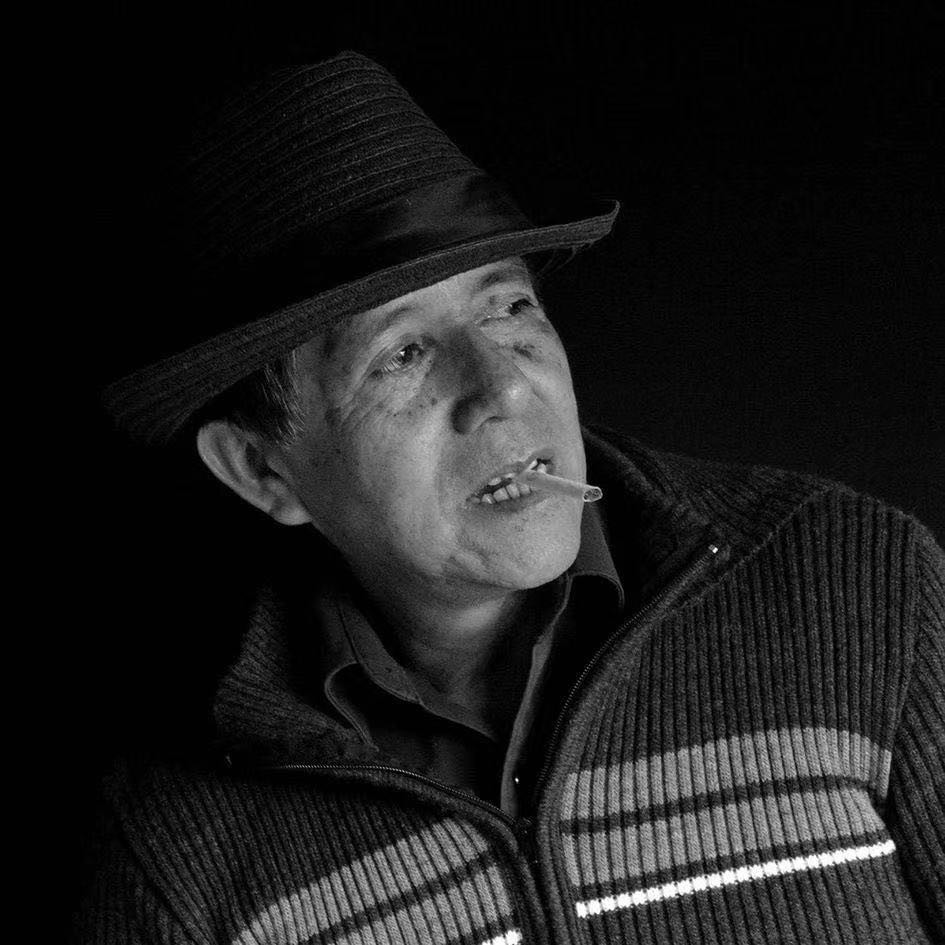
Margarito Cuéllar / 马加里托·奎亚尔
羚羊与古丝绸之路
我不是捕蚕的猎人
可我已越过海路和陆路来到了这里
我抚摸她的绒毛
手指却好像什么也没碰到
我将继续前行
直到世界的尽头
我将骑着竹马
穿越绵延两千公里的俄罗斯大草原
从西伯利亚到贝加尔湖
然后沿着阿穆尔河下行到中国边境
我要用手指轻轻触摸她绒绒的毛发
犹如抚摸一只优雅的、沉睡中的动物
就是在那里,生命在低声流淌
文字隐藏在阳光下的巢穴里
请允许我用不同的语言在她脸上偷一个吻
作为回馈
我要送她十笼鸟
它们可不是一般的鸟儿
而都是优雅漂亮的珍禽
放飞时它们会轻快地直上云霄
一边飞一边和着音乐
无忧无虑地欢唱
给天空带来惊艳的一幕
我从不赠人以珠宝
因为珠宝既不会飞翔也不会歌唱
人们将看到我在湖边为她奏响竹乐
重现所有鸟儿的歌唱
如果黑夜消失在大海的气息中
人世间将不再有任何美丽
我阅读她的留言
上面的表意文字在我如同一本
图画书里绘着的乌鸦足迹
又如同书写在宣纸上的疯狂字符
如果有一天我们相互道别
我们不会说“再见”
啊,因为“再见”是个单调无味的词语
而单调无味与我们的生活方式是背道而驰的
在生命尚未走到尽头前
任何不合时宜的鸟叫声
都会让我们迷失在黄山上
An Almond-eyed Antelope and the Ancient Silk Road
I am not a silkworm hunter
But now I’m here after having crossed the seas and lands all the way
I stroke her soft fleece
But my fingers don’t seem to have touched anything
I will keep going
Till the end of the world
And on the back of a bamboo horse
I will ride through the 2,000-kilometer Russian Steppes
From Siberia to Lake Baikal
Then down the Amur to the Chinese borders
I enjoy running my fingers through her fluffy hair
Like petting a graceful, sleeping animal
Whereby, life flowing in a whisper
Words hidden in the nest under the sunshine
Allow me to steal a kiss on her face in a different language
And as a return
I would give her ten cages of birds
None of which are of low quality
But the elegant and beautiful of their kind
When let fly they will create a stunning scene in the sky
By briskly soaring up to the heavens
And singing merrily to the music
As they are flying around
I never give jewels to anyone
For jewelry can neither fly nor sing
People will see me playing bamboo music for her by the lake
Reproducing the singing of all the birds
If the night disappeared in the breath of the sea
There would be no more beautiful things on earth
Upon reading her message
I feel that the ideographic characters in it just look
Like the footprints of a raven painted in a picture book
Or the crazy symbols brushed on Xuan paper*
If one day we have to part from each other
We will bid no “goodbye” as usual
For the word “goodbye” is full of dreariness
And dreariness is just the opposite of how we live our lives
Before the coming of the last minute of life
Any untimely birdsongs
Will make us lost amid Mount Huangshan
* Xuan paper: a kind of quality paper made in Xuancheng and Jingxian in Anhui Province, which is used for traditional Chinese painting and calligraphy, soft and tensile of texture and resistant to insect bites, absorbing ink evenly, and good for long preservation.
English translation: 周文标 (Zhou Wenbiao)
LA GACELA OJOS RASGADOS Y LA ANTIGUA RUTA DE LA SEDA
No soy un cazador de gusanos de seda
pero recorrería las millas náuticas y los kilómetros necesarios
porque acariciar su pelo es como rozar la nada con los dedos.
Viajaré siempre recto
hasta el fin del mundo;
en mi caballo de bambú
cruzaré dos mil kilómetros de estepa rusa y los montes Urales.
De Siberia llegaré al lago Baikal y descenderé a la frontera China por el río Amur.
Pasaré lentamente mi mano por sus cabellos
semejantes a un animal precioso y adormecido
porque ahí la vida transcurre en voz baja
y las palabras se ocultan de la luz en una madriguera.
A cambio de que
me deje robarle un beso en idiomas diferentes
le regalaré diez jaulas de pájaros
no avecillas comunes
pájaros refinados y bellísimos.
El cielo se convertirá en un estallido
pájaros en vuelo vertical flechas aladas
música en viaje permanente
cantos despreocupados y alegres.
No le obsequiaré joyas
las joyas no vuelan ni cantan.
Me verán a la orilla del lago tocando para ella un instrumento de bambú
que reproduce el canto de todos los pájaros.
Y si una noche se esfuma con el aliento del mar
no quedará nada hermoso en el mundo
Leo sus mensajes
los ideogramas semejan un libro ilustrado
por las huellas de un mirlo de Kissan
signos trazados con la complicidad de la locura sobre papel de arroz.
Si un día nos despedimos
no diremos adiós.
Ah porque el adiós es una conversación seria
y la seriedad está reñida con nuestra forma de ser.
Nos perderemos en el Monte Amarillo
antes de que el reclamo inoportuno de la vida
llegue a su fin.
中文译者: 奚跃萍 (Xi Yueping)
*
在园林里谈情说爱的人
他们并不在意园林是否茂密。
对那些在园林里谈情说爱的人来说,
园林有时是荒漠,有时是大海。
那些在园林里谈情说爱的人——
如果此时的园林是一片荒漠
他们会全身赤裸,就当是在月球的沙丘上;
如果此时的园林是一片大海
他们就会闭起眼睛纵身跳下悬崖。
对那些在园林里谈情说爱的人来说,
从来就没有什么彼岸,
大海也不过是无底的深渊。
他们很快就学会了鱼的技能。
他们行走在水面上,身体不会下沉。
当他们发现别的
在园林里谈情说爱的人,
他们就会与他们一起共享园林的音乐。
他们在树枝上筑巢,
然后诞下绿色的宝宝。
对于那些在园林里谈情说爱的人来说,
雨水会保佑他们
并教会他们如何捕猎好斗的困兽,
如何数石块,如何咀嚼麻雀,
以及如何安身保命。
那些在园林里谈情说爱的人,
他们闭着眼睛生火,
整天价有用不完的精力,
靠吃真菌和蠕虫为生。
他们有的是被箭洞穿的心脏,
藏身于树皮,就能再次窥见对方。
爱情已经远去,雨还在下着。
黑夜带来了更多的音符。
我将在园林里点起篝火。
如果此时我躺平在草地上,
我也许会做个开心的美梦,
礼拜日的空气也许会误把我当作
又一个在公园里谈情说爱的人。
POEM OF THOSE WHO LOVE
THEMSELVES IN PARKS
They are not concerned with the density of the forest.
For those who love in the parks
the forest is a desert and sometimes it is the sea.
Naked by the lunar dunes
if the forest is a desert.
And if the forest is the sea
they throw themselves blind off the cliffs
those who love in the parks.
For those who love in the parks
the other shore does not exist
the sea has no bottom
and they soon learn the art of fish.
They walk on the water without sinking
and when they find others
how they love each other in the parks
they share the music of the forest
and they nest in the branches and produce green children.
To those who love each other in the parks
the rain blesses them
and teaches them to hunt the beasts of boredom
to count stones, to chew sparrows
and not to die of anything.
Those who love in the parks
they light a fire with their eyes closed
they bloom all the time
they feed on fungi and worms
and they do not lack hearts pierced by arrows
in the bark of the trees to see each other again.
Now that love is far away, the rain does not stop
and the night brings notes of more
I’ll light a bonfire in the park
and if I lay down on the grass
maybe my dream is happy
and the sunday air confuses me
with one more of those who love each other in the parks.
(English translation: María Isabel Maldonado)
LOS QUE SE AMAN EN LOS PARQUES
No les preocupa la densidad del bosque.
Para los que aman en los parques
el bosque es un desierto y a veces es el mar.
Desnudos por las dunas lunares
si el bosque es un desierto.
Y si el bosque es el mar
se arrojan ciegos a los acantilados
los que aman en los parques.
Para los que aman en los parques
la otra orilla no existe
el mar no tiene fondo
y aprenden pronto el arte de los peces.
Caminan sobre el agua sin hundirse
y cuando encuentran a otros
que como ellos se aman en los parques
comparten la música del bosque
y anidan en las ramas y procrean hijos verdes.
A los que se aman en los parques
la lluvia los bendice
y los enseña a cazar a las bestias del tedio
a contar piedras, a masticar gorriones
y a no morir de nada.
Los que aman en los parques
encienden fuego con los ojos cerrados
florecen todo el tiempo
se alimentan de hongos y lombrices
y no les faltan corazones atravesados por flechas
en la corteza de los árboles para volverse a ver.
Ahora que el amor está lejos, la lluvia no cesa
y la noche trae notas de más
encenderé una fogata en el parque
y si me recuesto en la hierba
tal vez mi sueño sea feliz
y el aire del domingo me confunda
con uno más de los que se aman en los parques.
Abril 11 de 2017
Bogotá, Colombia, Hotel Virrey Park
中文译者: 奚跃萍 (Xi Yueping)
***
马加里托·奎亚尔. 墨西哥著名诗人、作家、记者、出版人,墨西哥文化 艺术国家基金委员会委员。生于墨西哥中部的圣路易斯波 多西州,毕业于新莱昂州自治大学,自大学时代起定居蒙 特雷。出版有诗集《四月的街道》《动物实验室》《毕业 生之歌》《幸福时代》等。在墨西哥出版有三十年诗选, 题为《石头的音乐(1982—2012)》,小说集《愉悦的风险》 及格言集《影子的梦·海菊蛤》。主编有诗集《此水间—— 拉丁诗人集》《空气的骑手——拉丁美洲与加勒比当代诗选》 及新莱昂州自治大学文学校刊《文字与武器》等。奎亚尔 曾获法国国际广播电台诗歌奖、卡洛斯·佩里赛尔伊比利 亚美洲诗歌奖、委内瑞拉维克多·瓦雷拉国际诗歌奖提名、墨西哥短篇小说奖、中国第四届栗山诗会卡丘·沃伦诗歌奖、厄瓜多尔第九届里拉西语文学节诗歌奖。诗歌被翻译成英、葡、德、保加利亚、意大利、罗马尼亚等语言,多次在世 界各国参加诗歌节及文学节,作品广受读者欢迎。
Margarito Cuéllar. A famous Mexican poet, writer, journalist, publisher, and a member of Mexican National Funding Committee for Culture and Art. He was born in Central Mexico’s San Luis Potosi, graduated from the Autonomous University of Nuevo Leon, and settled in Monterrey since his college years. He has published poetry books Streets in April, Animal Laboratory, Song of the Graduate, Happy Age, etc. In Mexico, he published poetry anthology Music of Stones:1982-2012, fiction collection The Risk of Joy and a book of mottos The Dream of Shadows and Sea Clam. He has edited poetry collections Between the Waters: A Collection of Latin Poems; Air Rider: Selected Contemporary Poems From Latin America and the Caribbean; Words and Weapons, school journal of the Autonomous University of Nuevo Leon. Cuéllar has been awarded French International Radio Poetry Prize, Carlos Perisel Ibero-American Poetry Award, Nominee of the Venezuelan Victor Varela International Poetry Prize, Mexican Short Story Award, the Kaqiu Warren Poetry Award of the 4th Lishan Poetry Society of China, Poetry Award at the 9th Lirasian Literature Festival in Ecuador. His poetry has been translated into English, Portuguese, German, Bulgarian, Italian, Romanian. He participated in poetry festivals in many countries around the world, and his works are widely acclaimed among readers.
Margarito Cuéllar. Reconocido poeta originario de San Luis Potosí, México. Maestro en artes por la Universidad Autónoma de Nuevo León (UANL) y Doctor en Educación por la Universidad José Martí de Latinoamérica. Libros recientes de poesía: Últimos acontecimientos en torno a la alegría (Ecuador, 2023); En el hotel de la vida todos somos extranjeros (México, 2022); Heridas luminosas que se quiebran (Colombia, 2021); Ensayo sobre la belleza y el desorden de las cosas (España, 2021); Poemas en los que nunca es de noche (Grupo Editorial Ibáñez, Colombia, 2019); Teoría de la belleza (México, 2018); Poemas para formar un río (Monte Ávila, Venezuela, 2016); Vigilias (Santiago de Chile, 2013) y Las edades felices (Hiperión/ UANL, España-México, 2013 y 2015). En 2003 obtuvo el premio de poesía convocado por Radio Francia Internacional y en 2014 el Premio Iberoamericano de Poesía Carlos Pellicer para Obra Publicada (INBA/ Gobierno de Tabasco). En 2019 ganó el Premio Hispanoamericano Festival de la Lira, convocado por el Banco del Austro (Cuenca, Ecuador). Miembro del Sistema Nacional de Creadores de Arte en el área de letras 2014-2016 y 2019-2022). Dirigió el Centro de Escritores de Nuevo León y la revista Armas y Letras de la UANL. Con Nadie, salvo el mundo obtuvo el Premio Hispanoamericano de Poesía Juan Ramón Jiménez 2020 (Huelva, España). Premio Internacional de Poesía Pilar Fernández Labrador 2021 (Salamanca, España). Premio Internacional de Poesía Golden Magnolia 2021 (Festival Internacional de Poesía de Shanghái). Premio de Poesía Clemencia Isaura (Mazatlán, Sinaloa, 2022).
Su obra ha sido traducida parcialmente al inglés, francés, portugués, alemán, griego, chino, búlgaro, rumano, ruso, árabe, italiano, uzbeko, danés, croata, latín, bengalí, catalán, hindi, islandés, quechua, mayan and armenio, entre otros.