
La agonía del gallo - Javier Alvarado / 哈维尔·阿尔瓦拉多
Quédate aquí en la tierra / Y observa la danza sanguinolenta del gallo. / Nuestros niños y mujeres / Aprenderán los rituales / De montería. / Bailarán como animales / Bajo los efectos / De la crianza / Y el cultivo. /
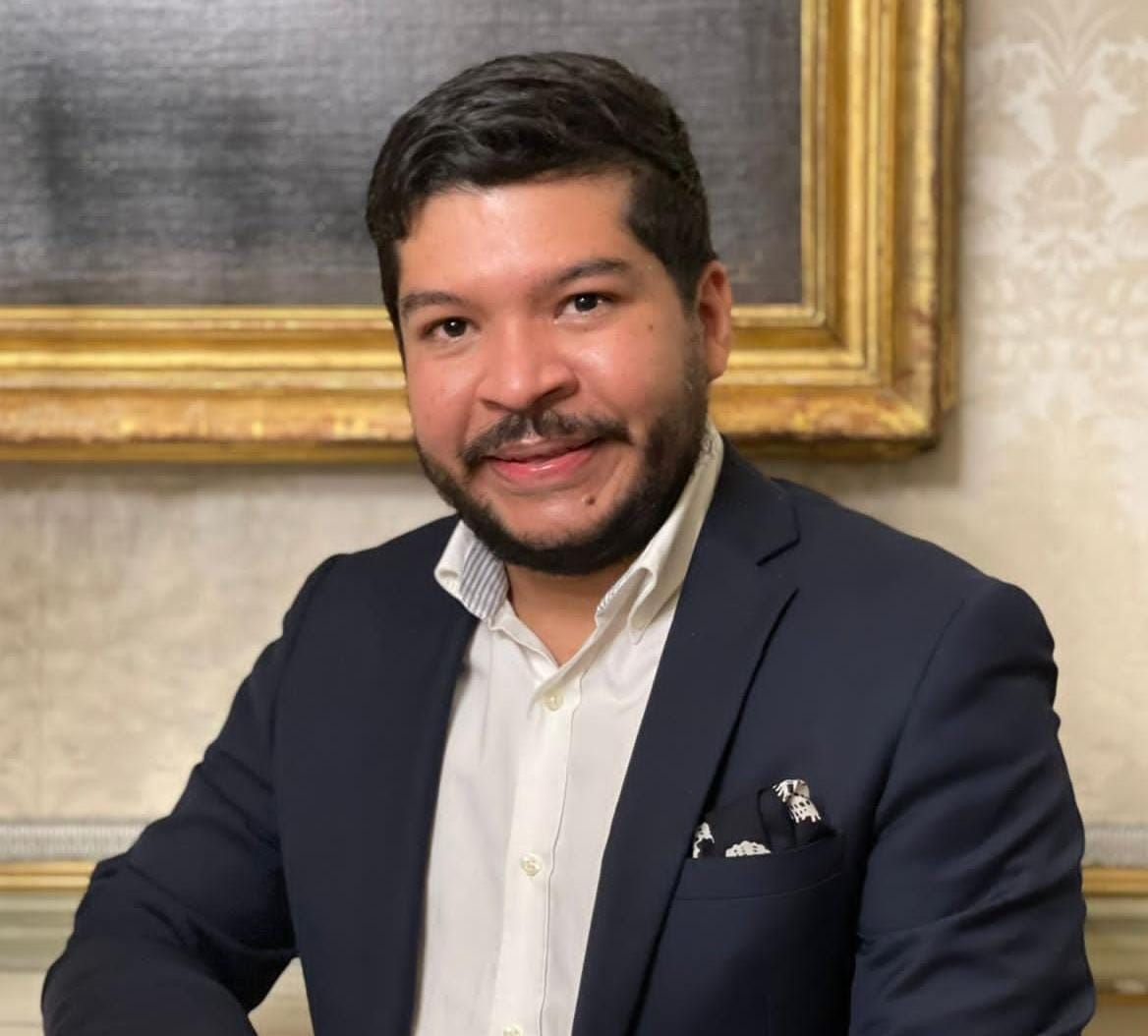
Javier Alvarado / 哈维尔·阿尔瓦拉多
La poesía de Javier Alvarado (Panamá, Santiago de Veraguas, 1982) es una de las voces más potentes, prolíficas y galardonadas de la literatura caribeña contemporánea. Su obra se caracteriza por una madurez temprana y una profunda vocación lírica que asume la poesía no solo como oficio, sino como acto de fe.
Su obra, barroca y polífónica, dialoga con la literatura, con la mitología, con otros autores y con el arte en general, manteniendo un diálogo interdisciplinario que excede a la poesía misma. Es allí donde la memoria y el dolor se construye desde la infancia y toma conciencia del dolor humano y de las pérdidas, a través del tiempo, Es por eso que la poesía de Alvarado es, en esencia, un viaje místico y profundamente humano a través del lenguaje
Especial para Tres Orillas, he aquí cinco poemas en chino, inglés y español.
Enrique Solinas
《博卡拉卡哈》
房屋可能已经消逝,
连同蜂巢的残骸湮灭于寒冬。
再无人从驳船的孤寂中
挥动渔网。他们逐一离去,
当童年被狰狞的楼群围困之时。
最遥远的,莫过于时光及其阴影,
莫过于棚屋最终的判决——
它们如上帝遗落的最后记忆般消散。
或许我们本非必死,
而我们的足迹业已腐朽。
博卡拉卡哈携着电光
与死亡去向何方?
篝火与渐逝的捕鱼又飘向何处?
或如一场可怖的喧嚣?
欢笑与哭泣终将沉寂,
椰香米饭与鲜鱼也会蒙上
饥饿与温顺的晦暗。
我只望见混凝土的进犯,
一盏灯在荒村熄灭。
我的童年将被高楼劫掠,
卡门圣母将永存于大地。
我们仅存于影像与明信片。
某位史家会唤我们:失落的部族。
冬雨将在体内落下,
再无人从驳船的孤寂中
挥动渔网。
BOCA LA CAJA
The houses will have already disappeared
And the remains of the beehive in the winter.
No one will whip the nets from the sparseness
Of the barges anymore. They all left
When childhood became fenced in
By the frightening buildings. Now nothing is more distant
Than time and its shadow, than the final verdict
Of the huts that disappear like the last
Keepsake that God left in the memory, perhaps we weren’t
So mortal and our traces disappeared.
Where does Boca la Caja go with its flashes of light
And its deaths?
Where do its bonfires and its fishing fade away
Like a frightening pandemonium?
The laughs and cries will no longer be heard
The rice with coconut and the fish will cloud together
With a kernel of hunger and meekness.
I only look at the expansion of the concrete and a light
Turns off in the one-horse town.
My childhood will be snatched away by the tall buildings.
The Virgin of Carmen will stay on earth.
We will only remain in videos and postcards.
Some chronicler will call us: a lost town,
Winter will rain inside of us
And no one will whip our nets anymore
From the sparseness of the barges.
(Traducción al inglés por: Joanne Britland y Lina Rincón)
BOCA LA CAJA
Ya habrán desaparecido las casas
Y los restos del colmenar en el invierno.
Ya nadie azotará las redes desde la parquedad
De las barcazas. Todos se fueron yendo
Cuando quedó cercada la infancia
Por los temibles edificios. Ya nada es más distante
Que el tiempo y su sombra, que el veredicto final
De las casuchas que desaparecen como el último
Recuerdo que dejó Dios en la memoria, quizás no fuimos
Tan mortales y perecieron nuestras huellas.
¿A dónde va Boca la Caja con sus centellas
Y sus muertes?
¿A dónde sus fogatas y la pesca que se va desvaneciendo
Como una temible batahola?
Ya no se escucharán más las risas y los llantos,
El arroz con coco y los pescados se nublarán
Con un bocado de hambre y mansedumbre.
Sólo miro el avance del concreto y una luz
Se apaga en el poblacho.
Mi infancia quedará arrebatada por los altos edificios.
La Virgen del Carmen se quedará en la tierra.
Sólo quedaremos en videos y postales.
Algún cronista nos llamará: un pueblo perdido,
El invierno lloverá dentro de nosotros
Y ya nadie azotará las redes
Desde la parquedad de las barcazas.
*
《马塔钦的回忆》
马塔钦在水下回响
带着扼喉的嗓音和方言口音
音乐家的面庞,沾满水银的指节;
那块土地我永难忘怀。我不会轻视它,
我抚摸它,
我嗅探它,如同洪水后
初生的神迹
新芽渐次舒展。
我攥紧又张开双拳,
试图在湖面游弋
痛苦的收获;
异教文字书写旅行日志,
皮箱塞满自杀与死亡,
塞满曙光与失落的乡野。
马塔钦在号子声中归来
如同一个汇聚的星座,
如同一颗被摹印的星辰,
如同旷野中一声被施了魔法的呐喊。
我仍渴望登上列车,
沿着道路与铁轨前行,
穿过播撒劳作的乡间
那里有乌梅与荷花,
废弃的书页汇成的池塘。
我匆忙赶往拉利内亚教堂。
那里钟声不断响起
尽管海水咸涩,我仍旧匆忙
旋紧巨大钟表的发条,它仍在走动
无人知晓原因、时间,亦不知其所以然;
在钟摆中,我看到了世界的闪耀
它有巨嘴鸟的尾羽,却缺少荒原。
马塔钦有座车站,登车吧
终有一天,我们会抵达永恒
在火车的脊背上。华人在此处安卧沉睡
伴随着它们的色彩和歌声。火车启动了
带着自杀的色彩。如今,一切都是遗忘的滋味
那辆机车
还有那锈铁
登车吧。
总有一天,我们会抵达永恒
在火车的脊背上。
MEMORY OF MATACHÍN
Matachín reverberates beneath the waters
With its hung voice and its dialect
With its musician face and its fingers smothered in mercury;
It is a strip of land that I can’t forget. I don’t ignore it
And I caress it,
I smell it like the first miracle
That sprouted after the downpour
With its gradual leaves.
I clench my fists and I open them
trying to swim
Over this lake
The harvest of the pain
The pagan letters that they composed in their travel
journal;
Their suitcases filled with suicides, and of deaths.
Of dawns and of lost towns.
Matachín returns to my sailor songs
Like a constellation gathered
Like a traced star,
Like a bewitched scream into the void.
I still harbor cravings of getting on the train,
Of following the paths and the train tracks,
The fields where the labor is carried out
Where Uh Mei is with his lotus,
With his pond of dead pages.
I rush to arrive to the church of La Línea.
Where the bell keeps ringing
Despite the brackish weight of the waters, I hurry
To wind up a great clock that keeps going
Nobody knows the reason, the time, nor why;
In its pendulums I see a world blink
With its toucan’s tail, with its absent marshes.
In Matachín there is a station. Get on the train.
Someday we will arrive to eternity
On the spine of the train. Here lie the sleeping Chinese
people.
With their colors and songs. The train started
With the colors of suicide. Now everything is the taste
Of the forgotten with its locomotive
And its rusted iron
Get on.
Someday we will arrive to eternity
On the spine of the train.
(Traducción al inglés por: Joanne Britland y Lina Rincón)
RECUERDO DE MATACHÍN
Matachín reverbera bajo las aguas
Con su voz ahorcada y su dialecto
Con su rostro de músico y sus dedos embadurnados por
azogue;
Es una franja de tierra que no puedo olvidar. No la ignoro
Y la acaricio,
La huelo como el primer milagro
Que brotó tras el diluvio
Con sus hojas graduales.
Cierro mis puños y los abro tratando de bracear
Sobre este lago
La vendimia del dolor;
Las letras paganas que compusieron su bitácora de viaje;
Sus maletas llenas de suicidios, y de muertes.
De auroras y de pueblos perdidos
Matachín regresa a mis salomas
Como una constelación que se recoge,
Como una estrella calcada,
Como un grito hechizado a la intemperie.
Aún albergo las ansias de montarme en tren,
De seguir los caminos y los rieles,
Los campos donde se disemina la faena
Donde está Uh Mei con su loto,
Con su estanque de páginas muertas.
Me apresuro a llegar hasta la iglesia de La Línea
Donde la campana sigue tañendo
A pesar del peso salobre de las aguas, me apresuro
A dar cuerda a un gran reloj que sigue andando
Nadie sabe la razón, la hora ni el por qué;
En sus péndulos veo parpadear un mundo
Con su cola de tucán, con sus páramos ausentes.
En Matachín hay una estación. Móntate.
Algún día llegaremos a la eternidad
En lomo de tren. Aquí yacen los chinos dormidos
Con sus colores y canciones. El tren inició
Con los colores del suicidio. Ahora todo es el sabor
Del olvido con su locomotora
Y su hierro oxidado
Móntate.
Algún día llegaremos a la eternidad
En lomo de tren.
*
《公鸡的末日》
谁能嘲笑这阴郁的岩石
献祭的公鸡?
维吉尔·皮涅拉(古巴作家)
留在大地吧,
看那公鸡流血的舞蹈。
我们的妇孺
将习得狩猎的仪式。
他们如动物般舞动,
由于哺育与栽培。
他们会等待我们
如森林期盼
风暴般的
情人。
鹿群绝望的坡地将归我们所有,
它们因敌弹痛苦,
吹出哨音
(那个
强迫的
跳跃
朝向死亡)。
世间生灵
面对猎杀
没有比鹿
更无助的存在
(它的跳跃蕴藏突然爆发的温柔)
但鹿永远无法取代公鸡的地位——
我们喂养的禽鸟,
日日解释,
溃烂出歌声,
在羽翎的合唱中
在那幽暗又明亮的寂静里
超越清晨的青春。
我的生命是另一轮太阳,
在大陆表面,它也是
岛屿的颂歌。
用各种语言
公鸡坦白它的秘密:
它是宣告光明的武士,
将鸡冠刺向幽冥
只为延续繁衍
无需英雄之名
在母鸡受精时
母性
清醒
金色的、剔透的、精元的、
丰产的鸡蛋。
野蛮却徒劳的扑翅
当我们伸出哺育过它的手
执行
屠杀它的罪恶仪式。
THE AGONY OF THE ROOSTER
Who can laugh about the sacrifices
of the roosters on this funeral rock?
VIRGILIO PIÑERA
Stay here on the earth
And observe the bloody dance of the rooster.
Our children and women
Will learn the rituals
Of the hunt.
They will dance like animals
Under the effects
Of the upbringing
And the farming.
They will wait for us
Like the forest
Waits for the storm
Of its lover.
Ours will be the desperate hill of the deer
Their pain for the enemy’s bullet
Pronouncing that whistle
(That
Forcing
Of the
Jump
Towards death).
There’s no one more helpless
Before the hunt
Than the deer itself
(Its jump contains the total tenderness of the paroxysm)
But the deer will not win its place from the rooster
Raised by us,
That demystifies each day
Festering songs
In the chorus of its feather
In that dark and illuminated silence
That transcends the youth of the mornings.
My life is another sun
On the continental surface and it is also
In the laudatory of the islands.
In diverse languages
The rooster reveals its secret:
It is a warrior announcing the light
Wielding its crest against the shadows
To carry its continuity
Without being a hero
In the fertilization
Of the hen
Mother gender,
Lucid gender
Of the egg
Golden, clear, seed
Fertile.
Savage its useless flap
When our hand that raised it
Executes
The criminal ritual of its slaughtering.
(Traducción al inglés por: Joanne Britland y Lina Rincón)
LA AGONÍA DEL GALLO
¿Quién puede reír sobre esta roca fúnebre
de los sacrificios de gallos?
VIRGILIO PIÑERA
Quédate aquí en la tierra
Y observa la danza sanguinolenta del gallo.
Nuestros niños y mujeres
Aprenderán los rituales
De montería.
Bailarán como animales
Bajo los efectos
De la crianza
Y el cultivo.
Nos esperarán
Como el bosque
A la tormenta
De su amante.
Nuestro será el alcor desesperado de los ciervos
Su congoja por la bala enemiga
Pronunciando ese silbato
(Ese
Forzar
Del
Salto
Hacia la muerte).
No hay ser más desvalido
Ante la caza
Que el propio ciervo
(Su salto contiene la ternura total del paroxismo)
Pero el ciervo no le ganará su lugar al gallo
Criado por nosotros,
Que se demistifica cada día
Supurando cantos
En el coro de sus plumas
En ese silencio oscuro e iluminado
Que trasciende la mocedad de las mañanas.
Mi vida es otro sol
En la superficie continental y también lo es
En el laudatorio de las islas.
En los diversos idiomas
El gallo revela su secreto:
Es un guerrero para anunciar la luz
Esgrimiendo su cresta a la penumbra
Para llevar su continuidad
Sin ser héroe
En la fecundación
De la gallina,
Género madre,
Género lucidez
Del huevo
Áureo, claro, seminal,
Fecundo.
Bárbaro su inútil aletear
Cuando nuestra mano que lo crió
Ejecuta
El rito criminal de su degüello.
*
《长城》
筑起长城,
留一扇门虚掩。
或许万千蛮族之中,
会有异域女子,转世红颜踏入
竹影摇曳
原是一轮明月,
一只蜜橘,
一只熊猫,
一串符号、一种抽象、一个有关玉石的问题,
为了栖居于多彩瓷器的
幽暗神祗;
蜗牛壳上的“阴”与“阳”
在山峦般的驼峰上爬行,
随季风吹动,
拼写白银的轨迹,
带有唾液的蜂巢,
却不限定围墙与边境。
既已死去,
我难启门扉,
亦无力守防。
我曾想奔赴长城,迷失于每块岩石
每道城垣,抵御
入侵的部落。
我曾欲效忠帝王,书写帝国传奇,
却命丧敌军长矛之下,岩石
未护我残躯,
任尘泥践踏,
如祭坛米粟,如激流中颠簸的河灯;
在那里,火光映照
它那不可思议的痛苦,
反反复复
那异域女子将我唤醒,
使我化作大地上的城墙,
球体中的迁徙危机,
一只蚕正在叶脉星图上
酝酿入侵。
而我——戍守的战士
与异邦入侵的女子相拥,
静立
未被察觉
在游人的闪光灯前。
THE GREAT WALL OF CHINA
Build a wall
And leave a door ajar.
Perhaps among the thousands of barbarians
A foreign woman, a reincarnated woman, might want to
enter
Between the bamboo
That turns out to be the moon,
A tangerine,
A panda bear,
A symbol, an abstraction, a question of jade
For the dark gods
That dwell in the sequence of color in the porcelain;
The ying and the yang on the shell of the snail
Dragging itself over the mountainous humps
And the monsoons,
Spelling out a trace of silver
A beehive with its saliva
Without drawing walls and borders.
Already dead,
I can’t open doors ajar
Or offer defenses.
I thought of arriving to the great wall;
to go astray between each rock
And between each wall, protecting myself
From the invading tribes.
I thought of serving the Emperor,
in writing the sagas of the empire,
But I died pierced by an enemy’s spear, there was no stone
To protect my body,
There, being stomped on in the dust,
Like an offering of rice or a floating lamp in the
sharpness of the river;
There, where the fire reveals
Its miraculous agony,
Where time and again
That foreigner wakes me
Making me a wall in the earth,
Migratory crisis in the orb,
A silkworm putting together an invasion
In the astronomy of the leaves. I, an occupying warrior
Hugging the foreign invader
Posing
Without being perceived
Before the flash of the tourists.
(Traducción al inglés por: Joanne Britland y Lina Rincón)
LA MURALLA CHINA
Construye una muralla
Y deja una puerta entreabierta.
Quizás entre los miles de bárbaros
Quiera entrar una extranjera, una mujer reencarnada
Entre los bambúes
Que resulte ser la luna,
Una mandarina,
Una osa panda,
Una grafía, una abstracción, una pregunta de jade
Para los dioses oscuros
Que habitan las sucesiones del color en la porcelana;
El ying y el yang sobre la concha del caracol
Arrastrándose sobre las gibas montañosas
Y los monzones,
Deletreando un rastro de plata,
Un colmenar con su saliva
Sin delimitar muros y fronteras.
Ya muerto,
No puedo entreabrir puertas
Ni ofrecer defensas.
Pensé llegar a la gran muralla; extraviarme entre cada roca
Y entre cada muro, protegiéndome
De las tribus invasoras.
Pensé en servir al Emperador, en escribir las sagas del imperio,
Pero morí atravesado por una lanza enemiga, no hubo
Piedra
Para proteger mi cuerpo,
Allí recibiendo pisadas en el polvo,
Como una ofrenda de arroz o una lámpara flotante en la
agudeza del río;
Allí donde el fuego revele
Su milagrosa agonía,
Donde una y otra vez
Me despierte esa foránea
Haciéndome muralla en la tierra,
Crisis migratoria en el orbe,
Un gusano de seda armando una invasión
En la astronomía de las hojas. Yo guerrero ocupante
Abrazado con la forastera invasora
Posando
Sin ser percibidos
Ante el flash de los excursionistas.
*
《做风筝的人》
但我知晓,明朝你将化风归去
何塞·渡边 (秘鲁诗人)
致玛雅的东尼奥
我的童年被风筝刺穿
红的,黄的,白的,蓝的,绿的,
如黄昏时天上的飞鸟。
东尼奥惯用竹篾制作风筝,
(那些细瘦的芦秆
似女神苍老的指节)
再覆上绘满寓言故事的棉纸。
它们本可化作船帆,
蜂鸟的羽翼,
或礼物的包装;
却被裁作菱形
一朵指向四方的几何花。
当浆糊渐渐变干,
他想象那盘旋飘舞
占领彩虹的疆域。
此刻街道仿佛荒芜,
东尼奥已搬离玛雅的房屋,
一枚陀螺不知疲倦地旋转
在乡愁的国度。
而我在童谣,捉迷藏和铁罐游戏之间蓦然忆起那些风筝。
“这是你的童年,”风筝向我低语,
“你握着诗的提线,
终将化作风儿。
我们知道
明天
你将化风而去,
只为托起
新的翱翔。”
THE KITE MAKER
but I know that tomorrow you will belong to the air
JOSÉ WATANABE
For Toño—Maya’s Toño
My childhood was traversed by kites—
Red, yellow, white, blue, green—
Like birds in the evening sky. Toño used to
Craft them from *virulí* (slender reeds
Like the aged fingers of a goddess)
And tissue paper teeming with allegories and fables.
They might have been ship’s sails,
Hummingbird wings,
Or gift wrappings;
But the paper was cut and arranged upon the diamond frame—
A geometric flower of the cardinal points.
While the flour paste dried,
I imagined a fluttering flight
Conquering the vastness of a rainbow.
Now that the street seems deserted,
And Toño no longer lives in Maya’s house,
And a spinning top still whirls energetically
In the land of nostalgia,
I remember them amidst the circle games, hide-and-seek, and the game of the tin can.
"That was your childhood," the kites told me. "You hold a thread of poetry;
You will become that thread,
And we know
That tomorrow
You will belong to the air.
To make us fly."
EL HACEDOR DE COMETAS
pero sé que mañana serás del aire
JOSÉ WATANABE
A Toño, el de Maya
Mi infancia estuvo traspasada por cometas
Rojas, amarillas, blancas, azules, verdes
Como aves en el cielo de la tarde. Toño solía
Confeccionarlas con virulí (unas delgadas cañas
Como los dedos envejecidos de una diosa)
Y papel de china repleto de alegorías y fabulaciones.
Pudieron ser velas de nave,
Alas de colibrí
O envoltorios de regalo;
Pero era seccionado y dispuesto sobre el rombo;
geométrica flor de los puntos cardinales.
Mientras la goma de harina se secaba
Imaginaba un revoloteo
Conquistando la magnitud de un arcoíris.
Ahora que la calle pareciera estar desierta
Y que Toño ya no vive en la casa de Maya
Y que un trompo sigue girando enérgicamente
En el país de la nostalgia
Las recuerdo entre rondas, el escondido y el juego de la lata.
-Esa fue tu infancia. – me dijeron las cometas. -Tienes un hilo de poesía,
Te convertirás en él
Y sabemos
Que mañana
Serás del aire.
Para hacernos volar.
***
哈维尔·阿尔瓦拉多,1982 年生于巴拿马贝拉瓜斯省圣地亚哥。他毕业于巴拿马大学,获西班牙语语言文学学士学位。他是一位诗人,曾获得多项国内外诗歌奖项,如里卡多·米罗诗歌奖(巴拿马文学领域的最高奖项,2015)、尼加拉瓜的鲁文·达里奥奖、尼古拉斯·纪廉奖、索尔·胡安娜·伊内斯·德·拉·克鲁斯奖、伊比利亚美洲圣经诗歌大卫王奖、富恩特·巴克罗丝-费德里科·加西亚·洛尔卡故居奖、何塞·桑托斯·乔卡诺奖等。他是洪都拉斯语言学院和巴拿马语言学院的成员,著有二十部诗集和三部诗选。
Javier Alvarado (Santiago, Veraguas Province, Panama, 1982). He holds a degree in Spanish Language and Literature from the University of Panama. A poet, he has won numerous national and international poetry prizes, including the Ricardo Miró, Rubén Darío (Nicaragua), Nicolás Guillén, Sor Juana Inés de la Cruz, Rey David (Ibero-American Biblical Poetry), Fuente Vaqueros (Federico García Lorca's birthplace), and José Santos Chocano. He is a member of the Honduran and Panamanian Academies of Language. He has published approximately twenty books of poetry and three anthologies.
Javier Alvarado (Santiago, provincia de Veraguas, Panamá, 1982). Licenciado en Lengua y Literatura Españolas por la Universidad de Panamá. Poeta ganador de premios nacionales e internacionales de poesía como el Ricardo Miró, Rubén Darío de Nicaragua, Nicolás Guillén, Sor Juana Inés de la Cruz, Rey David de Poesía Bíblica Iberoamericana, Fuente Vaqueros-Casa natal de Federico García Lorca, José Santos Chocano. Es miembro de las Academias Hondureña y Panameña de la Lengua. Cuenta con una veintena de poemarios y tres antologías.