
Form in Anger - Zou Shengnian / 作者/邹胜念
The Buddha has a form in anger. / They call it the Vajra. / The greater the anger, the greater the power, / the greater his strength for conquering demons… /

Zou Shengnian / 作者/邹胜念
(译者/威尔·斯宾塞)
(Translator/ Will Spence)
Form in Anger
The Buddha has a form in anger.
They call it the Vajra.
The greater the anger, the greater the power,
the greater his strength for conquering demons…
‘And what did you wish for?’
‘I wished that you wouldn’t be angry.’
Two lovers are talking
and all the Buddhas in the Hall are listening.
The floor gives way where the lovers stand,
and all the Buddhas in the Hall stand
on the precipice.
怒身
佛有怒身,曰金刚。
愈怒,法力愈强,愈能降魔伏妖……
“你许了什么愿?”
“愿你不怒。”
一对恋人在说话,满大殿的佛都在听着。
恋人站在哪里,哪里就是悬崖。
满大殿的佛站在悬崖上。
*
Gathered Sounds
In the wetlands I hear
languages I do not understand…
like the guttural call of the merganser.
It is mating season, when
all wings surrender to form.
Feathers beautiful and bare
beat the twilight air,
arrows at dusk—
and uneven beaks bite
the river’s buried currents, where
fish thrash above
a riverbed dark and quiet.
I, too, have a hidden beak.
When I use it, the sounds speak for me:
the sharp shrieks
and the dull cries—
but when the light and colour are drained
from my tongue and stripped
from my vocal cords,
these hundred birds become my hundred bodies.
We watch the birds in the wind,
air woven with gathered sounds
like branches aburst with wild blossoms,
as the dark clouds (heavy with meaning)
lighten, like a Vajra
after the anger,
and come to rest atop the distant mountains.
In the wetlands,
I don’t need to understand anything.
Mud is its own dark language,
where old stories and old names
go to rot, sink,
and what rises in their place
is another kind of sound,
lighter than the wind and softer than the reeds—
like the song of your loving me;
resurrecting my briny, heavy,
mudflat heart.
音束
在湿地,我听到了内容不详的语言,
比如秋沙鸭……粗哑的嗓音。
求偶时节已到,所有翅膀陷入了形式之美。
——它们扇动,翎羽如箭,于黄昏里赤裸而闪耀。
长短不一的喙,咬住河中暗流不放,
鱼在挣扎,河床混沌而沉默。
我也有隐藏的喙,当我启用,
一些“唧唧”为我所说,
一些“扑扑”也为我所说。
当颜色与光线从舌头和声带里被抽走,
一百只鸟,便是我的一百具身体。
我们在风中观鸟,
空中交织着不实的音束,恍若杂花生树。
而乌云(庞大的内容),渐渐,如息怒的金刚,
挨着远方山脉,侧身一睡。
在湿地,我不再需要听清楚什么。
淤泥:黑色的语言。
往事与人名在其中腐化、下坠……而飘升的,
是比风略高的,比苇草更软的另一些声音,
——宛如你爱我时的吟唱,
复活了我咸涩、沉闷的滩涂之心。
*
Meeting the Qinling Mountains
Standing at the centre of the bridge
I have no questions, but the stream
keeps sending me answers:
incessant, gurgling, urgent sounds.
The mountains make way for them
but pebbles are useless punctuation,
and the flowing cursive of the narrow water
sprawls like a god’s careless signature across our fate.
The hawthorn tree, heavy with red fruit
and hemmed with blooming dahlias,
leans on me like an overworked, exhausted wife.
She, too, has no questions.
This moment in time is but one ridge
in the mountain range.
A simple question could hold it in place
but the question
(do you love me?)
is no longer allowed.
An erhu melody drifts over from the village
but listen: the music makes no sense.
I pace the bridge, trying to
punctuate the stream of answers
in what feels like torture.
I need to ask the question, but a second too soon
would be violence, loving you past its limit—
and a second too late would be cowardice,
allowing this pack-like love to tumble
down the mountainside,
turning as it goes,
dark at first,
then clear.
会见秦岭
站在桥中央,心中无任何问题,
但溪水,一直送来汩汩作响的答案。
——秦岭让行,卵石是无用的标点。
狭窄的溪流狂奔,像神在我们的命簿上
潦草、蜿蜒的签名。
一棵驼背的山楂树,满头红果,
脚底开满了大丽花。她像过度劳累的妻子
倚在我身旁,心中……也无问题。
时代是连绵山体中的一段,
发问可以稳固它,但内容(你爱我吗?)已不流行。
从终南山寨里传来的二胡曲,仔细听,
是倒诵;是被摘去了句子的清醒。
在桥上来回踱步,为那天降的答案断句,
——宛如受刑。
快一秒,是粗暴与截断,是将你爱过了头。
而迟一秒,是不舍得对你发问,
是放任行囊般的爱,在滚落中
由浑浊……转至透明。
*
The Herd
The grassland is yellowing and
the wildflowers have withered out of season.
Dust, and the sound of wind, herald
a herd of antelope
sweeping by—
a thunderous shadow.
I see the first antelope:
muscles glimmering like mirages,
body drawn to its limit
leaping—a three-second rainbow
that even the setting sun holds back to see,
and hooves striking the earth.
This weakened god for whom
the new grass parts:
glory be the trampling, and
the chewing, and
every punishment that follows.
On the valley floor I see another antelope:
head caught in a forked branch,
horns pointing toward
two different heavens,
and hooves broken still.
Small bones in the waterweed
played like flutes by the stream,
as blue butterflies tremor with delight.
The whole scene is shattering,
like news of disaster
from a neighbouring country.
Drum-skin belly split and inside
a fawn, whose death came
before anything.
Escape is an act of grace in which
each gathering of strength,
each loosening,
lowers the cliff until it strikes the plane
where life and death meet on a level,
urging us to understand—
the world is made this way:
one snow leopard,
many, many antelope.
羚羊群
草原昏黄,群花错败。
尘与风声紧随,
多好的羚羊群:一片雷雨般的阴影快速掠动。
第一只羚羊,它的肌肉释放着幻觉,
被拉伸至极限的身躯,是存在三秒的虹。
夕阳为此着迷。蹄子落地,
它是虚弱的神明。新草左右滚动,荣耀是
践踏、咀嚼……一切刑的降临。
我在谷底,看见的是另一只羚羊。
它的头悬在枝杈,两只尖角
指向天堂的两个方向。
断蹄沉睡。荇草里,几根短笛般的骨
被溪水奏响。蓝蝴蝶兴奋。
满目粉碎,像邻国刚刚发生的大事。
鼓皮般的腹裂开:一只幼羚羊,
它的死先于它的出世。
逃亡,像优雅的炫技。
无数次的蓄力与发射,将悬崖的高度
一点一点降下去……
直至悬崖与谷底相遇,一片生死相连。
催促我们领悟——
世界的构成:雪豹一只,羚羊无数。
*
Butterfly Valley
We sit by the river,
thinking about what happened.
Stones, lifted one by one
and thrown into the dusk,
his old age touching my youth—
another life flickers there,
belonging to neither of us.
Ice-blue evening.
Time the same colour as smoke
rising from the valley.
He lies beside me, light as a song:
music I will enter too,
in twenty years or more.
Butterfly Valley—still,
just a girl praying to remain
trapped inside the body of her youth.
We raise our hands to the wind—
foolish surrender,
though we do not know it.
Lips wither and fade.
A horse grazing—lifting its head,
its silhouette becomes the borders of our world.
We sit by the river until our shadows merge
and I am alone.
No hatred. Alone,
I can still think about what happened.
蝴蝶谷
我们坐在河边,
将最近发生的事捋了捋。
小石头,一颗一颗被拾起
然后飞出……
模糊的夕光里,
他的暮年连接着我的青春
——构成另一个他者冲动的一生。
冰蓝。
时间,与远处的炊烟冰蓝,
他像曲子一样轻,躺在我身旁。
二十年后,我也会进入曲子,
蝴蝶谷幽静……少女,
她祈愿永世困在她的青春里。
我们的手,高高举起;
我们的投降,于风里显得愚蠢却不自知。
嘴唇,一前一后
完成枯萎。
一匹马,低头,咀嚼,抬头……
它伟岸的轮廓,勾勒着世界的版图。
我们坐在河边,
一直坐到影子交叠,只剩我一人。
没有恨意,
我一个人,也可以将那些事捋一捋。
***
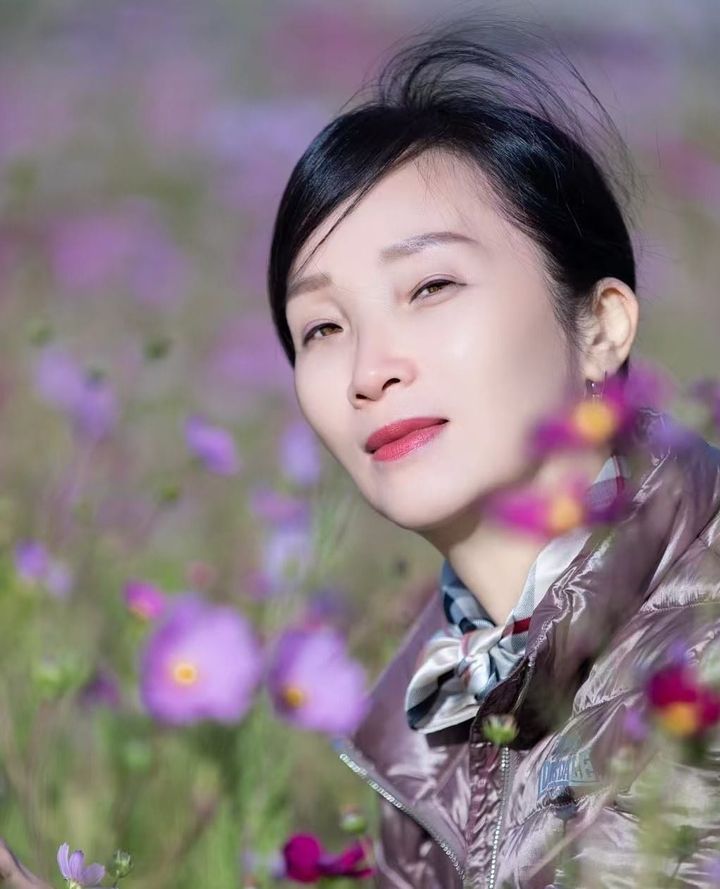
Zou Shengnian is a renowned poet from Nanjing, Jiangsu Province. She is a graduate of the School of Chinese Language and Literature at Beijing Normal University. Her work has appeared in leading literary journals including People's Literature (Renmin Wenxue), Poetry Periodical (Shi Kan), Chinese Writers (Zhongguo Zuojia), and October (Shiyue). She participated in both the 40th Youth Poetry Conference organised by Poetry Periodical and the 2025 International Youth Poetry Conference. Zou has received the Mao Dun Literature Prize New Talent Award, the Poetry Periodical Annual Young Poet Award, the Poetry Periodical Long Poem Award, the Yangtze River Poetry Award, the Li Bai Poetry Award, and the Zijin Mountain Literature Prize, among other honours. Her work has been included in recommend reading lists published by the China Contemporary Literature Research Association and the Yangtze River Literary Review, among other organizations. She is the author of several poetry collections, including The Kneeling Figurine (Futing Yong) and Small Comforts (Xiao Anning).
邹胜念,著名诗人,江苏南京人,毕业于北师大文学院。作品见于《人民文学》《诗刊》《中国作家》《十月》等刊物,参加《诗刊》社第40届青春诗会、2025国际青春诗会,获茅盾新人奖、《诗刊》年度青年诗人奖、《诗刊》“新时代长诗奖”、扬子江诗学奖、李白诗歌奖、紫金山文学奖等。作品入选中国当代文学研究会、《扬子江文学评论》等年度文学排行榜,出版诗集《伏听俑》《小安宁》等。
*
Will Spence is Chinese-to-English translator of fiction and non-fiction. His work includes The Unfilial by Yao Emei (Sinoist, 2024); The Book of Secrets by Xinran (Bloomsbury, 2024); That Which Can’t Be Washed Away by Xu Huaizhong (ACA, 2023); China Adorned by Deng Qiyao (Thames & Hudson, 2022); and The Promise by Xinran (Bloomsbury, 2019), for which he was shortlisted for the Society of Authors First Translation award in 2020.
威尔·斯宾塞是一位从事中英翻译的译者。他的译作包括姚鄂梅的《家庭生活》(Sinoist出版社,2024年)等。因翻译《承诺》,他于2020年入围了英国作家协会首部翻译奖短名单。