Espero a la elegancia arruinada - Fiona Sze-Lorrain
Las flores del ciruelo peinan la montaña meridional. Quizás invierno, / quizá primavera. ¿Qué le puede dar esa diferencia / a quien solo pasa por allí? /
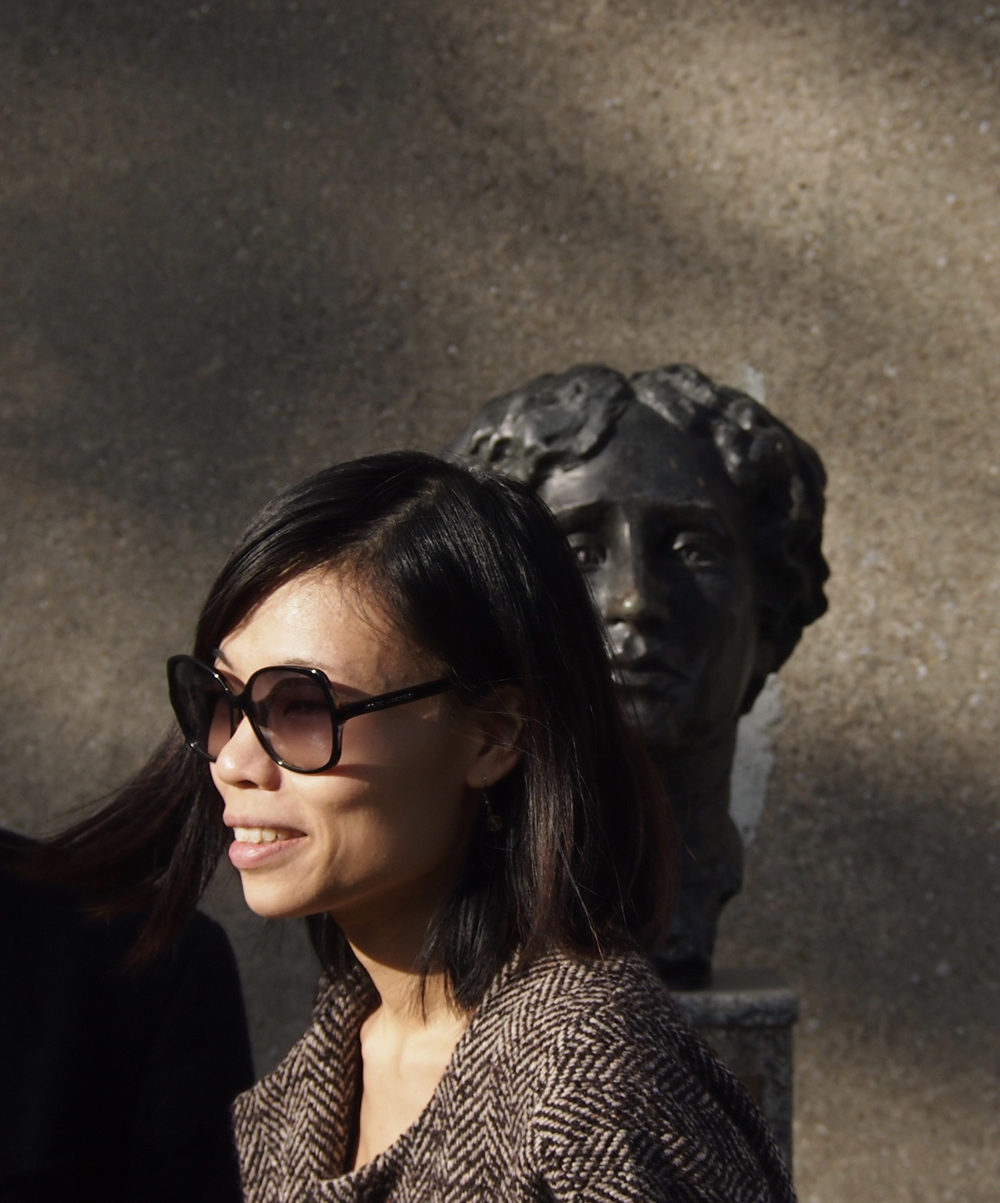
Fiona Sze-Lorrain
Espero a la elegancia arruinada
(Traducción al español de Daniela Betancur)
Fragile
The sea under our bed
holds immensity for sleepless
hours that belong to last night.
I am moon-fishing while
waiting for you to open
your eyes and cry for light.
Crawling in the sheets, I fear
burying you in my dreams where
your tears drop as water
trickling from the sky, and I am
an instant of devastating white.
Frágil
El mar bajo la cama
cobija inmensidad para insomnes
horas de la noche anterior.
Voy buscando la luna mientras
espero a que abras
los ojos y reclames luz.
Me arrastro por las sábanas; temo
enterrarte en mis sueños donde
tus lágrimas caen como agua
goteando del cielo, y yo soy
un instante de blanco arrasador.
*
I Wait for the Ruined Elegance
Plum blossoms comb the southern mountain. Maybe
winter,
maybe spring. What can the difference
give a bystander? If
only swallows mend the wind, another way to choose—
tree to tree, grievance
by grievance. I watch
the sun turn from a sphere to a palace. Burning,
but not disastrous. Soon, or
now, my gaze
will break. I want to honor
the invisible. I’ll use the fog to see white peaches.
Espero a la elegancia arruinada
Las flores del ciruelo peinan la montaña meridional. Quizás
invierno,
quizá primavera. ¿Qué le puede dar esa diferencia
a quien solo pasa por allí? Si
solo las golondrinas reparan el viento, otra manera de elegir;
Árbol por árbol, agravio
por agravio. Me quedo mirando
el sol, que se convierte de esfera en palacio. Ardiente,
pero no nefasto. Pronto, o
ahora, mi mirada fija
se romperá. Quiero honrar
lo invisible. Usaré la niebla para ver duraznos blancos.
*
When the Title Took Its Life
My saddest lines
wish to know how they left
this pen
and why I imprison them
in corridors
along margins. Abbreviated
but exhausted from labor.
Tonight, they wreak revenge
on my mortal hand—
Erase me.
Write, “I don’t know
why I am sad.
Night is long. Like an empty house
with annexes of silence.”
Or bar with a slash
words like “bleeding,”
“persecution,” “exile,” and “loneliness.”
Like a blind judge, these lines
doubt my sincerity.
Here is not life.
The sickle moon looks down.
What does it know? The storm
I heard when I meant
to be writing.
Cuando el título se quitó la vida
Mis versos más tristes
quieren saber cómo salieron de
esta lapicera
y por qué los aprisiono
en los pasillos
de los márgenes. Abreviados
pero exhaustos de trabajar.
Esta noche, desatan su venganza
sobre mi mano mortal.
Borrame.
¡Anota!: “No sé
por qué estoy triste.
La noche es larga. Como una casa vacía
con anexos de silencio”.
O corta con la barra
palabras como “sangrado”,
“persecución”, “exilio” y “soledad”.
Como un juez ciego, los versos
dudan de mi franqueza.
Aquí no está la vida.
La hoz de la luna nos mira desde arriba.
¿Qué sabe? La tormenta
que oí cuando pensaba ponerme
a escribir.
*
Few Days before Christmas
Kim Jong-il was dead when I woke up and surfed
the net before my husband repeated
his curse that pigeons defecating on the balcony
should be cooked to no one’s sorrow, even
if mourning was authentic and
wet butterflies stopped their wings to muse over strange flowers
I saw as hysteria.
A días de la Navidad
Kim Jong-il estaba muerto cuando desperté y navegué
por internet y entonces mi esposo repitió
su maldición para las palomas que defecan en el balcón:
deberían cocinarse sin que nadie las llore, ni siquiera
si el duelo fuese auténtico, ni
si mariposas húmedas detuviesen las alas sobre flores extrañas
que vi como histeria.
*
Jeux d’eau
Until the quavers become feathers of a fountain, Ravel remains a beast that
charges straight through the room. G sharps and B flats are four times as restless.
Phrases unshapely, notes flutter like fish out of an aquarium. Arpeggios, says
Martha, must be water, touched at room temperatures and without edges.
Staccatos are black stones you go inside. You can’t jump too high, you must weigh
less than the stones. I am nine and here is where wisdom should begin. Très doux.
Très expressif. Très rapide. I am working on three ways to enter a fountain. I found five. Imagine butterflies in a lightful dome. Imagine clouds a belt around
your waist. These are the best two to sustain the flight. To spend the pedal. To
betray the title. If only I knew fountains never look the same.
Jeux d’eau
Hasta que las corcheas sean plumas de una fuente, Ravel es una bestia que
arremete por el cuarto. Cualquier sol sostenido o si bemol es cuatro veces más
inestable. Frases deformes; las notas se agitan como peces sin pecera. Los
arpegios, dice Martha, tienen que ser agua, tocados a temperatura ambiente y sin
aristas. Los staccatos son piedras negras donde hay que meterse. No se puede
saltar demasiado; hay que pesar menos que las piedras. Tengo nueve años y aquí,
se supone, empieza la sabiduría. Très doux. Très expressif. Très rapide. Busco tres
maneras de entrar en una fuente. Encuentro cinco. Imaginate mariposas en una
bóveda de luz. Imaginate un cinturón de nubes que te envuelve la cintura. Esas dos
son las mejores para mantener el vuelo. Gastar todo el pedal. Traicionar el título.
Si solo supiera que las fuentes nunca son iguales.
***
Fiona Sze-Lorrain is a writer, poet, translator, musician, and editor. One of the few English-language woman writers who works across genres, cultures, and artistic expressions, she writes and translates in English, French, and Chinese. Her work includes a novel in stories, Dear Chrysanthemums (Scribner, 2023), five poetry collections, most recently Rain in Plural (Princeton, 2020) and The Ruined Elegance (Princeton, 2016), twenty translations, and three coedited anthologies of international literature. Longlisted for the 2024 Andrew Carnegie Medal for Excellence in Fiction, she was a finalist for the Los Angeles Times Book Prize, the Best Translated Book Award, and twice for the Derek Walcott Poetry Prize, among other honors. A 2019–20 Abigail R. Cohen Fellow at the Columbia University Institute for Ideas and Imagination, the inaugural writer-in-residence at the Museo de Arte Latinoamericano de Buenos Aires, she serves as an editor at Vif Éditions in Paris. As a zheng harpist, she has performed widely in Europe, Asia, and the U.S. A judge for the 2025 International Dublin Literary Award and the John Calder Translation Prize in 2025 and 2026, she lives in Paris. www.fionasze.com
Fiona Sze-Lorrain es escritora, poeta, traductora, música y editora. Es una de las contadas autoras mujeres de habla inglesa que trasciende géneros, culturas y formas de expresión artística. Escribe y traduce de y hacia el inglés, el francés y el chino. Su obra incluye Dear Chrysanthemums (Scribner, 2023), una novela en forma de relatos; cinco poemarios, de los cuales Rain in Plural (Princeton, 2020) y The Ruined Elegance (Princeton, 2016), son los más recientes; veinte traducciones, y la coedición de tres antologías de literatura internacional. En 2024 fue preseleccionada para el premio Andrew Carnegie Medal for Excellence in Fiction; además, fue finalista del galardón Los Angeles Times Book Prize, del Best Translated Book Award y del Derek Walcott Poetry Prize en dos oportunidades, entre otras distinciones. En 2019-20 fue becaria de la Abigail R. Cohen Fellowship del Institute for Ideas and Imagination de la universidad de Columbia (EE. UU.); además, fue la primera escritora seleccionada para la Residencia de Escritores del Museo de Arte Latinoamericano de Buenos Aires (MALBA). Es editora de Vif Éditions (París). En su calidad de arpista zheng, ha realizado numerosas presentaciones en Europa, Asia y los Estados Unidos. En 2025 fue Jurado del International Dublin Literary Award, y en 2025 y 2026, del John Calder Translation Prize. Vive en París. Página web: www.fionasze.com
*
Daniela Bentancur es traductora literaria en idioma inglés, diplomada por la Universitat Pompeu Fabra y graduada del IES en Lenguas Vivas Juan Ramón Fernández (Buenos Aires), donde dicta Traducción Literaria desde hace diez años. Fue becada por el British Centre for Literary Translation, de la universidad de East Anglia. Cursó talleres de traducción de poesía con Pablo Ingberg y Márgara Averbach. Fue jurado en los premios de traducción Destacados ALIJA (categoría Traducción) y Premio Paula de Roma (UNCO, primera edición). Sus traducciones se publicaron en la revista Granta en español; hoy traduce narrativa contemporánea para la editorial Fiordo. Durante años, tradujo al castellano canciones y poemas para niños y compuso poemas infantiles para editoriales y programas educativos de los Estados Unidos. Entre sus últimas traducciones, se destaca Ensayos nuevos y escogidos (Diotima 2026), de la poeta estadounidense Denise Levertov. Integra la Comisión de Traducción Editorial de la AATI desde hace más de diez años. Actualmente, desde el IESLV JRF, codirige un proyecto colaborativo de traducción poética al inglés junto con María José Zubieta (New York University) y Paula Galindez (IESLV JRF).