
El nacimiento de la luna - Jorge Palma / 豪尔赫·帕尔马
Es negro el cielo / y las camisas / tendidas de un alambre / se arruinan / con este malestar / de pompas fúnebres. /
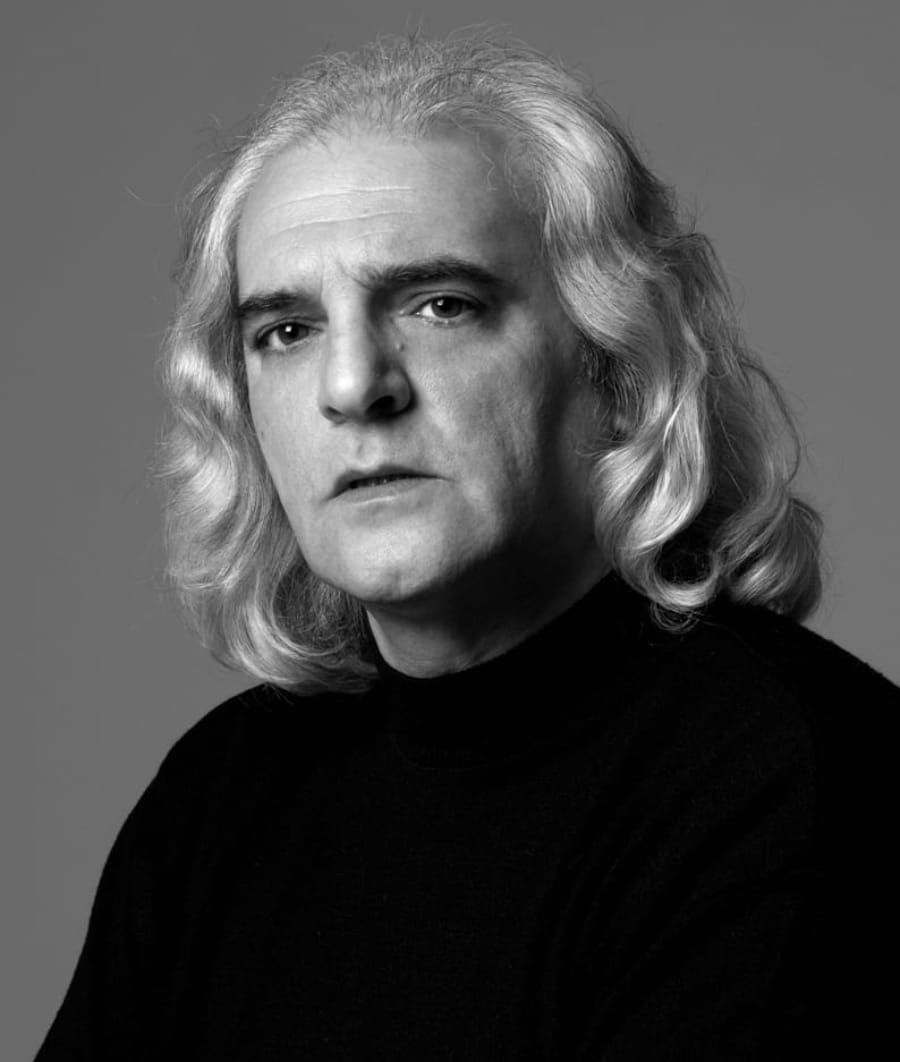
Jorge Palma / 豪尔赫·帕尔马
月亮的诞生
天空黑乎乎的。
挂在电线上的
衬衫
因殡仪馆的烟尘而
给毁了。
在这个难以置信的早晨
(半边天在为篮子哭泣,
而另外半边天那里,
两个太阳像金翅雀一样在歌唱),
我朝前挪了一步,
重新调整了一下自己的姿势。
在我左边口袋里,
海狸喘着粗气。
在我眼皮底下,
一个晴朗的早晨
正背对着柏油
堵住的入海口。
我凝视着四分五裂的大海,
重新把自己拼凑起来,因为我的身体
被分成了不对等的七块。
冒着烟的月亮
紧张地
穿过海洋的走廊。
石棉城市
在死者紧握的手中
像蜡烛一样闪闪发光。
这是我所期待的。
The birth of the moon
The sky is black
and the shirts
hanging on a wire
are ruined in the discomfort
of funeral parlours.
In this unlikely morning
(half the sky
weeps buckets, in the other half
two suns sing like goldfinches)
I take a step
to recompose myself.
In my left pocket
a beaver weighs heavily
breathing, below my eyes
a clear morning
turns its back to the tar
gluing up the estuaries.
I put myself back together
gazing at the divided sea since my body
is in seven unequal parts.
The moon goes by nervously
smoking, down the corridors
of the ocean.
The asbestos cities
shine like wax candles
in the clenched hands of the dead.
And I’m hoping.
El nacimiento de la luna
Es negro el cielo
y las camisas
tendidas de un alambre
se arruinan
con este malestar
de pompas fúnebres.
En esta mañana inverosímil
(la mitad del cielo
llora a mares, en la otra
cantan dos soles, como jilgueros)
subo un escalón
me reincorporo.
Pesa en mi bolsillo izquierdo
un castor
y respira, debajo de mis ojos
una mañana limpia
de espaldas al alquitrán
derramado en los estuarios.
Me recompongo mirando el mar
partido como tengo el cuerpo
en siete partes desiguales.
La luna se pasea nerviosa
fumando por los pasillos
del océano.
Las ciudades de amianto
resplandecen como cirios
en las manos crispadas
de los muertos.
Y yo espero.
*
那是个秋天
献给我的母亲
黎明时分,
我回到了
红房子的白色宁静中。
一个男孩站起来,一口气
喝干了学做一个男人的拜师酒,
怀揣梦想和日益膨胀的幻觉,
兜里
还藏了一条
神话般的鱼
穿过他房间的剪影,
因为死亡已经
为他的命运保留了
那个不可思议的日子。
那段日子,
表皮上没留下任何痕迹,
天空中没有
灵魂所预见的决斗,
昏暗的街道上
没有通奸
没有乱砍乱杀的
刀光剑影
也没有失眠的黎明,
直到看到了
一个人的
哑吧档案——
一棵树,一棵
某个孩子
或其他什么人
遗失在烂泥地里
三年前
就在一个乞丐发烧的眼睛里
被预见到了的树。
当我母亲一边织毛线
一边唱歌的时候,
你对那个
被季节的色彩
烙上火焰印记的年代
又有什么看法呢?
晒台上
没有霜冻
没有护身符
也没有鸟儿
被困在
电话机接线盒里。
天一亮,
露台的光线就变成了
蓝色。
餐厅
是黄色的:
那是我的私人领地。
It was in autumn
For my mother
I return to the white silence
of the red house
and it’s dawn.
A boy stands up and drinks
a man’s apprenticeship
dreams, accumulates images
keeps in a pocket
the silhouette of a fabulous fish
crossing the sky
of his room, for that
incomprehensible day
death already keeps
for his destiny.
These are the days
that leave no traces on the skin
with no duels in the sky
foreseen by the soul
no adulteries
no knives wandering
directionless
some insomniac dawn
down lightless streets
till meeting
the dumb profile
of a man
a tree
some child or other
lost
in a field of mud
foreseen three years before
in the feverish eyes
of a beggar.
And what do you say then
of the time marked
in fire
by the colour
of a season,
when my mother knitted
and sang
and there was no frost
on the balconies
no amulets
no birds trapped
in telephone boxes.
The light of the patio
was blue
as dawn entered.
And the dining room
was yellow:
it was my house.
Era en otoño
Para mí madre
Vuelvo al silencio blanco
de la casa roja
y amanece.
Un niño se asoma y bebe
un aprendiz de hombre
sueña, acumula imágenes
guarda en un bolsillo
la silueta de un pez fabuloso
cruzando el cielo
de su cuarto, para ese día
incomprensible
que la muerte
le tiene destinado.
Son los días
sin marcas en la piel
sin duelos en el cielo
previstos en el alma
ni adulterios
ni cuchillos vagando
sin rumbo
una madrugada insomne
por calles sin luz
hasta encontrar
el enmudecido perfil
de un hombre
un árbol
un niño cualquiera
perdido
en un campo de cieno
vaticinado tres años antes
en los ojos afiebrados
de un mendigo.
Y qué decir entonces
de ese tiempo marcado
a fuego
por el color de una
estación,
cuando mi madre cosía
cantando
y no había escarcha
en los balcones
ni amuletos
ni pájaros clavados
en las cabinas telefónicas.
Era azul la luz
del patio
entrando el alba.
Y amarillo el comedor
en otoño
y era mi casa.
-English translation: Peter Boyle
-中文译者: 奚跃萍 (Xi Yueping)
***
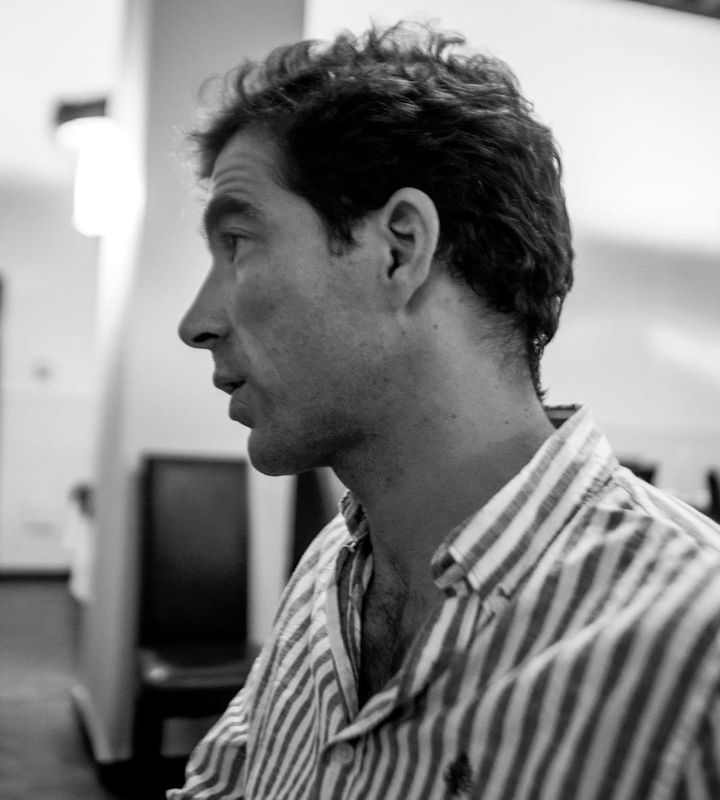
豪尔赫·帕尔马,诗人、小说家、文化记者和媒体人。1961 年4 月24 日生于乌拉圭的蒙得维的亚。多年来,就职于多家报纸和广播电台,协调并创立了文学和创作工作室(小说和诗歌)。
他先后发表了诗集《风与影之间》(1989)、《遗忘者》(1990)、《银河系》(2006)、《天堂日记》(2006)和《乌托邦之地》(2007)。1997 年,诗歌《血的毁灭》被收录于《诗社》(刊有二十九个国家未出版的诗歌,由马德里普列马歌剧院出版的诗选)。诗歌作品多次刊登在委内瑞拉的 《文学报》、墨西哥的 《诗刊》、尼日利亚的《惠特斯塔夫》、智利的《西诺萨戈》 、尼加拉瓜的 《400 大象》、意大利的《卢克雷齐亚纳 》 (2008) 和 《原创诗》等期刊上。
他的部分诗歌被译成英语、法语、意大利语、德语、阿拉伯语、马其顿语、罗马尼亚语和匈牙利语,并发表于慕尼黑的《阿克森特夫报》和巴勒斯坦的《日子报》。
他曾受邀参加过第十四届古巴哈瓦那国际诗歌节、第四十八届斯特鲁加国际诗歌节与诗歌之夜(马其顿)、第六届格拉纳达国际诗歌节(尼加拉瓜)、第十四届非洲诗歌节(南非)和第三十五届魁北克三河城国际诗歌节(加拿大)。
Jorge Palma, poet and storyteller, born in Montevideo, Uruguay, on April 24, 1961. Cultural journalist and populariser. For years, he has worked for various newspapers and radio stations.
He has coordinated and led workshops on literature and creation (narrative writing and poetry).
As regards poetry, he has published “Between the wind and the shadow”, 1989. “Forgetfulnes”, 1990. “The Milky Way, 2006. “Diaries of heaven”, 2006. “Place of Utopias”,2007. The poem “The destruction of blood” was included in the anthology Aldea Poética (selection of unpublishedpoetry from 29 countries, published by Opera Prima, Madrid, 1997).
Some of his poetry has been translated into English, French, Italian, Germany, Arabic, Macedonian, Romanian and Hungarian. Translated poems were published in Shearsman Books of London, Akzente of Munich and Al-Ayyam (Ramallah) of Palestine. His poems have appeared at different times in the virtual journals like Letralia, of Venezuela, Periódico de poesía, of Mexico, Arabic Nadwah of Hong Kong, Writestuff of Nigeria, Cinosargo of Chile, 400 Elefantes of Nicaragua, Lucreziana 2008 of Italy and Poesía Salvaje.
He was a guest at the 14th International Poetry Festival in Havana (Cuba), the 48th Struga. Poetry Evenings (Macedonia), VI International Poetry Festival in Granada (Nicaragua), 14th Poetry Africa (South Africa) and the 35th International Festival Poetry Trois-Rivieres in Quebeq (Canada).
Jorge Palma (Montevideo. Uruguay, 1961). Poeta, narrador, periodista cultural y divulgador. Ha publicado trece libros de poesía. Entre el viento y la sombra, 1989. El Olvido, 1990. La Vía láctea, 2006. Diarios del cielo, 2006. Lugar de las utopías, 2007. La voz de tus ojos es más profunda que todas las rosas, 2018. El testamento de las mariposas, 2020. Papeles invisibles a la luz de la luna, 2022. Entonces noviembre, 2022. Sólo vine a mostrarte como late el corazón de un pájaro, 2023. En el nombre del Padre, 2023. Ese hermoso deseo de volar, 2025. Las Quimeras de Juan Palomar, 2025. Narrativa: Paraísos artificiales, 1990 (cuentos). Su poesía ha sido publicada en varias revistas latinoamericanas y de otros países del mundo. Letralia (Venezuela). UNAM (México). Akzente (Alemania). Wasafiri (Inglaterra). Fue coordinador para Uruguay de la revista Caravansary (Colombia). Y colaborador de la revista Santa Rabia (Perú). Su poesía está traducida al inglés, francés, italiano, árabe, rumano, macedonio, húngaro, griego y alemán, bengalí y chino. Ha participado en diversos festivales internacionales de poesía como los de La Habana (Cuba). Struga Poetry Evenings (Macedonia). Granada (Nicaragua). Africa Poetry (Durban/Sudáfrica). Trois-Rivieres (Canadá). Ciudad de los anillos (Santa Cruz de la Sierra/Bolivia). Wine & Poetry, Colchagua (Chile). II Coloquio Latinoamericano de Literatura. Universidad Nacional de Tumbes (Perú). II Feria Internacional del libro de Tegucigalpa (Honduras). XXVI Encuentro de poetas Iberoamericanos, Salamanca (España). IX Festival Internacional de poesía de Shanghái (China)
*Accésit Premio Pilar Fernández Labrador, 2022, Salamanca, España, por el libro Papeles Invisibles a la luz de la luna.
*III Premio Rey David de poesía Bíblica Iberoamericana, 2023, Salamanca, España.