
El mundo como cuerpo y texto - Rebecca Gayle Howell
Pienso que la imaginación espiritual ha sido una base del desarrollo humano y los mitos han sido la tecnología que ha develado esa potencia.
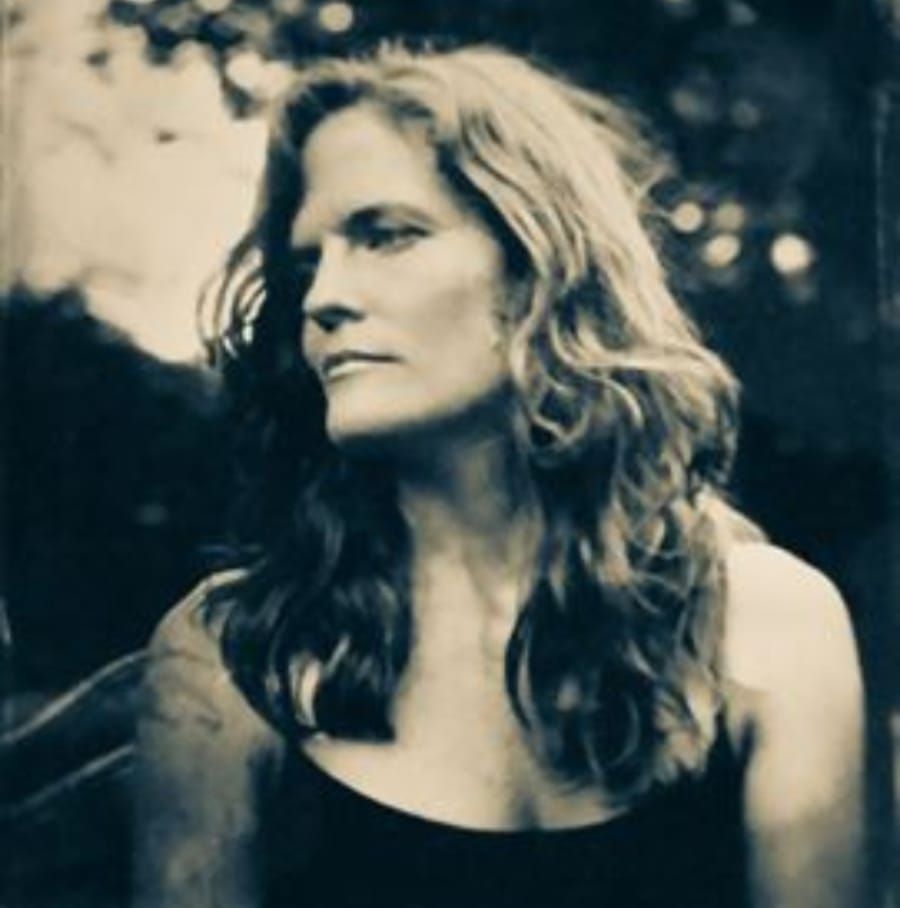
El mundo como cuerpo y texto: La poesía de Rebecca Gayle Howell
Por Jeremy Paden*
Ahora es la hora fresca del día
Oh, esta tierra es un jardín
–Jean Ritchie
Rebecca Gayle Howell es una poeta, traductora y editora premiada que ha publicado tres libros de poemas, dos libros de traducciones, una antología de poemas sobre obreros y varios libretos de música clásica contemporánea. Sus poemarios son: Render / An Apocalypse Fundir / Un apocalípsis (Cleveland State University Press, 2013) que ganó el concurso para primer poemario organizado por el Centro de Poesía de Cleveland State University es una colección que se ubica en una finca pequeña de agricultura de subsistencia en los montes de Appalachia; American Purgatory El purgatorio americano (Eyewear Publishing, 2017) que ganó el premio Sexton en 2016 y es una serie situado en un mundo distópico donde gente de la clase obrera vive en una ciudad fundada en llanura páramo; y Erase Genesis Borrar el Génesis (Birdwill Press, 2026) es una colección de poemas tachados en la que Howell regresa vez tras vez a los primeros tres capítulos del Génesis. (La tachadura es una forma de poesía encontrada en la que se toma un texto original y se tachan o se borran ciertas palabras y se dejan las que llegarán a formar el texto nuevo, un poema formado con las palabras de otro. Para ver versiones en castellano de las tachaduras de Howell hacer clic aquí.) A pesar de las diferencias de marco, paisaje, ubicación temporal y formas poéticas hay un vínculo profundo entre estos libros, como si el mundo de su imaginación fuera un relieve cárstico repleto de ríos subterráneos que conectan los lagos y estanques que son las manifestaciones de su espíritu creador. En esta conversación, intentamos seguir algunos de estos cauces, o para usar un vocablo que podría aparecer en Fundir / Un apocalípsis, trazamos el tejido conectivo que une estas obras.
La religión es uno de los ríos principales que riega toda su obra, aparece como una preocupación en todos sus poemarios y en todas las versiones de su etimología: o sea, como una forma de relectura, de lazos fuertes, y de selección cuidadosa. La primera y más antigua definición etimológica nos la da Cicero. Para él, la religión es una forma de relegere donde legere es lectura y relegere es leer y leer vez tras vez. La persona devota regresa a los textos sagrados y los estudia detenidamente. Otra etimología, una más tardía, y la preferida por Agustino, aunque él no fue el primero en proponerlo, es la religión como religare, o los lazos entre los fieles y la deidad que se ven por medio de las devociones de los píos que cumplen sus obligaciones religiosas. Aquí el prefijo re- no significa la repetición sino que sirve para intensificar la acción. En este caso, la religión es el lazo que une y ata el devoto a su dios. Hay una tercera etimología que vincula la religión con el descuido y, claro está, con su opuesto, la atención, el cuidado, el aseo. Legere, en este caso, se toma no como esa segunda definición que sería leer sino como recoger, juntar, seleccionar y significa ese poner atención cuidadosa a los mandatos divinos, el tomarlos, examinarlos y seleccionar entre ellos las acciones apropiadas. Se encuentran las definiciones en la obra de Howell. Ella cuidadosamente retoma las tradiciones textuales que informan su espiritualidad y los estudia detenidamente, los escoge con cuidado, los sopesa y considera todos sus posibles significados y las varias obligaciones que demandan de ella y nosotros.
Mientras que esta entrevista comienza con el tema de la religión, a medidas que avanza se bifurca y se ramifica en otros temas y exploramos esas cavernas y cauces subterráneas, nos adentramos en la música y el canto, el mundo físico, serpentear por cuestiones de género, consideramos el ecofeminismo y la ética del cuidado y finalmente la traducción.
En Fundir / Un apocalípsis ella escribió un almanaque, un guía de campo, para un mundo rural moribundo y que, efectivamente, ya no existe. Pero este libro no es una mirada nostálgica que celebra la hacienda rural bucólica donde la auto-suficiencia es sinónimo a la independencia. Sino es un catálogo de las formas que toman la violencia que ha creado el mundo moderno, las violencias que nuestro ser animal perpetra para poder existir. Y mientras el lector avanza por ese mundo, se acerca más y más a su propio ser animal.
Si Fundir se puede entender como una colección ubicada en un pasado cercano, cuando mucho del USA era todavía un mosaico de familias rurales que vivían y cuidaban de fincas particulares, was still a patchwork of rural family farms, Purgatorio americano se sitúa en un mundo futuro, pero no lejano, en medio de una crisis ambiental. Este segundo libro es la autopsia de un mundo destrozado por la codicia industrial, una avaricia que no se ha preocupado ni considerado cómo ha asolado el mundo natural ni el las vidas de la clase obrera sobre las que la riqueza del sistema depende.
Aun si nuestra conversación regresa de manera consistente a preguntas textuales y aun si la poesía de Rebecca es muy consciente de las tradiciones y los géneros literarios que ella revisa y reimagina, su poesía es una que se arraiga profundamente en el cuerpo. Hay en su verso una celebración del trabajo y de la belleza del cuerpo humano mientras trabaja.
Borrar el Génesis, su poemario más reciente, no se sitúa ni en un pasado reciente ni un futuro cercano, sino en la atemporalidad de los mitos cosmológicos que han formado la simiente del pensamiento, la cultura y las prácticas occidentales. A lo largo de las décadas de los 70s y los 80s, Wendell Berry, uno de los poetas e intelectuales cristianos más prominentes de las letras estadounidenses del siglo XX tardío, y Gary Snyder, quizá el budista más escrupuloso de los poetas Beats que, a la vez, también fue un activista ambiental, mantuvieron una larga conversación epistolar sobre la creación. Gary rechazó cualquier acercamiento cristiano-occidentalista y condenó la idea del dominio humano de la tierra tal como avanzado por ciertas lecturas de los primeros capítulos del Génesis.Wendell, por su parte, propuso releer, reinterpretar y reimaginar el dominio como una forma de un cuidar, un atender que depende del afecto. Borrar el Génesis propone otra manera de releer y reimaginar los dos mitos centrales de la creación para el pensamiento cristiano, occidental. (La mayoría de los estudiosos, se es de saber, señalan que la creación del mundo tal como descrito en Génesis 1-2:3 y la creación del jardín de Edén de Génesis 2:4-3:24 son dos historias distintas.)
En el primer verso de la canción de Jean Ritchie, una cantautora folk de Kentucky y que le inspiró a Bob Dylan, “Ahora es el fresco del día,” Dios pregunta
¿Te gusta mi jardín tan lindo?
Podrás vivir en este jardín si mantienes el pasto verde
Y yo volveré en el fresco del día
En el segundo verso, la deidad manda “dar de comer a mis corderos” y en el tercer verso el mandato es “mantener a la gente libre.” Las tachaduras del Génesis que hace Rebecca no sólo retoma la conversación entre Gary y Wendell para mezclar el pensamiento cristiano con el budista mientras reimagina este texto fuente sino que va aún más allá de esa conversación y saca provecho de ese gesto anterior que se encuentra en esta canción de Jean, la Madre de la música folk, donde descansar y cuidar son sinónimos de florecer y libertad y son regalos ofrecidos a todos los seres humanos. Si El purgatorio americano termina con albercas secas y páramos baldíos, Borrar el Génesis nos recuerda que “ahora es el fresco del día.” El libro recuerda que una vez la deidad miró al jardín de este mundo y lo proclamó bueno. Leamos los versos de Rebecca y entremos a ese jardín fresco al atardecer para descansar.
1-Tus tres poemarios entablan una conversación con la escritura y la religión en diversas maneras. Pero en vez de rastrear estas maneras en cada uno de tus libros, me gustaría pensar en tu último libro Borrar el Génesis como una clave, como un texto fundamental para entender cómo funciona tu imaginación moral y literaria. Si bien una manera de entender la trayectoria de tus textos sería como un movimiento hacia el borrar o el tachar, esto es, hacia el ejercer una serie de cambios sobre el texto original a través de la re-narración y la resignificación, o como el extraer un nuevo sentido de la bulla del verso original al introducir el silencio de tachar el texto, otra sería la de imaginar que tu último poemario Borrar el Génesis pone en evidencia y hace visible una práctica que has utilizado desde el comienzo. ¿De qué manera, entonces, interactúan tus textos con la imaginación religiosa y los textos sagrados?
Pienso que la imaginación espiritual ha sido una base del desarrollo humano y los mitos han sido la tecnología que ha develado esa potencia. Historias. Historias tan innegablemente arraigadas, trascendentes y portables que sentimos que nos pertenecen a nosotros y a nuestras generaciones, historias que crean entre nosotros la pertenencia— y también entre nosotros y la posibilidad de estados de conciencia más elevadas, aquellas vocaciones más elevadas que van hacia la sabiduría y el amor.
Los mitos nos conectan, nos enseñan, nos deleitan, nos advierten—y hacen su trabajo de manera fácil a lo largo del tiempo, del espacio y de los sistemas lingüísticos por medio de una combinación del realismo fabuloso y el surrealismo que es contrario a la lógica y es a la vez minimalista. Parece ser una literatura simple, cuando es todo lo opuesto. Me interesa escribir nuevos mitos para la época de cambio climático, mitos que nos ayudan a ensanchar nuestro sentido de pertenencia con ese estado superior al que llamamos naturaleza, que para mí siempre ha sido divino.
Y yo persigo esta praxis en la poesía, porque solo la poesía mezcla la narrativa con el canto. En la poesía, quizá especialmente en las secuencias poéticas, el sueño y el baile pueden ser la misma experiencia—una experiencia donde nuestro imaginar la trascendencia se fomenta por medio del hecho netamente animal del latir de nuestro corazón. A causa de estas razones, creo que combinar el poder de la poesía con el poder del mito puede ayudar a sanar nuestros sistemas nerviosos que han sido y siguen siendo, a mi ver, destruidos por la peligrosísima fantasía de que existimos por separado de la tierra que abusamos. No lo somos.
Llegué a esta labor con una base en el cristianismo contemplativo, que a medida que he madurado se ha emparejado con estudios interconfesionales y las tradiciones contemplativas de otras tradiciones, al igual que una práctica de meditación bastante disciplinada. También llego a esta labor apasionada con entender cómo se escribe y se traduce la literatura sagrada desde el nivel del arte y la técnica. Una de las cosas que amo de estas obras de literatura es que son en la actualidad textos vivientes, esto es siguen con vida y siguen cambiando, por medio de las vidas y los cuerpos de los que repiten, traducen, editan y se involucran con estas escrituras. Un idioma muerto es uno que ya no evoluciona. Lo mismo pasa con la literatura. Empero estos libros tienen vida. Podemos decidir si serán usados para dominar, para la crueldad y el control—o podemos decidir usarlos para ser agentes para un amor abundante, atmosférico e inexplicable. Todavía podemos tomar esa decisión, por medio de nuestro compromiso.
Borrar el Génesis ha sido creado por medio de praxis mía, de un compromiso propio. Al tachar repetidamente los primeros tres capítulos del libro de Génesis, descubrí nuevos poemas cada vez que regresaba al texto. Luego me di cuenta que estos poemas empezaban a formar un nuevo mito de creación, un mito de la recreación para el cambio climático. Yo no veo este compromiso mío con el Génesis no como una manipulación del texto primordial sino como una participación en su propia viveza. El encontrar y el expandir su aliento. La enmienda siempre ha sido parte de la travesía de la Biblia al traerlo al inglés y la pérdida siempre ha sido una parte vital de las artes de la traducción. Con Borrar el Génesis contribuyo a esa tradición. Es la elaboración de la pérdida para destacar la ecología profunda que yace escondida en el original.
Para expresarme llanamente, el silencio es mi catedral privada de la oración.
2-Has mencionado la cercanía de la poesía con el cantar. Ciertamente, el canto es una de las maneras en que hablamos de la poesía, y usamos esa referencia a pesar del hecho que la poesía se ha vuelto un medio altamente literario, profundamente visual, uno que privilegia, a veces, la página más que la oreja. Empero, tú has escrito tres libretos en colaboración con Reena Esmail, una compositora de música clásica: un ciclo de villancicos sobre el solsticio de invierno, una cantata sobre el acto comunitario de votar y una meditación en forma de llamada y respuesta sobre la pandemia del COVID-19. ¿A qué le prestas atención cuando escribes versos para canciones?
Reena y yo hemos colaborado por unos siete años—y cada día ha sido una gozada total. Ahora mismo estamos escribiendo dos piezas nuevas, ambas se estrenarán en el otoño del 2026, por lo tanto nos encontramos sumidas en esa alegría profunda al contestar esta pregunta. Quisiera poder explicar el florecimiento que ocurre en mi cuando trabajamos juntas.
La manera tradicional en que una libretista escribe para una compositora no tiende a ser a través de la colaboración. Lo típico es que la libretista escribe un poema y luego se lo da a la compositora para que lo ponga a música. El momento del intercambio es el momento de la transferencia. Reena y yo trabajamos de maneras diferentes. Queremos que la obra sea más grande que lo que cualquiera de nosotras pudiéramos realizar sin la otra, y por lo tanto adaptamos nuestro trabajo desde el comienzo hasta el estreno. Lo que muchas veces decimos es que nos afinamos a una frecuencia de radio secreta entre el lugar donde vive ella y donde vivo yo.
Esto es, ella y yo escuchamos la posibilidad. Nos acercamos al trabajo con una receptividad compartida, confiando que el misterio sabrá más que nosotras. Muchas veces esto parece como el mandarnos mensajes de audios largos en los que compartimos lo que creemos haber escuchado— podría ser una intuición o un fragmento de lenguaje o un ostinato y podría ser una serie de incógnitas a las que damos la bienvenida para poder abrir nuevas puertas en nuestras suposiciones y procesos. Oh—¿qué si hiciéramos esto? es una conversación que a menudo tenemos. Esta receptividad es la manera en que me acerco a mi propia praxis y sé que también la manera en que Reena se acerca a la suya—un escuchar a las estructuras profundas parecido a las tradiciones de la oración contemplativa. Por lo tanto es apasionante poder compartir este proceso con otra persona cuya devoción está al mismo nivel, alguien del que sabemos que podemos confiar.
Cuando Reena y yo enseñamos clases juntas, frecuentemente digo que me toca escribir un “poema malo” para Reena. Con eso quiero decir, si yo escribo un poema para que exista por sí solo, quiero que tenga su propia música, quiero hacer que sea una sinfonía en la mente del lector. Pero cuando escribo para una pieza coral, quiero que el lenguaje necesite de la música de Reena. Si escribiera un poema que podría existir independiente y se lo daría, tendría de por sí una estructura musical que la restringe. Mejor, queremos co-crear una obra que canta desde el centro de nuestra práctica compartida, un canto que se extiende mucho más allá de cualquiera de nosotras, algo que nos hace sentir enteras en el momento de la creación. Arreglamos nuestra interdependencia para poder cumplir aquel deseo.
Le digo a mis estudiantes “siempre hay otra manera de expresar algo,” con la esperanza de poder ayudarlos entender que el lenguaje es su medio y no su identidad. Que nosotros los escritores podemos estar al servicio de algo más grande que nosotros—ya sean las fuerzas tales como la comunidad, la justicia, la divinidad, la supervivencia o alguna verdad urgente para el escritor. Pero para crear un arte que busque tal finalidad, debemos trabajar y retrabajar nuestras palabras más allá de nuestros compromisos previos. La traducción literaria fue mi primera institutriz en esta verdad—en el arte de la traducción, como bien sabes, la escritura verdadera toma lugar en el momento de la reescritura, al desafiar al idioma meta para doblarlo y reconfigurarlo para mejor representar el autor del texto fuente y sus logros. Mi proceso con Reena es parecido. Siempre estamos escribiendo y reescribiendo, y en mi rincón del estudio eso puede parecer como yo escribir palabras que puedan ser movidas o reescritas en nuevos moldes métricos. Es en el recrear que la creación ocurre y este proceso me es una alegría, porque siempre se enfoca en la posibilidad de las cosas, lo que es otra manera de decir la esperanza.
3-Otro cauce que une los tres libros es una concentración en el paisaje, en la geografía. De nuevo, pareciera que Borrar el Génesis sería un caso aparte. Fundir toma lugar en una finca brutal en un paisaje muy parecido a los bosques y montes de la geografía cárstica de Kentucky. El purgatorio americano se sitúa en los áridos páramos desertificados del oeste del estado de Tejas. Estos dos libros parecen representar ecorregiones actuales, mientras que Borrar el Génesis es una fábula, un mito. Empero, el Edén era un jardín muy bien regado. ¿Qué papel juego entorno geográfico en tu imaginación?
Para mí, la naturaleza siempre es algo específico y siempre es divino. A veces hablamos del mundo natural como si fuera un monolito, una monocultura de la existencia bestial, cuando la existencia de las bestias por definición nunca es una monocultura. Esto se ve en la manera que nos acercamos a la literatura, también. La categoría “Poeta de la Naturaleza” ha sido por demasiado tiempo una tradición generalizada pero celebrada, mientras que “Poeta Regionalista” ha sido generalizado y desestimado, como si estas dos maneras de trabajar podrían existir por separado.
Wendell Berry escribe a menudo de la necesidad de ser responsable por la membrecía de uno mismo en un lugar. Él me enseña que pertenecemos a nuestros lugares, que somos una parte significativa del equilibrio o desequilibrio que se encuentra allí. Soy consciente de esta verdad de la manera más clara cuando estoy afinada al genio particular de un lugar, cuando puedo descansar en su grandeza, cuando sé que el lugar sabe más que yo y cuando busco aprender de él. Nada me trae más paz ni más desafíos. Para mí, esta responsabilidad es la generosidad divina que es nuestro patrimonio.
Creo que los tres poemarios míos son mitos, pero tienes razón— Fundir y El purgatorio americano toman más de las técnicas del realismo fabuloso de las ya mencionados. Fundir se sitúa en una finca de subsistencia muy parecida a la de mis abuelos en la parte oriental de Kentucky; El purgatoria americano se ubica en una visión distópica de los algodonales del oeste de Tejas, donde viví mientras realizaba mis estudios doctorales. Escuché profundamente a estos lugares, por años, y luego los construí cuidadosamente como un mito en mi imaginación, un lugar ensoñado que flotaba por encima de lo real, para que las historias se sintieran verdaderas e inventadas al mismo tiempo, encontrándonos donde estamos, mientras nos envuelven en la potencialidad de las cosas.
El paisaje de Borrar el Génesis viene más del surrealismo fabulista del mito que de su interés en el realismo. En este libro, el escenario se encuentra articulado como la interconexión entre todos los seres. Jehová la Mujer está escondida entre los Árboles y Ella es también los Árboles mismos. El Hombre es también el Río de Piedra Cornerina. La Expansión y la Expansión es también la Tarde y la Mañana, y la Tarde y la Mañana son también el Árbol de Fruto que su Simiente Esté en Él, etc. A través del canto y del silencio, escribo un lugar que pertenece a sí mismo, tal que el entorno revela la moraleja de la historia: el sufrimiento del hombre viene directamente de nuestro insistir en estar separados de la tierra, cuando la separación no existe.
4-Un tercer río subterráneo que une a los tres libros es la manera en que cada uno juega con la escatología. Es decir, el fin del mundo. Y lo hacen desde el mismo título: Apocalipsis, Purgatorio, Génesis. Debemos recordar que si bien los dos mitos de creación en Génesis tienen que ver con comienzos, el segundo termina con la expulsión del Jardín de Edén y por lo tanto también tiene que ver con finales. No solo eso, pero dentro del exégesis cristiano esa segunda historia de Génesis es esencial para algunas lecturas del acto redentor de Cristo, y es también algo esencial a esa visión de fin de mundo del cielo nuevo y tierra nueva con que Juan de Patmos concluye su Apocalipsis y que luego es retomado por otros místicos como John Milton y William Blake. Así que, ¿qué te atrae de las visiones de fin de mundo?
Esa es una lectura interesante de mi trabajo. Veo la veta que sigues. Una cosa que me interesa es la posibilidad de que todo fin es en sí un comienzo, o— como me lo enseña el budismo, La vida es el cambio. Por lo tanto, en ese sentido, sí. Yo miro fijamente a la puerta sin puerta.
Soy una persona que piensa que mi relación con mis propios libros no es ni tan interesante ni tan importante como las relaciones que construyen mis lectores, por lo tanto suelo guardar estas cosas para mí— pero ya que me preguntas, explicaré mi propio pensar sobre el asunto.
Fundir / Un apocalipsis y El purgatorio americano llevan esos nombres como referencia a los géneros de los que uso. Llamar Fundir un apocalipsis no intenta hacer referencia al fin del mundo, sino a una técnica literaria antigua llamada el género del apocalipsis, que usaba un imaginario futurista para poder lidiar con la crisis arrolladora del momento actual del autor. El Apocalipsis de San. Juan es uno de muchos libros parecidos. De todos modos, pensaba en ese modo de escribir mientras escribía Fundir y decidí darle vuelta a la tradición y hacer uso del histórico imaginario agrario para poder lidiar con la apabullante crisis que empezaba a entender, la cual es el cambio climático. Así también con El purgatorio americano—no lo ubico en un purgatorio doctrinal sino me apropio de la tradición literaria medieval. El purgatorio americano es un mito que investiga los vínculos entre el laborar y la extracción de riquezas de la tierra y cómo el ser vulnerable a estas fuerzas hace que un lugar y la gente de ese lugar existan en un ciclo interminable de la que no sienten nunca tener la esperanza de ser liberados. En otras palabras, esto no es algo del que podemos escapar por medio del trabajo.
Fundir concluye con un ciclo de poemas que fingen darle al protagonista una salida—aunque es claro, por medio del sarcasmo y el apóstrofe, que su abandono de la finca por razones del “progreso” le dará todo menos lo que busca. El libro por fin sugiere que nuestra esperanza de contrarrestar el cambio climático es el recordar la eco-ternura, cosa del que solo podemos acordarnos cuando nos encontramos cerca a nuestros primos, la flora y la fauna—o sea, en el lenguaje del libro, si regresamos a la finca y nos hacemos responsables de nuestra relación cercana, dependiente y culpable a la particularidad de la naturaleza de los lugares a los que pertenecemos. El mirar al ojo del animal que decidimos sacrificar para poder sobrevivir—esto puede entenderse como eco-violencia o puede entenderse como mirar de lleno a las verdades que evadimos.
El purgatorio americano termina con un poema en el que la protagonista, una mujer-obrera, da a luz en un aljibe. Después de haber escuchado toda su vida que ya nadie puede dar a luz en este lugar debido al envenenamiento por pesticidas—ella da a luz y es un milagro. Pero claro, no es tan simple. Como otras historias de purgatorio, no sabemos si el tiempo en El purgatorio americano es lineal o circular. El lector puede leer el libro de manera lineal y entender el último poema como uno donde la protagonista y su criatura mueren en el parto a causa de las serpientes en el aljibe. Una conclusión desesperanzadora a una historia desesperada. Un maestro difícil pero mordaz, por seguro.
Pero el lector puede también entender la narrativa como circular—un uróboro. En este caso el último poema se leerá como si las culebras fueran una metáfora, quizá como el símbolo tradicional del poder femenino. En tal caso, el lector puede asumir que la madre y su criatura sobreviven—lo que da comienzo a la historia otra vez. Hay un niño en el libro, un personaje llamado El Chavo que tiene una madre sin nombre. El Chavo está lleno de esperanza y alegría, a pesar de su entorno, y por esta razón él es la Beatrice de la historia, el guía. Si el protagonista y su hijo sobreviven, El Chavo y su madre son los únicos personajes restantes que podrían serlo. Y esto rompe el mundo, lo abre y señala una manera de salir que no tiene nada que ver con haber merecido esa salida.
Así que, de nuevo. Soy proclive a mirar fijamente a la puerta sin puerta.
5-Un cuarto río es la crítica feminista que entablan tus obras, o ese revisar/reimaginar que establece conexiones entre humanos, entre seres humanos y el mundo natural, entre práticas religiosas de tradiciones diversas. Tu poesía comparte mucho con lo que se ha denominado como el ecofeminismo, desde su crítica del patriarcado y el capitalismo neo-liberal hasta la manera en que tu trabajo consistentemente avanza un ética del cuidado. Empero, las designaciones teóricas, bien como el ecofeminismo, son abstractas y filosóficas, nombran una manera de ver e interpretar el mundo, los textos, el arte y la cultura. Y mientras que estas designaciones críticas nos ayudan entender el arte y la cultura, muchas veces hay una separación entre la teoría y la práctica, entre la vida y las maneras en que la concebimos y hablamos de ella. Tu trabajo, empero, mientras que es profundamente lírico e intuitivo, tiende hacia una coherencia de visión y parece ser muy informada de ciertas posturas éticas y filosóficas sin olvidar que la poesía lírica se arraiga en el cuerpo y no la cabeza. ¿De qué manera está tu poesía orientada por tus compromisos filosóficos? ¿Crees que mi caracterización de esta división entre la mente y el cuerpo, la teoría y la práctica es actual o solo una ficción moderna?
Sí. Me interesan mucho aquellos marcos que valorizan la interconexión, aquellos que creo que albergan una ética de cuidado y que se oponen a las estructuras de dominación. Nuestra paisana bell hooks, otra escritora de Kentucky, nos enseña que las fuerzas como el patriarcado heteronormativo, el capitalismo extractivo y el racismo comparten la misma raíz, la mente señorial, y no se puede curarse de uno sin curarse del otro—esto es, no habrá sanación del racismo hasta que el sexismo se sane, el sexismo no será solucionado hasta que dejemos de explotar el mundo, y así sucesivamente. La maleza se expande hasta que sea extirpada desde las raíces.
Yo creo que nosotros—todos nosotros: seres humanos y criaturas, flora y fauna—somos parte de un todo, estamos interconectados y somos interdependientes como miembros de la inteligencia de la Naturaleza, que busca el equilibrio. La imaginación humana para el dominio, emparejado con nuestra imaginación para establecer sistemas, crea una fantasía que somos capaces de alcanzar, una en la que nos encontramos de alguna manera aparte de o afuera de la Naturaleza. Una vez que empezamos a creer esto, podemos fácilmente creer que una “clase” de persona vale menos que otra o más o que merece más que otra ser dominada, de igual manera fácilmente podemos creer que un “tipo” de lugar vale menos que otro, merece la explotación más que otro. Estas maneras de pensar no existen por separado.
Y tienes razón. Para mí, todo esto es la verdad encarnada; no es una abstracción. He conocido la violencia de género y he conocido la violencia ecológica y he conocido estas heridas en mi cuerpo y he conocido sus semejanzas. Pero mi esperanza es que no todos tengan que aprender estas semejanzas por haber sobrevivido estos abusos. Por ejemplo, en cuanto al ecofeminismo, solo basta que cualquier persona en los Estados Unidos lea las cartas y las memorias escritas por los han sido llamados colonizadores. Estos textos están repletos de metáforas de violación en las que la tierra es una mujer núbil que desea ser asolada. Esto no es una casualidad, ni es algo aislado.
Los seres humanos son criaturas dotadas de imaginación. Y los límites de nuestra imaginación articulate our confirmation of realities, because these are the boundaries that also define our actions. Esto es, como una escritora utilizo mi imaginación para confirmar estos puntos de interconexión, tanto para nombrar las fuerzas que nos hieren y para nombrar las fuerzas que nos curan. Podemos escoger nuestras ideas. Pero casi nunca lo hacemos por medio de mandatos abstractos. El sistema nervioso nos convence, no el argumento. La experiencia es nuestra maestra primordial y la literatura—el cuento y el canto—nos ofrece una experiencia que conecta nuestro sistema nervioso a nuestras imaginaciones. Sentimos que vivimos la historia, que cantamos la canción. Y aunque parezca como una experiencia privada, es un hecho cultural compartido. De ende nuestra arte tiene consecuencias enormes. Yo creo que muchas de las catástrofes han sido causadas por los humanos debido a la mente señorial tienen su origen en las historias que nos hemos contado. Me parece que la única manera de escaparnos de esas catástrofes es el escribir, leer y creer en nuevas historias. Y esa es la lid al que le he puesto mi hombro.
6-Junto con tus tres libros de poesía propia, también has publicado dos poemarios traducidos: uno del árabe Hagar antes de la ocupación / Hagar después de la ocupación de la iraquí Amal al-Jouburi y uno del castellano El interior de la ballena de la argentina Claudia Prado. La traducción ha sido una práctica central para muchos poetas norteamericanos del siglo XX–W. S. Merwin, Randall Jarrel, Denise Levertov, James Wright, todos traducían y publicaban sus traducciones a lo largo de su carrera. ¿Qué rol juega la traducción en tu praxis poética?
Borges, LeGuin, Barnstone y otros todos han dicho que toda escritura es traducción, y estoy de acuerdo. Eso era algo que describía al hablar de mi colaboración con Reena—nos afinamos a frecuencia de radio, a un misterio, al que escuchamos y luego co-traducimos. Y lo mismo pasa cuando escribo mis propios poemas originales. Podré sentir un fragmento de idioma y luego lo escucharé, vez tras vez, hasta escuchar el próximo fragmento. Cuando escribo poemas, traduzco del silencio inefable que encuentro dentro y fuera de mí.
Merwin me enseñó que no hay mejor manera de aprender cómo escribir un poema vivo sino por medio del aprender cómo traducir un poema en una versión viva. Esta ha sido mi experiencia. Y tienes toda la razón—antes de los MFAs, el traducir era una educación central para muchos de los grandes autores. El arte de la traducción literaria es un arte; no es lo mismo que traducir información. Un poema se anima con el poder del lenguaje que se usa, sí—pero también otros sistemas de conocimiento le dan vida, tales como la cultura, el clima, la política, las relaciones humanas, la religión, la identidad, la región. Cada vez más, en todas las áreas de mi praxis entiendo que “el lenguaje es la casa del ser,” tal como Heidegger famosamente escribiera—los poetas albergamos misterios del ser–el nuestro y los de otros–dentro de esas habitaciones. Los traductores son responsables de reconstruir la casa, mientras transmutamos todo lo que vive dentro de ella. Porque me es muy importante escuchar lo más atenta que pueda a los poetas que traduzco, colaborar con ellos directamente, estoy comprometida en trabajar lo más fuerte que pueda para asegurarme de que mi versión sirva de honrar al poema original y al escritor original, en cuanto a sus logros particulares de estilo y significado. El inglés no se acostumbra a doblarse para otros, por lo tanto esta práctica depende de un enfoque detallado orientado hacia las oportunidades inesperadas. Este enfoque me enseña mucho sobre las oportunidades inesperadas que me esperan en el inglés cuando me siento a escribir mis propios poemas originales.
Por lo general es verdad que me siento como una alumna al traducir y al escribir, el cual es mi estado preferido. Y con Borrar al Génesis, siento que yo entretejo las dos prácticas de manera más directa. En muchas maneras, siento que el libro es una clase de traducción.
The World as Body and Text: The Poetry of Rebecca Gayle Howell
Now is the cool of the day
Oh, this earth is a garden
–Jean Ritchie
Rebecca Gayle Howell is an award winning poet, translator, and editor who has published three books of poems and two books of translation. Her books are: Render / An Apocalypse (Cleveland State University Press, 2013) and winner of the Cleveland State University Poetry Center First Book Prize is set on a subsistence farm in Appalachia; American Purgatory (Eyewear Publishing, 2017) Winner of the 2016 Sexton Prize, a working class dystopian sequence set in and around a town in a barren and desertified prairie; and Erase Genesis (Birdwill Press, 2026) a suite of a erasure poems that return again and again to the first three chapters of Genesis. Despite the difference in setting and form there are deep connections between these books, as if her imaginative world were a karst landscape with underground rivers connecting the various pools and lakes that are the manifestation of her creative spirit. In this conversation, we try to follow some of these rivers, or to use language that might come from Render / An Apocalypse, we trace out some of the connective tissue that binds these works together.
Religion, a principal stream that runs through all her work, appears throughout her collections in all its possible etymological meanings: rereading, tight bonds, and careful selection. The first and oldest etymology is provided by Cicero. For him, religion is a form of relegere where legere is reading and relegere is reading through again and again. The devout return to their sacred texts and pour over them. A later etymology, and the one preferred by Augustine, though he is not the first to use it, is religion as religare, or the bonds between a practitioner to the divine shown through through pious practice and the fulfilling of obligation. Here the re- prefix does not mean repetition but is, instead, an intensifier. In this case, religion is the fast and tight binding of practice. Still a third etymology connects it to neglect and would have it mean the opposite; that is, care or attention. Legere, in this case, is not the later/secondary meaning of the word as reading but is instead legere as taking up and examining, as a form of careful gathering or selecting and would signal pious action and careful attention to the divine and their mandates. All three of these meanings appear in Howell’s work. She carefully takes up the textual traditions that inform her spiritual imagination and pours over them, selecting, weighing, and considering their meanings and the obligations they place on her and us.
While this interview begins with the question of religion, as the interview branches out into other questions and we explore those other underground caverns and waterways, we move into song, move out into the physical world, meander through questions of genre, consider ecofeminism and ethics of care, and finally translation.
In Render / An Apocalypse, she wrote a field guide, an almanac to a dead and dying rural world. But this is not a nostalgic book that looks back at a bucolic, rural homestead where self-sufficiency is synonymous with independence. Instead, it is a catalogue of the kinds of violence that made that world possible, the kinds of violence that our animal-being commits in order to sustain itself. And as the reader moves through that world, they move closer and closer to their own animal being.
If Render can be understood as set in a near past, when much of the US was still a patchwork of rural family farms, American Purgatory is set in a not-too-distant future, in the midst of an environmental collapse. This second book is an autopsy of a world torn apart by the greed of industry, a greed that has not cared for or considered how it has ravaged the natural world or the lives of the working class on whose labor the wealth of the system depends.
Even though our conversation consistently returns to questions that are textual in nature and even as Rebecca’s poetry is deeply aware of the literary traditions and genres she revises and reinvisions, her poetry is one that is rooted deeply in the body. There is in her verse a celebration of work and of the beauty of the body engaged in labor.
Erase Genesis, her most recent volume, is not set in the recent past or near future, but in the timelessness of the cosmological myths that have provided the foundation of Western thought, culture, and practice. Throughout the 1970s and 1980s, Wendell Berry, one of the foremost Christian poets and thinkers of late-20th-Century American letters, and Gary Snyder, perhaps the most serious Buddhist among the Beat poets who then turned environmentalist, carried on a protracted epistolary conversation about creation. Gary largely eschewed Western/Christian approaches and condemned the notion of dominion found in the early chapters of Genesis. Wendell, on the other hand, reread, reinterpreted, and reimagined dominion as a form of caretaking, of tending after that turns on affection. Rebecca’s Erase Genesis provides another and different way to reread and reimagine the two foundational creation myths of Western, Christian thought. (Most scholars, it should be noted, understand the creation of the world recounted in Genesis 1-2:3 the creation of the Garden found in Genesis 2:4-3:24 to be two distinct creation stories.)
In the first verse of Jean Ritchie’s “Now Is the Cool of the Day,” God asks
Do you like my garden so fair?
You may live in this garden if you keep the grasses green
And I'll return in the cool of the day
In the second verse, the divine request is that “you feed my lambs” and in the third it is that “you keep the people free.” Rebecca’s erasure of Genesis not only takes up the conversation between Gary and Wendell and mixes Christian and Buddhist thought in her reimagining of this Ur-text, but it goes deeper. It taps into that earlier gesture found in Jean, the Mother of Folk, where rest and care are synonymous with flourishing and freedom, and are gifts given to all. If American Purgatory ends with dried cisterns in a barren prairie, Erase Genesis reminds us that “now is the cool of day.” The book remembers the divine looked upon the garden of the world and proclaimed it good. Let us read Rebecca’s verse, and let us enter into that cool, evening garden of rest.
1-All three of your books engage with scripture and religion in various ways. But rather than try to chase down each, I'd like to think about Erase Genesis as providing a key, a ground text to your moral and your literary imagination and, while one way to think about the trajectories of these texts is as a movement toward erasure, toward manipulation of an original through retelling and resignification, or as a bringing new sense out of the noise of the busy line by the silence of the erased text, another way to think about it is that Erase Genesis makes visible an approach that you have been using from the beginning. How does your work, then, engage the religious imagination and the religious text?
I think the spiritual imagination has been a pillar of humanity’s advancement, and myths have been the technology that unlocked that power. Stories. Stories so undeniably grounded, transcendent, and portable that we feel they belong to us and to our generations, that they create belonging among us— and also between us and the possibility of higher states of being, higher callings toward wisdom or love.
Myths connect us, teach us, delight us, warn us—and they do their work so easily across time, place, and language systems through a counterintuitive combination of fabulist realism and surrealism, within minimalism. It seems like a simple literature, when it is anything but. I am interested in writing new myths for climate change, myths that can help grow our sense of belonging with the higher state of being we call nature, which for me is always divine.
And I pursue this practice in poetry, because only poetry blends story with song. In poetry, perhaps especially in poetic sequences, the dream and the dance can be the same experience—an experience where our imagination for transcendence is advanced by the very animal fact of our heart’s beat. For these reasons, I think combining the power of poetry with the power of myth can be an aid in healing our nervous systems, which I think have been and are being ravaged by the dangerous fantasy that we are separate from the earth we abuse. We are not.
I come to this work with a foundation in contemplative Christianity, which as I’ve aged has been paired with studies in interfaith contemplative traditions, as well as a fairly disciplined meditation practice. I also come with a passion for understanding how sacred literature is written and translated, at the level of craft and technique. One thing I love about these works of literature is that they are actually living texts, meaning they live on and change, through the lives and bodies of those who iterate, translate, edit, and engage them. A dead language is one that does not evolve. The same is true of a literature. These books live. We can choose for them to be forces of domination, brutality, and control—or we can choose for them to be forces for an abundant, atmospheric, inexplicable love. We can still make that choice, through engagement.
Erase Genesis is made from a practice of my own engagement. By repeatedly erasing the first three chapters of the Book of Genesis, I found new poems each time I returned to the same text. Then I realized the poems were compiling into a new creation myth, a re-creation myth for climate change. I do not see my engagement with Genesis as manipulating the source text, but rather participating in its aliveness. Finding and expanding its breath. Redaction has always been a part of the Bible’s journey into English, and loss is always a vital part of the translation arts. In Erase Genesis, I am contributing to that tradition. I am crafting loss to foreground the deep ecology that lays under the source.
To put it simply, silence is my private cathedral of prayer.
2-You have mentioned poetry’s closeness to song. Certainly, that is one of the ways we talk about it, and talk about it still, even as poetry has become a highly literate, deeply visual medium, privileging, at times, the page rather than ear. Yet, you have written three libretti in collaboration with Reena Esmail, a classical composer: a cycle of winter solstice carols, a cantata about the communal act of voting, and a call-and-response meditation on the COVID-19 pandemic. What are things you must pay attention to when writing for song?
Reena and I have been collaborating for just about seven years—and every day of it has been a total and complete joy. We are working on two new pieces now, both of which will premiere in the fall of 2026, and so we happen to be deep in that joy as I answer this question. I wish I could explain the blooming that happens in my practice when we are at work together.
The traditional way a librettist writes for a composer is not collaborative. Typically, the librettist will write a poem and then hand it off to the composer to set. The moment of exchange is the hand off. Reena and I work differently. We want the work to be bigger than either one of us could have made on our own, and so we dovetail our work from inception to premiere. What we often say is that we are tuning into a secret radio frequency between where she lives and where I live.
By this we mean, we are listening to possibility. We approach the work with a shared receptivity, trusting mystery to know more than we do. Often this looks like us passing long voice texts back and forth, sharing what we think we are hearing— it may be an intuition or an idea or a snippet of language or a riff, and it may be a series of questions that we welcome to open new doors in our assumptions and processes. Ooo—what if we did this? is a common conversation. This receptivity is how I approach my own practice, and I know it is also how Reena approaches hers—a deep structure listening akin to contemplative prayer traditions. So it is thrilling to be able to share that process with someone else as equally devoted to it, someone we know we can trust.
When Reena and I are teaching together, I often find myself saying that it is my job to write a “bad poem” for Reena. By that I mean, if I’m writing a poem that is built to stand on its own, I want it to hold its own music, I want it to make a symphony in the reader’s silent mind. But when I’m writing for choral performance, I want the language to need Reena’s music. If I wrote a poem that stands on its own and handed it off to her, then it would have a musical structure that would fence her in. Instead, we want to co-create work that sings out from the center of our shared practice, reaching out well past either of us, something that feels whole in its making. We orchestrate interdependence to do that.
I tell my students “there is always another way to say a thing,” with the hope of helping them understand that language is their medium, not their identity. That we writers can be in service to something larger than ourselves—be it forces like community, justice, divinity, survival, or some other urgent truth for the writer. But for us to create art which seeks such a purpose, we must work and rework the words out past our attachments. Literary translation first taught me this—in that art, as you well know, the real writing happens in the rewriting, in challenging the target language to bend and reshape itself to best honor the source writer and their accomplishment. My process with Reena is similar. We are always writing then rewriting, and in my corner of the studio, that may look like me writing language that can be moved around or written again in new metrical patterns. It’s in the remaking that the making happens, and I find that process to be blissful, because it is focused on the possibility of things, which is another name for hope.
3-Another thread that binds the three books together is landscape. Again, with Erase Genesis, it might seem that this one is a strange outlier. Render takes place in a raw, rural homestead of a landscape similar to Kentucky's own knobby, wooded, karst landscape. American Purgatory is set in an arid, high plains, desertified landscape reminiscent of West Texas. And, these at least echo real ecoregions, while Genesis is fable, a myth. Yet, Genesis is also a well-watered garden. What role does place or landscape play in your imagination?
For me, nature is always specific and always divine. We sometimes talk about the natural world as if it is a monolith, a monoculture of creaturely life, when creaturely life is by definition never a monoculture. We see this in our approach to literature, too. The designation of “Nature Poets” has for too long been a generalized but lauded tradition, while “Regionalist Poets” were generalized and dismissed, as if these two ways of working could ever be distinct from each other.
Wendell Berry writes often about being responsible for one’s “membership” in a place. He teaches me that we belong to our places, that we are a consequential part of the balance or imbalance that is found there. I know this truth most clearly when I am tuned to the particular genius of a particular place, when I rest in its greatness, when I know it knows more than I do and I seek to learn from it. Nothing brings me more peace and more challenge. For me, this responsibility is the divine expansiveness that is our birthright.
I think that all three of my books are myths, but you’re right— Render and American Purgatory draw more from the techniques of fabulist realism, which I mentioned earlier. Render is set on a subsistence farm not unlike my grandparents’ own, which was in East Kentucky; American Purgatory is set in a dystopian vision of West Texas cotton fields, which I lived among while I was doing my PhD. These were both places I listened to deeply, for years, and then imagined into a gently-raised mythos, a dreamed place that floated just above the real, so that the stories could feel both real and not, meeting us where we are, while drawing us into the possibility of things.
The landscape of Erase Genesis is drawn more from myth’s fabulist surrealism than its interest in realism. In this book, the setting is often articulated as the interconnection of all beings. The Lord Woman is hidden among the Trees and She is also the Trees themselves. Man is also the River of Onyx Stone. Firmament and Firmament is also the Evening and the Morning, and the Evening and the Morning are also the Fruit Tree Whose Seed is in Itself. Etc. Through song and silence, I am writing a place that belongs to itself, so that the setting reveals the story’s teaching: man’s suffering comes directly from our demands to be separate from the earth, when separation does not exist.
4-A third thread between the three books is how they play with eschatology. That is with the end times. And, they do so in their very titles: Apocalypse, Purgatory, Genesis. We should remember that while the two creation stories in Genesis are about beginnings, the second creation story, ends with the expulsion from the Garden of Eden, and so is about endings. Not only that, but within Christian exegesis, that second story is essential to some readings of Christ's redemptive act, and is also essential to that end-of-times vision of the new heaven and new earth that concludes John's apocalyptic vision, and that is taken up by other mystic visionaries like John Milton and William Blake. So, what draws you to end-of-times visions?
That’s an interesting reading of my work. I see the thread you’re pulling. One thing that interests me is the possibility that every ending is actually a beginning, or— as Buddhism teaches me, Life is change. So in that sense, yes. I stare at the gateless gate.
I’m a person who thinks my relationship to my own books is not nearly as interesting or important as the relationship my readers build, so I tend to keep this stuff to myself— but since you’re asking I’ll detail my own thoughts on it.
Render / An Apocalypse and American Purgatory are so named because they signify what genre I’m drawing from. Calling Render an apocalypse isn’t meant to refer to the end of the world, but rather the ancient literary technique called the apocalypse genre, which used futuristic imagery in order to deal with an overwhelming crisis of the author’s present moment. St. John’s Apocalypse is one of many such books. Anyway, I was thinking about that way of writing when I was working on Render, and I decided to invert the tradition and draw from historic agrarian imagery in order to deal with the overwhelming crisis I was coming to understand, which was climate change. The same is true of American Purgatory—I’m not setting it in a doctrinal purgatory but rather borrowing from the medieval literary tradition. American Purgatory is a myth that asks questions about the bonds between labor and land extraction and how being susceptible to these forces sends a place and its people into what can feel like an endless cycle that has no hope of liberation. In other words, this is something we can’t work our way out of.
Render ends with a cycle of poems that pretends to give the protagonist his way out—though it is clear, through sarcasm and direct address, that his leaving the farm for “progress” will provide anything but. The book finally suggests that our hope against climate change is to remember eco-tenderness, which can only be remembered in close proximity to our flora and fauna cousins—in other words, in the language of the book, if we return to the farm, taking responsibility for our close, dependent, and culpable relationship to the particular natural places to which we belong. Looking the animal in the eye that we decide to kill to survive—this can be understood as eco-violence or it can be understood as looking at the truths we avoid.
American Purgatory ends with the protagonist, a woman-laborer, giving birth in a cistern. After hearing her whole life that no one can give birth in this place anymore, due to pesticide poisoning—she does, and it’s a miracle. But of course, it’s not so simple. Like other purgatory stories, we don’t know if time in American Purgatory is moving linearly or in circles. The reader can read the book linearly and understand from the last poem that the protagonist and her infant die in childbirth from the snakes they find in the cistern. A despairing end to a despairing story. A difficult but incisive teacher, I’m sure.
But the reader can also see the narrative as circular—an ouroboros. In this case the last poem will be read as though the snakes are a metaphor, perhaps for the traditional symbol of feminist power. If so, the reader can assume that the mother and her child survive—starting the story over. There is one child in the book, a character named the Kid who has an unnamed mother. The Kid is full of hope and joy, despite his surroundings, and for this reason he is the story’s Beatrice, its guide. If the protagonist and her child survive, the Kid and his mother are the only remaining characters who they could be. And this breaks the world open, pointing toward a way out that has nothing to do with earning it.
So, again. I’m prone to staring at the gateless gate.
5-A fourth thread is a feminist critique, or revisioning/reenvisioning that opens up connections, among humans, between humans and the natural world, among religious practices of differing traditions. Your poetry shares a lot with what has been called ecofeminism, from its criticism of the patriarchy and neo-liberal capitalism to the way your work consistently moves toward an ethic of care. However, theoretical terms, like ecofeminism, are abstract and philosophical, they name ways of seeing and interpreting the world, texts, art, and culture. And while these critical terms of art help us understand art and culture, there is often a divide between theory and practice, between life and how we conceive of it and talk about it. Your work, however, while deeply lyrical and deeply intuitive, tends also toward a coherence of vision and seems to be deeply informed by certain ethical and philosophical positions without forgetting that lyrical poetry is rooted in the body and not the head. How do your philosophical commitments inform your poetry? Do you think my characterization of this divide between the mind and the body, theory and practice is real or just a modern fiction?
Yes. I am very interested in frameworks that value interconnection, which I believe house an ethic of care, and which counter frameworks of dominance. Our fellow Kentucky writer bell hooks teaches that forces like heteronormative patriarchy, extractive capitalism, and racism share the same root, dominance-mind, and that there is no healing for one without the other—that racism will not be healed until sexism is healed, that sexism will not be healed until we stop extracting our places, and so on. The weed spreads, until it is taken out by the root.
I believe we—all of us: humans and creatures, flora and fauna—are parts of a whole, interconnected and interdependent as members of Nature’s intelligence, which seeks balance. The human imagination for dominance, paired with our imagination for establishing systems, creates a fantasy we are capable of realizing, one in which we are somehow above or outside Nature. Once we start believing that, we can very easily believe that one “type” of person is less than another, or more deserving of being dominated, just as we can very easily believe that one “type” of place is less than another, more deserving of being extracted. These are actually not separate thoughts.
And you’re right. For me, all of this is embodied truth; it’s not abstract. I have known gender-based violence, and I have known ecological violence, and I have known in my body these wounds, and I have known their sameness. But it is my hope that not everyone has to learn about this sameness through surviving it. For example, regarding ecofeminism, all anyone in the U.S. would need to do is read the letters and journals written by the so-called settlers. These writings are awash with rape metaphors in which the land is a nubile woman wanting to be laid to waste. That is not a coincidence, nor is it isolated.
Humans are creatures endowed with imagination. And the boundaries of our imagination articulate our confirmation of realities, because these are the boundaries that also define our actions. This is to say, as a writer I engage my imagination to confirm these points of interconnection, both for naming the forces that wound and for naming the forces that heal. We can choose our thoughts. But we rarely do so through abstract imperatives. The nervous system convinces, not argument. Experience is our most primal teacher and literature—story and song—offers us experience that connects our nervous systems to our imaginations. We feel as if we are living the story, singing the song. And although reading feels like a private experience, it is a shared cultural act. So our art has immense consequences. I think many of the catastrophes humans have caused through dominance-mind have originated in stories we told ourselves. It seems to me the only way out of those catastrophes is to write, read, and believe new stories. And that is the plow I put my shoulder to.
6-Along with three books of your own poetry, you also have published two translated texts: one book from Arabic, Amal al-Jouburi’s Hagar Before the Occupation / Hagar After the Occupation, and one from Spanish, Claudia Prado’s The Belly of the Whale. Translation was central to many mid-20th century American poets–W. S. Merwin, Randall Jarrel, Denise Levertov, James Wright–they all translated, and consistently, throughout their career. How does translation fit into your poetic practice?
Borjes, LeGuin, Barnstone and others have said that all writing is translation, and I agree. That’s a part of what I was describing when I was discussing my collaboration with Reena—we are tuning to a radio frequency, a mystery, that we are listening to and then co-translating. And the same is true when I’m writing my own source poems. I may hear a snippet of language and then I will listen to it, over and over again, until I hear the next snippet. When I write poems, I’m translating from the ineffable silence that I find both within me and outside me.
Merwin taught me that there is no better way to learn how to write a living poem than to learn how to translate a poem into a living version. That has been my experience. And you’re right—before MFAs, translating was a primary education for many great writers. The art of literary translation is an art; it’s not the same work as translating information. A poem is alive with the force of language, yes—but also other systems of knowledge like culture, climate, politics, relationships, religion, identity, region, economics. Increasingly, in all areas of my practice I understand that “language is the house of being,” as Heidegger famously wrote—as poets, we house the mysteries of self and others inside those rooms. Translators are responsible for rebuilding the house, while also transmuting all that lives inside that house. Because it is very important to me to listen as closely as I can to the poets I translate, collaborating with them directly, I am committed to working as hard as I can to ensure my version best honors the source poem and the source writer, their particular achievements in style and meaning. English is not used to bending for others, and so the practice requires a detailed focus toward the unexpected opportunity. This focus then teaches me quite a lot about the unexpected opportunities that await me in English when I am writing my own source poems.
So it is generally true that I feel like I am a student when I am translating and when I am writing, which is my favorite state of being. And with Erase Genesis, I feel like I am more directly dovetailing the two practices. In many ways, I feel like that book is a kind of translation.
Rebecca Gayle Howell es profesora asociada de poesía y traducción en el programa de maestría en creación literaria de la Universidad de Arkansas. Entre sus premios figuran dos becas de la Fine Arts Work Center, como también una de United States Artists Fellowship, y el premio Aiken Taylor Award para poesía estadounidenese contemporánea. Su poesía, sus traducciones y sus libretos han sido reconocidos por críticos y especialistas en lugares tales como The Los Angeles Times, Poetry London (U.K.), Asymptote, Limelight (AUS), Publisher’s Weekly, MINT (India), Classic FM (U.K.), y Ms. magazine. Su último libro es Borrar el Génesis, que acaba de ser publicado por Project Poëtica/Bridwell Press.
*
*Jeremy Paden es miembro de lo Affrilachian Poets y escribe y traduce tanto en inglés como en castellano. Entre sus traducciones más recientes figuran De las que duelen (Valparaíso Ediciones, 2024), una versión en castellano del poemario The Hurting Kind de Ada Limón, la expoeta laureada de los Estados Unidos, y Waiting for Perec (Action, Spectacle, 2025), una versión en inglés del poemario Esperando a Perec del poeta chileno Mario Meléndez. Es autor de varias colecciones de poesía y un libro ilustrado infantil. Ha recibido premios tales como el Premio Poeta en Nueva York y el Premio Campoy-Ada. Es profesor de español y de literatura latinoamericana en la Universidad de Transylvania.