
Decidí fundar un país - Shen Haobo / 沈浩波
Es la idea más genial que he tenido. / ¿Por qué no voy yo a fundar un país? / El territorio sería mi cuerpo: / un metro setenta de altura, / ochenta y siete centímetros de ancho. / Toda esta grasa, / tierra fértil.
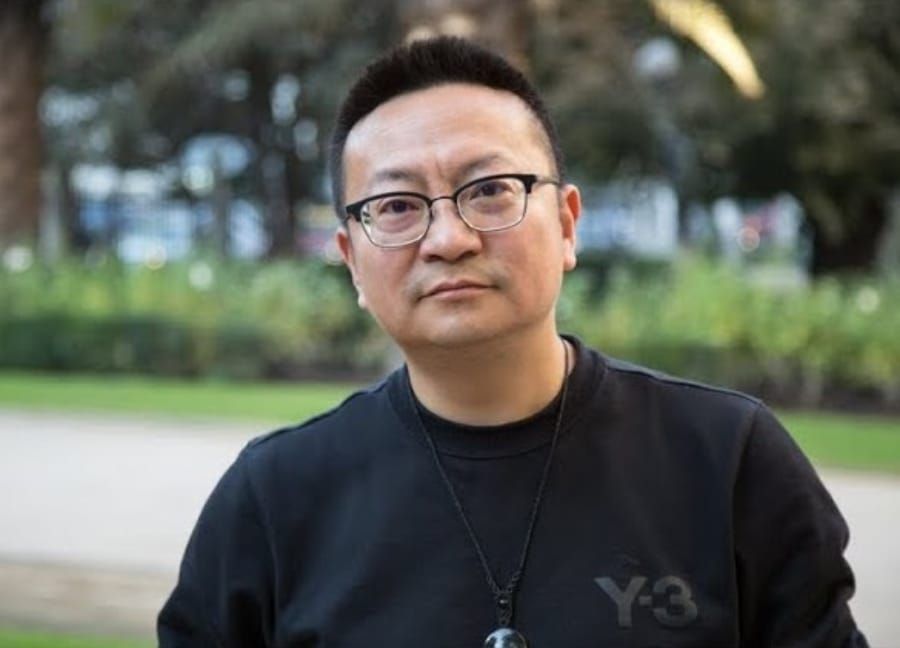
Decidí fundar un país
Shen Haobo / 沈浩波
Cagamos
La bandera roja itinerante
está clavada en la esquina superior
derecha del pizarrón.
Grandes flores rojas adornan el pecho de los maestros.
Los pupilos ejemplares sostienen cornetas doradas.
Las niñas orgullosas alzan sus pechos aún no desarrollados.
Y nosotros, en fila,
nos ponemos en cuclillas en las letrinas tras la escuela,
una brizna de hierba entre los labios,
miramos el cielo azul,
y cagamos, sí, cagamos.
El dique primaveral pertenece a los jóvenes que cortan pasto para los cerdos.
Los bancos del parque a los enamorados.
Los rascacielos son el reino de quienes han triunfado.
Junto al fuego cálido, no existe el forastero.
Y nosotros seguimos en los baños, en silencio,
Apretamos las mochilas entre las manos,
miramos el dobladillo de nuestros pantalones de pana,
y cagamos, sí, cagamos.
Son tantos los niños que vuelan cometas en la plaza
como las esposas y madres infieles a sus hombres en la noche
Son tantos los hombres que vomitan bilis en los bares
como las chicas que se cubren la mitad de sus senos
con túnicas de seda para dormir.
Y nosotros, acuclillados en estos estrechos hoyos
miramos en el espejo
al hombre de rostro amarillento,
y cagamos, sí, cagamos.
Siempre es así: quien aparece en la esquina de la calle
es un loco o un policía.
Siempre es así: hasta las stripers nocturnas creen
que el camino al paraíso
es de oro.
Siempre es así: la gente desea que los buenos
vivan siempre en paz.
Siempre es así: cuando el cielo se aclara,
nuestras bocas se abren para sonreír.
Y en un día así llevaremos nuestros poemas,
irrumpiremos en la plataforma de la universidad
y recitaremos al unísono:
—Cagamos, sí, cagamos.
2001.2.1
(Traducción de Pablo Rodríguez Durán)
We Push
The circulating red flag sticks to the upper right corner of the blackboard.
Big red flowers are attached to the teachers’ chests.
Good pupils hold golden trumpets in their hands.
Proud girls stick out their undeveloped breasts.
But we squat in line at the latrines behind the school.
With grass blades in mouth, we look to the blue sky.
We push. We push.
The spring riverbank belongs to the lads reaping grass for pigs.
The benches in the park belong to the couples in love.
The skyscrapers are the world of the successful people.
Beside the warm fireplace there is no place for a tramp.
But we keep silent at the pit latrines,
holding tight our bags, looking at our corduroy trouser cuffs.
We push. We push.
There are as many children flying kites on the square
as the wives and mothers unfaithful to their men at night.
There are as many men throwing up bile in the bars
as the girls covering half of their breasts with silk nightgowns.
But we sit on the narrow toilets,
gazing at the sallow-faced men in the mirrors.
We push. We push.
It’s always so: those who appear on the street corner
are either mad- or policemen.
Always so: even the nightclub strippers would think
there is a golden road to heaven.
Always so: people wish good men a peaceful life.
Always so: once the weather gets clear,
we broaden our mouths to smile.
But in such weather we’ll dash onto
the university platform with our poetry, reading together –
We push! We push!
2001.2.1
(Translated by Liang Yujing)
我们拉
流动红旗插在黑板的右上角
大红花佩带在老师们的胸前
好孩子们手里拿着金色的喇叭
骄傲的女生挺起她们没有发育的胸膛
而我们并排蹲在学校后面的茅坑
嘴里衔着草叶,抬头望着蓝天
我们拉呀,我们拉
春天的河堤属于打猪草的少年
公园的长椅属于拥有爱情的男女
摩天大厦是事业有成者们的天下
温暖的炉火边没有异乡人的位置
而我们蹲在公共厕所里一声不吭
夹紧手中的皮包,看着灯心绒的裤脚
我们拉呀,我们拉
有多少孩子在广场上放风筝,就有多少
妻子和母亲在深夜里红杏出墙
有多少男人在酒吧里吐出胆汁,就有多少
少女用丝绸的睡衣遮住半只乳房
而我们坐在狭窄的抽水马桶上
看着镜子中那个脸色蜡黄的男人
我们拉呀,我们拉
总是这样,在街的拐角出现的
不是疯子就是警察
总是这样,连跳脱衣舞的女郎都以为
通往天国的路是金色的
总是这样,人们都在祝福好人一生平安
总是这样,天气一旦晴朗
我们就会咧开嘴巴
而我们将在这样的天气携带诗稿
冲上大学的阶梯教室,齐声朗诵
——我们拉呀,我们拉
2001.2.1
*
Decidí fundar un país
Es la idea más genial que he tenido.
¿Por qué no voy yo a fundar un país?
El territorio sería mi cuerpo:
un metro setenta de altura,
ochenta y siete centímetros de ancho.
Toda esta grasa,
tierra fértil.
Mi sangre, su mar galopante.
Mi nariz, vientre y testículos,
sus colinas elevadas.
Los nutrientes que entran en mi cuerpo
al comer
ricos yacimientos minerales.
Mis ojos, sus lagos.
Mi vello, sus bosques.
Este será un país
hermoso y abundante.
Y yo,
su único soberano eterno.
Gran presidente,
gran líder,
gran Emperador;
único,
majestuoso,
y temible.
¡Pero espera!
¡Mi país no tiene súbditos!
Nadie a quien pueda esclavizar.
Si no hay esclavitud ni esclavos,
¿cómo puede llamarse esto un país?
Si no se puede humillar
ni oprimir a los semejantes,
¿cómo puede esto llamarse una nación?
2022.08.20
(Traducción de Pablo Rodríguez Durán)
I’ve Decided to Found a Country
Nothing cooler than this idea:
why shouldn’t I found a country?
Its territory is my body,
170 centimetres tall and 87 centimetres wide.
All my fat is fertile soil.
My blood, a roaring sea.
My nose, belly, and balls are bulging hills.
The nutrients I ingest
orm rich mineral deposits.
My eyes are lakes.
My hair is forests.
This will be
a beautiful, richly endowed nation.
And I –
am the one and only eternal ruler on this land.
I’m the Grand President, Great Emperor, Supreme Chief,
unique,
formidable.
But wait –
my country has no subjects,
no people for me to enslave.
If there are no masters and slaves,
how can it be called a country?
If I can’t bully and oppress my fellows,
how can it even be called a country?
2022.8.20
(Translated by Liang Yujing)
我决定成立一个国家
没有比这更酷的念头了
我为什么不成立一个国家呢?
国土就是我的身体
170厘米高,87厘米宽
满身脂肪皆是沃土
血液是奔腾的大海
鼻子、肚子和睾丸是隆起的山丘
吃进身体的营养
构成丰富的矿藏
眼睛是湖泊
毛发是森林
这将是一个
美丽富饶的国度
而我
是这个国家唯一的永恒的统治者
我是大总统,大皇帝,大首领
独一无二
威风凛凛
但是且慢
我的国家没有臣民
没有可以被我奴役的人
如果没有奴役和被奴役
怎么能被称为国家呢?
如果不能欺凌和压迫同类
怎么能被称为国家呢?
2022.8.20
*
Noche de Hualian
calmada
noche mecida de brisa marina
amplia
nadie en la carretera
un caracol
repta lentamente
una moto se acerca
en su rumrum
aún se oye
el eco
al desconchar
2015.6.13
(Traducción de Tyra Díez)
Night of Hualien
A silent
night with sea breezes.
A broad,
empty highway.
A snail
crawls slowly.
A motorbike passes.
In its whizz
you can still hear
a
crack.
2015.6.13
(Translated by Liang Yujing)
花莲之夜
寂静的
海风吹拂的夜晚
宽阔
无人的马路
一只蜗牛
缓慢的爬行
一辆摩托车开来
在它的呼啸中
仍能听到
嘎嘣
一声
2015.6.13
*
En el monte
En el coche, los cinco
avanzábamos en silencio.
Nadie sabía
a dónde
se dirigía el coche,
o cuándo se detendría.
A las tres de la tarde, alguien dijo:
—Creo que estamos por el camino equivocado.
Él respondió con calma:
—No se preocupen, vamos bien.
A las cuatro de la tarde, la discusión subió de tono.
Pero él seguía con las dos manos
aferradas al volante,
ignorando nuestras
quejas.
A las cinco de la tarde,
anochecía,
el follaje de los árboles
ensombrecía el camino curvo.
Los cuatro sabíamos
que íbamos por el rumbo errado.
Nosotros sabíamos que
él era consciente de esto.
Él sabía que nosotros habíamos concluido
que él conducía mal.
En el coche
reinaba el silencio,
seguía adelante,
como si no tuviera piloto.
2022.1.15
(Traducción de Isolda Morillo)
In the Mountains
All five of us in the car
fall into silence.
Nobody knows
where he is driving
or when he will stop.
We have just
had an argument.
At three o’clock, someone said,
We might be on the wrong road.
But he replied calmly,
Rest assured – it’s right.
At four, our quarrel grew bitter,
yet his hands
firmly holding the steering wheel
made our quarrel
fruitless.
Now, it’s already five.
Night is falling.
Under the thick trees,
the winding mountain road
becomes even darker.
The four of us all know
he has been on the wrong road.
We also know
he knows he has been on the wrong road.
He, too, sure knows
we know he has been on the wrong road.
No one speaks anymore.
There’s nothing but quietness.
The car, as if driverless,
keeps moving forward.
2022.1.15
(Translated by Liang Yujing)
在山中
车上的五个人
都陷入了沉默
谁都不知道他会
将车开到哪里
什么时候停下
刚才我们
已经有过争论
三点的时候就有人说
我们可能走错了
但他淡定地说
放心吧,没错
四点时吵得更加激烈
但他的双手
坚定地握着方向盘
令我们的争吵
变得毫无意义
现在已经五点了
天色向晚
浓密的树荫
令盘旋的山路
变得更加昏暗
我们四个都已经知道
他开错了
我们也知道
他知道自己开错了
并且他肯定也知道
我们知道他开错了
没有人再说话
车上一片安静
汽车如同无人驾驶般
继续前行
2022.1.15
*
Bajo el osmanto
Mi tierra natal es una aldea
situada al norte de la provincia de Jiangsu.
Se llamaba Shenjiaxiang —“Lar de los Shen” —,
nombre desaparecido hoy en día.
Pero, la vieja casa familiar sigue en pie.
En su patio hay un huerto donde cultivamos verduras
y crecen almendros, duraznos y otros árboles.
El más alto y frondoso es el viejo osmanto, que en otoño
emana una fragancia tan intensa como la miel.
Todos apreciamos a este árbol que ha visto nacer
a varias generaciones de la familia.
“Bajo el osmanto”, así se llama la cuenta del clan en WeChat*.
La vieja casa fue construida hace más de treinta años
cuando mis padres y mis tíos reunieron
treinta mil yuanes y la levantaron.
Ahora en ella solo viven mi tío y su señora, ambos octogenarios.
Mi tío está paralítico y anda en silla de ruedas.
Padece trastornos en el lenguaje y no puede hablar.
A veces está lúcido, y otras veces confundido.
El Día Qingming** vuelvo a mi pueblo. También están de regreso
mi primo y mis dos primas con sus esposos. Todos
nos juntamos en la casa familiar. Las primas
preparan la cena; sus maridos, mi primo y yo conversamos
con nuestras copas en las manos. La tía
nos observa sonriente. Hablamos mucho
de mis travesuras en la infancia: cuando mi padre
me pegaba la tía lloraba de dolor.
Cuando era pequeña, mi prima menor molestaba mucho.
Un tío suyo se enfadó tanto que dijo que la mataría con un hacha.
El día que se casó mi prima mayor, el novio
vino en bicicleta y de noche se la llevó
recorriendo lentamente la carretera en la oscuridad, mientras más atrás
la prima menor y yo los acompañábamos en silencio.
El primo me dice: ¿Por qué no escribes las historias de la familia?
Yo contesto: Escribí hace tiempo, por ejemplo, de tus lloriqueos
cuando eras pequeño. Mis palabras le provocan una carcajada.
Más tarde la tía muestra cansancio, pero no quiere acostarse.
Desea estar con nosotros y escuchar nuestro parloteo.
Ella está de buen ánimo.
Primero porque hace unos días el primo y las primas
la llevaron a Shanghái para un examen de salud.
Tenía tanto dolor en las piernas que casi no podía caminar
y finalmente encontraron la causa y la sometieron a un buen tratamiento.
Segundo, porque todos hemos vuelto a casa y las risas brotan
bajo el osmanto. Mi tía era muy hermosa en su juventud,
y ahora, mientras está con nosotros,
bajo las luces del comedor brilla intensamente su cabello plateado.
Se vislumbra todavía su hermoso rostro juvenil.
Ella no sabe que mi primo llora a escondidas.
Este le cuenta que lo que ella tiene es tuberculosis ósea,
una enfermedad de tratamiento lento, pero curable.
Mi tía cree sus palabras y confía en su recuperación.
En este momento todos hablamos y reímos,
Nadie le revela la verdad: es un cáncer pulmonar avanzado.
Esta es una reunión familiar entre risas y lágrimas;
la familia lleva una vida simple, pero que merece aprecio.
Mis primos se ven felices de estar juntos y demuestran
un gran amor por su madre. Son mucho mayores que yo
y me enseñaron a crecer. Hoy, esta misma noche,
siguen dándome lecciones sobre la vida y el amor.
10 de abril de 2020
(Traducción de Sun Xintang)
Under the Osmanthus Tree
My native place is a hamlet in northern Jiangsu,
formerly called Shen’s Alley, but now this name
has disappeared. My family’s old house remains,
with some vegetables in the yard, and a few
apricot and peach trees. The tallest and thickest
is an old Sweet Osmanthus. In autumn, the full tree
is strewn with honey-scented flowers. This is my family’s
most precious treasure, a companion of four generations.
Under the Osmanthus Tree is the name of our Wechat group.
The old house was built thirty years ago. My parents,
along with my uncle and aunt, tried every way
and spent thirty thousand yuan to have it erected.
Now, only my uncle and aunt live there,
two old people in their eighties. My uncle, paralyzed,
sits in his wheelchair with a speech impairment,
unable to speak, alternately sober and muddled.
On 4 April, I return home. My cousin Xiaoyan and her husband,
my cousin Xiaohua and her husband, my eldest cousin Peixin
have all come back. Brothers, sisters, and cousins reunite
in our mutual home. When Xiaoyan and Xiaohua cook dinner,
I drink with Peixin and my cousins-in-law.
My aunt sits aside, smiling, looking at us
who keeps talking about our childhood.
When my father beat me, my aunt’s heart ached so much
her tears came out. My uncle was once so angry with
Xiaohua’s ill temper he wanted to kill her with an axe.
On Xiaoyan’s wedding day, the bride-fetcher
carried her on a bike, going slowly
on the dark road, while Xiaohua and I
followed behind, in total silence.
Peixin tells me to write about our family.
I say, I’ve written a lot, say, about you being a cry-baby,
and he laughs out loud. My aunt, already drowsy,
is reluctant to go to bed. She prefers to stay with us,
listening to our chats. Recently she has been in good mood.
Peixin and Xiaohua took her to Shanghai
to have a medical check, for her legs hurt so badly she couldn’t walk.
Finally, her disease was identified and could be treated properly,
so they all returned home. Laughter reappeared
under the Osmanthus tree. My aunt, beautiful in her youth,
stays with us now with a full head of grey hair
glittering in the light of the dining room,
though her past beauty can still be faintly recognized.
What she doesn’t know: Peixin has cried many times secretly.
He calmed down and told my aunt she’d got bone tuberculosis,
which could be cured slowly, and my aunt believed it,
full of anticipation. Now, we are all laughing heartily.
No one has told her about her advanced lung cancer.
This is a reunion with tearful laughter, a simple life
worth cherishing. Peixin and his sisters
sit close to each other, accompanying their mother
with their deepest love. They, much older than me,
once guided me in my early life. Even now, this night,
they are still educating me, about life and love.
2020.4.10
(Translated by Liang Yujing)
桂花树下
我的老家在苏北的一个小村庄
原来叫沈家巷,现在这个名字
已经消失了。家里的老楼还在
院子里种着一些蔬菜,还有几株
杏树和桃树。最高大茂密的
是一颗老桂花树,秋天的时候
满树花香,浓郁如蜜。这是我家
最珍贵的东西,陪伴过四代人
我家的微信群,就叫“桂花树下”
老楼盖于三十年前,我爸我妈
和伯父伯母,想尽一切办法
花了三万块钱,盖起了这座楼
现在里面只剩下伯父伯母两个
八十多岁的老人。伯父已瘫痪
坐在轮椅上,语言功能障碍
无法说话,时而清醒,时而糊涂
四月四日,我回老家,大姐
大姐夫,二姐,二姐夫,大哥
都回来了。兄弟姐妹,相聚于
共同的家。大姐二姐做晚饭
我和大哥大姐夫二姐夫喝酒
伯母坐在旁边,笑眯眯地看着
我们聊了很多小时候的事情
我爸揍我的时候,伯母心疼得
直抹眼泪。二姐小时候脾气坏
她舅舅气得要用斧子劈死她
大姐结婚的时候,来接亲的人
在夜晚黑暗的马路上,载着大姐
在前面慢慢骑,我和二姐送亲
沉默无语,在后面跟着走
大哥对我说,你写写家里的事
我说我早写了,比如写你爱哭
大哥哈哈大笑。伯母已经困倦
但不肯去睡,她要和我们一起
听我们聊天。这些天她心情好
先是大哥和二姐把她接到上海
检查身体,她腿疼得不能走路
终于查出病因,可以对症下药
我们又都回到老家,桂花树下
充满了笑声。伯母年轻时很美
现在,和我们一起,在餐厅灯光
的映照下,满头银发闪闪发亮
依稀能看出年轻时的美丽容颜
她不知道,大哥最近经常偷哭
哭完告诉她,她得的病是骨结核
慢慢治,就能治好,伯母相信了
充满了期待。此刻我们都在欢笑
没有人告诉她肺癌晚期的真相
这是笑中带泪的相聚,简单
而值得珍惜的生活。哥哥姐姐们
紧密相挨,以最深切的爱意
陪伴他们的母亲。他们比我大很多
带领我长大,直到现在,这个夜晚
仍在给予我,有关生活和爱的教育
2020.4.10
**
Notas:
*WeChat es una aplicación china muy popular que ofrece servicios de mensajería y llamada gratis, redes sociales, pago online, etc.
*Qingming es el nombre de la fiesta tradicional china de “Claridad Pura”, en la cual se honra a los muertos. También es conocida como “día de barrer las tumbas” y suele tener lugar en los primeros días de abril.
**
沈浩波,诗人,出版人,1976年出生于中国泰兴,是 “下半身”诗歌运动的创始成员之一。这一诗歌运动兴起于本世纪初,作为对中国传统抒情诗的批评与反叛,其特点是语言身体化、直接而克制。沈浩波毕业于北京师范大学中文系,著有诗集《心藏大恶》《文楼村纪事》《蝴蝶》《命令我沉默》《花莲之夜》《沈浩波五年诗选》等。其作品已被翻译成多种语言。现居北京,执掌中国最具影响力的独立出版社之一。
Shen Haobo, nacido en 1976 en Taixing, China, es uno de los miembros fundadores del movimiento poético “Las Partes Bajas”, surgido a principios de este siglo como crítica y rebelión contra la lírica tradicional china, caracterizado por un lenguaje corporal, directo y sobrio. Licenciado en Lengua y Literatura China por la Universidad Normal de Beijing, ha publicado poemarios como El gran mal escondido en el corazón, Crónicas de Wenlou, Las mariposas y Ordéname callar, Noche en Hualien, Selección de cinco años de poesía, entre otros.
Traducido a varios idiomas, en español cuenta con tres antologías: Las partes bajas (San José, Costa Rica, 2017), Las partes bajas (Medellín, Colombia, 2019) y Flores de ira (Quito, 2023); en danés: Las mariposas y Escribir poesía en China. Actualmente vive en Beijing, donde dirige una de las editoriales independientes más influyentes del país.
Shen Haobo, born in 1976 in Taixing, China, is one of the founding members of the poetic movement “Lower Body,” which emerged at the beginning of this century as a critique of and rebellion against traditional Chinese lyricism, characterized by a bodily, direct, and restrained language. He holds a degree in Chinese Language and Literature from Beijing Normal University and has published poetry collections such as The Great Evil Hidden in the Heart, Chronicles of Wenlou, Butterflies, Order Me to Be Silent, Night in Hualien, and Selected Poems of Five Years, among others.
Translated into several languages, his work includes three Spanish-language anthologies: Lower Parts (San José, Costa Rica, 2017), Lower Parts (Medellín, Colombia, 2019), and Flowers of Wrath (Quito, 2023); in Danish: Butterflies and Writing Poetry in China. He currently lives in Beijing, where he runs one of the most influential independent publishing houses in the country.