
Masks - Hu Xian / 胡弦
Only the mask remains, behind it / the eternal void. / "With the mask as the boundary, time was divided into two kinds: one / claiming all things hers; the other, / bound to the mask, was without beginning or end." /
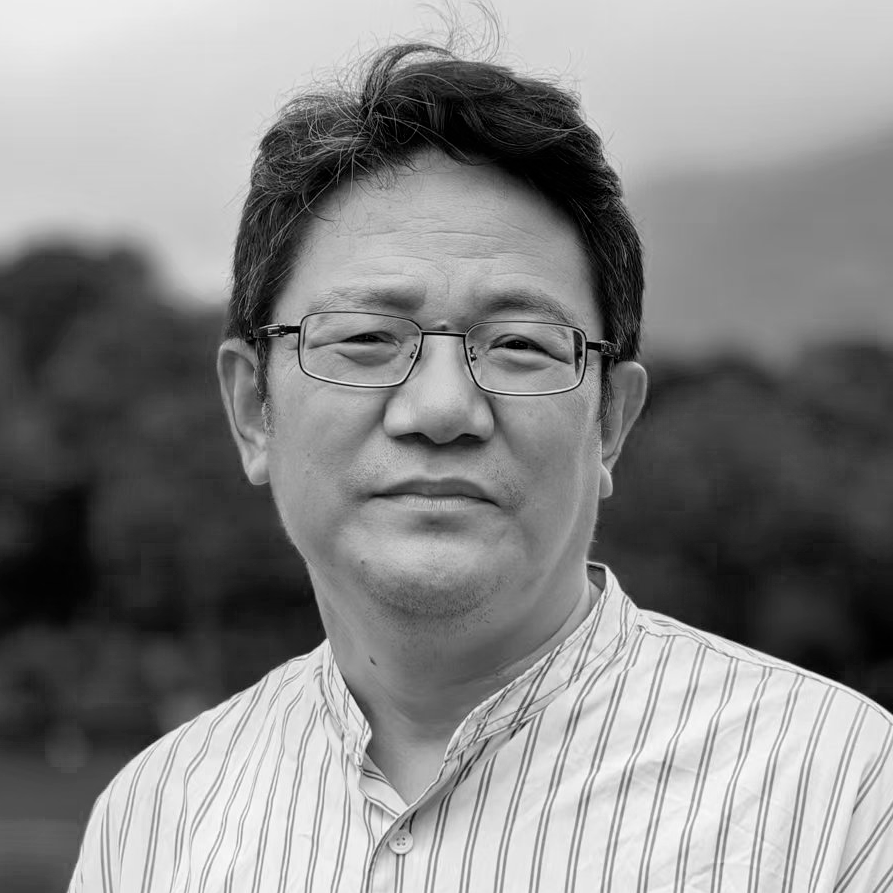
Hu Xian / 胡弦
(译者/西思翎)
(Translator/ Jan Laurens Siesling)
姜里村
一个小村,一片湖,偶有旅人。
去年在这里,我看见过一个溺死的老者,
沉在水中,竖直,像个日本玩偶。
他的儿子从村庄那头赶过来打捞他,
出水时,他身子很重,滑回水里多次,好像
还没有死,不愿离开那水。
他的儿子面色铁青,看不出一丝慌乱,手也有力。
(哦,痛哭之前,还有那么多
需要咬紧牙关才能做的事。)
后来,在他被拖走的地方,水渍
像一块继续扩大的胎记。
我站在那里,左边是老旧庭院,
右边是凶水;左边是破败的安宁,右边,
一个平静的镜面在收拾
村庄的倒影,和死亡留下的东西。
2017年8月
Jiangli Village*
A small village, a lagoon, and occasional travelers.
Last year, I saw here an old man who had drowned,
sunk into the water, standing upright, like a Japanese doll.
His son arrived from across the village to salvage him.
When it came out of the water, the body felt very heavy, slid back into the water many times, like still alive, unwilling to leave the deep.
His son's face was ashen colored, no trace of panic, his hands were strong.
Oh, before we cry, so many things
need still be done, gritting our teeth.
Later, where he was dragged away, the water stain
looked like a birthmark that continued to expand.
I was standing there, on my left the old courtyard,
on my right the water of doom; on the left dilapidated tranquility; on the right,
a calm mirror cleaning up
reflections of a village, and what death leaves behind.
2017
* Jiangli Village, situated between Suzhou and Shanghai, is ancient with a long cultural history. An important part of it is water: rivers, pools, and islands in their midst.
*
面具
——只有面具留了下来。
回声在周围沸腾,而面具沉默。
这沉默隐隐带着期待,因为面具后面
有个空缺无法填补。而面具曾在
别的脸上找到过自己的脸,此后,
面具内部就被黑暗充满,谁出现在那里,
谁就会在瞬间瓦解。
“面具的有效,在于它的面无表情。”
扣好面具,有人来到舞台上,有人
则摸索着,走得更远——那可怕的时刻,
脑袋在,却无法摸到自己的脸。
——有人曾匹马向前,狰狞面具
让恐惧出现在对手脸上……
当他归来,面具,被卸在一边,他的脸
仍需要表情的重新认领。
仿佛着了魔,一种平静的忘却被留在远方。人,
这个深谙面具秘密的人,
听到了冥冥中传来的召唤。
“——只有面具是结局,且从不怀念。”
但如何确认另一个自我?
所有寂静,都是忧心如焚的寂静,有人
再次戴上面具,出现在戏文
莫须有的描述中。
Masks
Only the mask remains, behind it
the eternal void.
"With the mask as the boundary, time was divided into two kinds: one
claiming all things hers; the other,
bound to the mask, was without beginning or end. "
All around echoes are in effervescence, but the mask is silent.
Indeed, speculating about masks,
is the main content of our life.
Someone picked up a mask and put it on, as if behind the mask
there was a gap that needed to be filled. But the mask had already
found its own face on other faces. Behind the mask,
the dark night that could not be deciphered, and whoever appeared there,
would disintegrate in an instant.
"The effectiveness of the mask lies in its expressionless face."
The man who fastens the mask, enters his own
afterlife in advance. Oh, the terrible moment,
my head is there, but I can no longer touch my face.
— He once rode his horse with a ferocious mask
throwing fear in the face of his opponent...
When he returned, the mask removed, his face
still needed to reacquaint itself with expression.
Peaceful forgetfulness of any kind is left in the distance. The human
kind, so well versed in the secrets of masks, seems to be
under the control of magic, by a call heard from somewhere far.
"— Only the mask is an end in itself and will never be missed." Facing as it were
another self. Having said that,
he put the mask back on again,
to appear in unwarranted descriptions.
2017
*
龙门石窟
顽石成佛,需刀砍斧斫。
而佛活在世间,刀斧也没打算放过他们。
伊水汤汤,洞窟幽深。慈眉
善目的佛要面对的,除了香火、膜拜、喃喃低语,
还有咬牙切齿。
“一样的刀斧,一直分属于不同的种族……”
佛在佛界,人在隔岸,中间是倒影
和石头的碎裂声。那些
手持利刃者,在断手、缺腿、
无头的佛前下跪的人,
都曾是走投无路的人。
2016年11月
The Longmen Grottoes*
Becoming a Buddha out of unyielding rock, requires cutting with knife and axe.
As long as the Buddha is alive in the world, knives and axes have no intention to let go of him.
The waters of the Yi are mighty and turbulent, the caves are hidden and deep. The kind-browed
good-eyed Buddha has to face not only incense, worship, murmuring,
but also gnashing of teeth.
"The same dagger and axe belong to adverse peoples..."
The Buddha is in the world of Buddha, the people are on the other shore, between them are reflections
and the sound of cracking rock. All those
with in their hands the sharp knives, before a Buddha with severed hands, or missing legs,
or a severed head, kneeling,
all those are desperate people.
2016
* The Longmen Grottoes constitute the extraordinary group of Buddhist high-relief carvings directly carved in the limestone rock of the cliffs along the Yi River, south of the city of Luoyang in the Henan province. Tens of thousands of statues hewn in the countless artificial caves, with their inscriptions and stupas, date from the times of the Northern Wei and the Tang dynasties (316-907). During the Tang dynasty, Buddhism was for long years the favored religion of the state.
*
琥珀里的昆虫
它懂得了观察,以其之后的岁月。
当初的慌乱、恐惧,一种慢慢凝固的东西吸走了它们,
甚至吸走了它的死,使它看上去栩栩如生。
“你几乎是活的”,它对自己说,“除了
不能动,不能一点点老去,一切都和从前一样”。
它奇怪自己仍有新的想法,并谨慎地
把这些想法放在心底以免被吸走因为
它身体周围那绝对的平静不能
存放任何想法。
光把它的影子投到外面的世界如同投放某种欲望。
它的复眼知道无数欲望比如
总有一把梯子被放到它不能动的脚爪下。
那梯子明亮、几乎不可见,缓缓移动并把这
漫长的静止理解为一个瞬间。
2012年5月
An Insect in Amber
It knows how to observe, and so for years to come.
The initial panic, and the fear, were sucked away by something that slowly solidified,
which even sucked away death, making it look lifelike.
“You are almost alive,” it said to itself, “except
you cannot move, cannot age little by little, everything will be the same as before.”
It marvels that it still has new ideas, and cautiously
keeps these thoughts in its heart so that they don't get sucked away because
the absolute calm surrounding its body cannot
harbor ideas anyway.
Light casts its shadow into the outside world as if it cast some form of desire.
Its compound eyes know countless desires such as
a set of steps always placed under its motionless feet.
The steps, bright, though almost invisible, move so slowly that
it conceives this long standstill as one instant.
2012
*
讲古的人
讲古的人在炉火旁讲古,
椿树站在院子里,雪
落满了脖子。
到春天,椿树干枯,有人说,
那是偷听了太多的故事所致。
炉火通红,贯通了
故事中黑暗的关节,连刀子
也不再寒冷,进入人的心脏时,暖洋洋,
不像杀戮,倒像是在派送安乐。
少年们在雪中长大了,
春天,他们进城打工,饮酒,嫖妓,
最后,不知所踪。
要等上许多年,讲古的人才会说,
他的故事,一半来自师传,另一半
来自噩梦——每到冬天他就会
变成一个死者,唯有炉火
能把他重新拉回尘世。
“因为,人在世上的作为不过是
为了进入别人的梦。”他强调,
“那些杜撰的事,最后
都会有着落(我看到他眼里有一盆
炭火通红),比如你
现在活着,其实在很久以前就死去过。
有个故事圈住你,你就
很难脱身。
但要把你讲没了,也容易。”
2010年12月
The Old Taleteller
The old taleteller was talking by the fire,
a toon tree stood in the courtyard, and the snow
fell heavily upon its back.
In spring, the toon tree withered, some people said
it was due to overhearing too many stories.
The fire in the stove was red, it penetrated
the darker parts of the story, even a knife
was no longer cold, and when pointed at people's hearts, was warm,
killed no longer, seemed to be spreading peace and happiness.
The teenagers grew up in the snow;
in the spring, they drank liquor, saw prostitutes, found work in the city,
in the end disappeared without a trace.
It took many years for the old taleteller to tell
his stories that came half from his master and half
from his nightmares — every winter he would
turn into a dead man, that only the fire in the hearth
could bring back to our earth.
"Because, after all, people act in this world only
to penetrate other people's dreams," he stressed.
"Those things that are dreamt up will eventually
find their place and settle (I saw in his eyes a pot of coals
glowing red); you, for instance,
now alive, in fact once died a long time ago.
If you are wrapped into a tale, you will have
a hard time to get out of it.
But to tell the story to make you disappear, that’s easy, too. "
2010
*
卵石
——那是关于黑暗的
另一个版本:一种有无限耐心的恶,
在音乐里经营它的集中营:
当流水温柔的舔舐
如同戴手套的刽子手有教养的抚摸,
看住自己是如此困难。
你在不断失去,先是坚硬棱角,
接着是光洁、日渐顺从的躯体。
如同品味快感,如同
在对毁灭不紧不慢的玩味中已建立起
某种乐趣,滑过你
体表的喧响,一直在留意
你心底更深、更隐秘的东西。
直到你变得很小,被铺在公园的小径上,
经过的脚,像踩着密集的眼珠……
但没有谁深究你看见过什么。岁月
只静观,不说恐惧,也从不说出
万物需要视力的原因。
2011年2月
Pebbles
—This is about darkness.
Or put it this way: an infinitely patient evil,
with music operating its concentration camp:
When running water gently licks its victim
like the expert touch of a gloved executioner,
it is very hard to keep seeing who you are.
You are constantly losing, first the hard edges,
then the smooth and clean, increasingly compliant body.
Like tasting pleasure, as if
in the leisurely play of destruction
a certain kind of pleasure has been built, gliding over you
with the sound on the surface of the body, always heedful
to something deeper and more secret down in your heart.
Until you become very small, and you pave a path in the park,
and the feet passing by are like stepping on dense eyeballs...
But no one looks into what you have seen. Years of
only quietly watching, no talk about fear, never speaking about
the reason why everything needs sight.
2011
*
蛇
爱冥想。
身体在时间中越拉越长。
也爱在我们的注意力之外
悄悄滑动,所以,
它没有脚,
不会在任何地方留下足迹。
当它盘成一团,像处在
一个静止的涟漪的中心。
那一圈一圈扩散的圆又像是
某种处理寂寞的方式。
蜕皮。把痛苦转变为
可供领悟的道理:一条挂在
树枝上晃来晃去的外套。又一次它从
旧我那里返回,抬起头
眺望远方……也就是眺望
我们膝盖以下的部分。
长长的信子,像火苗,但已摆脱了
感情的束缚。
偶尔,追随我们的音乐跳舞,
大多数时候不会
与我们交流。呆在
洞穴、水边,像安静的修士,
却又暴躁易怒。被冒犯的刹那
它认为:牙齿,
比所有语言都好用得多。
2017年9月
The Snake
Loving to meditate.
Its body grows longer and longer.
Loving also to be out of our attention,
it slides away;
with no feet,
it won't leave a footprint, anywhere.
Coiled up, it is like
the center of a still ripple.
The spreading circles being
some way of dealing with loneliness.
Molt. Turns pain into
insight: learns it is a coat
dangling from a branch. One more time it returns
to the old self, raising its head and
looking into the distance... that is, looking far
beneath the knees.
Its long tongue is like a flame that has been freed
from the shackles of emotion.
Occasionally, a snake will dance to our music,
most of the time not
speak to us. And stay in a
cavern, at the waterside, like a quiet monk,
but it can also be terribly irritable. The moment it is offended,
it thinks: teeth,
much more efficient than any other language.
2017
*
星相
老木匠认为,人间万物都是上天所赐,
他摸着木头上的花纹说,那就是星相。
我记得他领着徒弟给家具刷漆的样子,某种蓝
白天时什么都能刷掉,到了夜晚,
则透明,回声一样稀薄。
他死时繁星满天。什么样的转换
在那光亮中循环不已?
能将星空和人间搭起来的还有
风水师,他教导我们,不可妄植草木,打井,拆迁,或把
隔壁的小红娶回家,因为,这有违天意。
而我知道的是,老家具在不断掉漆,
我们的掌纹、额纹……都类似木纹,类似
某种被利斧劈开的东西。
——眺望仍然是必须的,因为
老透了的胸怀,嘈杂过后就会产生理智。
“你到底害怕什么?”当我自问,星星们也在
朝人间张望,但只有你长时间盯着它,
它才会眨眼——它也有不解的疑难,类似
某种莫名的恐惧需要得到解释。
2010年9月
Aliens of Sorts
There was a man, who practiced birdsong.
When he had mastered that skill, he
became a bird, folded his wings, and hid
from us.
He was only able to talk to birds,
and when he wished to talk to us,
he uttered strange tweets and twitters.
Likewise, a bird that learned human language,
could only carefully
stay fallow in the forest.
In the rear mountain, flocks of birds are singing,
birds with long calls, birds that can’t stop calling,
also a bird with only one short chirp,
a black spot, like a punctuation sign, that
marks a pause in our narrative.
Flocks of birds are singing, the world is at peace.
A most terrifying thing it is when an abrupt silence descends on the whole mountain forest,
as if all birds in one sudden moment
sensed a danger.
I listen to the silence. At the same time,
I need to hear you speak to feel my heart at ease.
2017
***
胡弦,著名诗人、散文家,1966年生于江苏徐州,做过教师、报社记者、文化馆创作员,现为中国诗歌学会副会长、江苏省作家协会副主席、《扬子江诗刊》主编。出版诗集《阵雨》(2011)、《沙漏》(2016)、《空楼梯》(2017)、《石雕与蝴蝶》(汉英双语,2020)、《星象》(汉西双语,2020)、《定风波》(2021)、《琥珀里的昆虫》(西班牙语,2021)、《水调歌头》(2023)、《猜中一棵树》(2024)等。曾获诗刊社“新世纪十佳青年诗人”称号(2009)、徐志摩诗歌奖(2012)、柔刚诗歌奖(2014)、《诗刊》年度诗歌奖(2014)、名人堂年度诗人”称号(2015)、腾讯书院文学奖(2016)、花地文学榜年度诗人奖(2017)、紫金山文学奖(2017)、《星星》年度诗人奖(2018)、十月文学奖(2018)、鲁迅文学奖(2018)、钟山文学奖(2021)、草堂诗歌奖大奖(2022)、英国剑桥大学银柳叶诗歌奖(2022)、海洋诗歌成就奖(2024)等。现居南京。
Hu Xian is a renowned poet and essayist, born in 1966 in Xuzhou, Jiangsu Province. He has worked as a teacher, journalist, and cultural center writer. He currently serves as Vice President of the Poetry Institute of China, Vice Chairman of the Writers’ Association of Jiangsu Province, and Editor-in-Chief of Yangtze River Poetry Journal. His published poetry anthologies include Shower (2011), Hourglass (2016), Empty Stairs (2017), Stone Sculpture and Butterfly (bilingual Chinese-English, 2020), Constellations (bilingual Chinese-Spanish, 2020), A Garden Lost and Found (2021), Insects in Amber (Spanish, 2021), Prelude to Water Melody (2023), and Guessing a Tree (2024). Hu has won the Top Ten Young Poets in the New Century Prize (2009), the Xu Zhimo Poetry Award (2012), Rougang Poetry Prize (2014), Poetry Magazine Annual Poetry Award (2014), Chinese Poetry Ranking Annual Award (2015), Tencent Academy Literature Award (2016), Huadi Literature Year Poets Award (2017), Purple Mountain Literature Award (2017), “Stars” Poet of the Year Award (2018), "October" Literature Award (2018), Lu Xun Literature Award (2018), “Zhongshan” Literature Award (2021), “Caitang” Poetry Award Grand Prize (2022), Prize of Silver Willow during Cambridge Poetry Festival (2022), and Ocean Poetry Achievement Award (2024), among others. He currently resides in Nanjing.
*
扬·劳伦斯·西思翎,荷兰出生,现居美国,是一位艺术史学家、小说和诗歌作家及翻译家。他与中国艺术和诗歌的联系始于2014年,当时他开始翻译结识的诗人,如韩东、宋林、海音、张杰等。以及PoemLife网站上的其他诗人。2019年,他的全球艺术史著作《艺术不止美》的中文译本由江苏凤凰艺术出版社出版。2020年,他自制了一篇关于刘半农的短篇《说,叫我如何不想她》。2021年,他的比利时出版社Arte Libro在根特出版了徐玉诺1922年开创性的现代主义中国诗集《未来园》的首个英文版。2025年,完成了胡弦诗歌选集的英文翻译,该选集最近由加州出版社Bridge21出版。这篇详尽的序言以中文为背景,单独发表于《作家》2025年第9期。西思翎1991年小说《梵高小说》的中文译本及出版计划于今年秋季(2026年)出版。目前正在撰写一本关于诗人兼画家吉狄马加的书。
Jan Laurens Siesling, Dutch by birth, living in America, is an art historian, a writer of fiction and poetry, and a translator. His connection to Chinese art and poetry debuted in 2014 when he started to translate befriended poets, such as Han Dong, Song Lin, Haiyin, Zhang Jie … and other poets of the PoemLife website. Some of these poems were published under the title The Spirit Between the Words, as the 3d issue of “Pleasure of the Text”, Beijing, 2019. In that same year, the translation in Chinese of his global art history book Art is More came out at Phoenix Fine Art Publishing, Jiangsu, Nanjing. In 2020, he wrote a short study on Liu Bannong, “Say, How Can I Not Miss Her”, self-produced. In 2021, his Belgian publisher Arte Libro, in Ghent, published the first English version of the groundbreaking 1922 bundle of Modernist Chinese poetry, The Future Garden by Xu Yunuo. In 2025, Siesling finished translating into English an anthology of Hu Xian’s poetry, recently coming out at the California publishing house Bridge21. The extensive introduction, set in Chinese, appeared separately in the Beijing Writer Magazine, 9, 2025. The translation in Chinese, and the publication of Siesling’s 1991 novel Le Roman de Van Gogh, is projected for this fall (2026). Siesling is now composing a book on poet and painter Jidi Majia.