
El rapto de mis sueños - José Luis Díaz-Granados / 何塞·路易斯·迪亚兹- 格拉纳多斯
¿Dónde estoy? Yo despierto / y no encuentro mis cosas. / ¿He perdido las llaves / que me inducen al vuelo? /
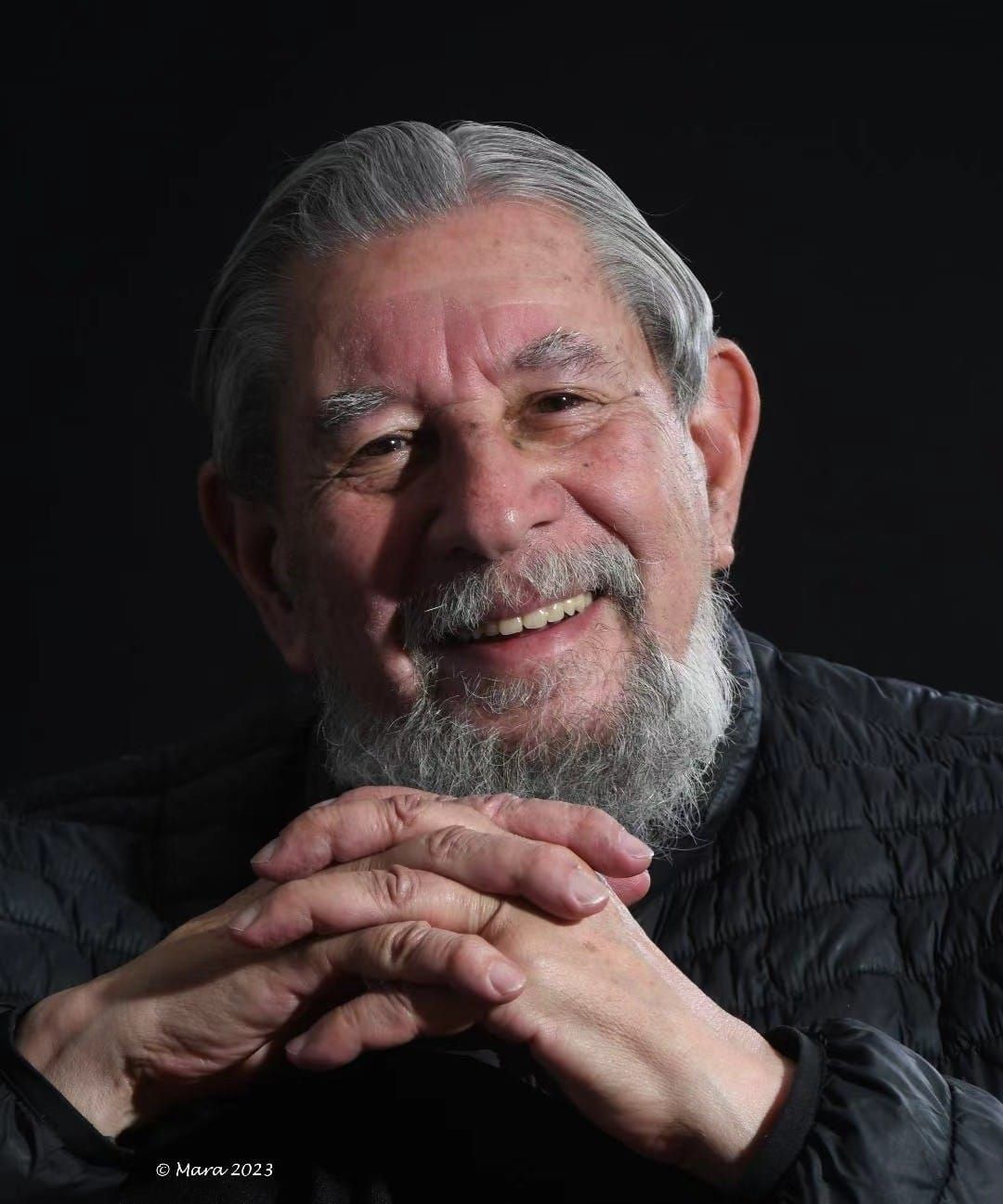
José Luis Díaz-Granados / 何塞·路易斯·迪亚兹- 格拉纳多斯
El rapto de mis sueños
黎 明*
——为我疯狂的生活而作
有一天中午,
阳光下,大雨倾盆
而午后的黎明却迟迟未到;
它比透明的一分钟更加微妙,
比永恒的海洋更像是一个瞬间。
清纯的蓄水池,我全身融入其中,
露珠般轻柔的海水不停地抚慰我;
那是我心中的永恒家园,
是我灵魂永远的归宿。
光的黎明,日的黎明,海的黎明,
白昼的黎明,永远的黎明,心灵的黎明,
今天的黎明,蔚蓝的黎明,七月的黎明,
爱的黎明,妻子的黎明,沉睡的黎明,
诗的黎明,唯一的黎明,我的黎明。
我梦中的船只、器皿、洞穴和帆船,
存放我所有思绪的抽屉,
以及藏匿我微笑的箱子,
皆是我渴望与回忆的栖息之所。
黎明,当下的北极星,永恒的北极星;
我的血肉,我的影子,我的孪生同胞;
我疯狂的伴侣,我的手镯;
我的神奇居所,我的小小城堡;
那里住着情比金坚的爱。
*《黎明》(1972)于1982 年由二重唱组合伊万和
露西亚谱曲,1980 年代在哥伦比亚大受欢迎。
奚跃萍 (Xi Yueping) / 译
Dawn*
For my crazy life, at noon
one day of all days the sun showered the rain
and the dawn at noon was not yet dawn,
more subtle than a transparent minute
more minute-like than an eternal ocean.
Pure reservoir into which my whole being fits,
Sea of dew caressing me incessantly,
perennial homeland of my heart,
cage where my soul rests everlastingly.
Dawn-light, Dawn-sun, Dawn-marine,
Dawn-day, Dawn always, Dawn of the soul,
Dawn today, Dawn blue, Dawn of July,
Dawn-love, Dawn-wife, Dawn sleeping,
Dawn-verse, Dawn-unique, Dawn-of mine.
Ship, vessel, cave, sloop of my dreams,
drawer where I keep all my thoughts,
chest where my smile hides itself,
where my yearnings and remembrances dwell.
Dawn, present polestar, eternal polestar,
my flesh, my shadow, my twin,
my crazy companion, my bracelet,
my magic chamber, my small castle,
where definitive love dwells.
*The poem DAWN (1972) by José Luis Díaz-Granados, was set to music by the duet “Iván y Lucía” in 1982, and became a popular hit in the 1980s in Colombia.
Alba (*)
Para mi loca vida, al mediodía
un día más día que todos, el sol regó la lluvia
y el alba al mediodía aún era alba,
más sutil que un minuto transparente
y más minuto que un océano eterno.
Cisterna pura donde cabe mi ser entero,
mar de rocío que me acaricia incesante,
patria perenne de mi corazón,
jaula donde descansa para siempre mi alma.
Alba-luz, Alba-sol, Alba-marina,
Alba-día, Alba-siempre, Alba-del-alma,
Alba hoy, Alba-azul, Alba-de-julio,
Alba-amor, Alba-esposa, Alba-dormida,
Alba-verso, Alba-única, Alba-mía.
Navío, vasija, cueva, balandra de mis sueños,
gaveta donde guardo todos mis pensamientos,
cofre donde se esconde mi sonrisa,
donde moran mis ansias y mis recuerdos.
Alba, norte presente, norte eterno,
carne mía, mi sombra, mi gemela,
mi compañera loca, mi pulsera,
mi mágico aposento, mi pequeño castillo,
donde habita el amor.
(*) El poema Alba fue musicalizado en 1982 por los cantautores latinoamericanos Iván Benavides y Lucía Pulido, más conocidos como el Dúo Iván y Lucía, y se convirtió en una de las baladas más populares y emblemáticas de la década del 80.
*
梦中的狂喜
奚跃萍 译
我在哪里?人醒了,
却找不到自己的东西。
该不会是我弄丢了
让我飞翔的钥匙?
我无法在书中找到自己;
看不见镜中的自己,
也看不见那张令人心酸的桌子,
上面尽是盲纸;
既听不到熟悉的声音,
也尝不到人间烟火的滋味;
我无法感知自我的存在,
但我并未断气;
我找不到我的幽灵,
也说不清我人在何处。
此刻,我只捕捉到
一些闻所未闻的大路信息
和一条去向无从可循的街道。
我迷失其中,
身边连个活天使都没有。
醒来时,我梦中的狂喜
让我伤心不已。
奚跃萍 (Xi Yueping) / 译
The Rapture of My Dreams
Where am I? I awaken
and can’t find my things.
Have I lost the keys
that let me fly?
I can’t find myself in my books
nor do I see my own mirror
nor the aching table
of the blind papers,
nor the eternal voices
nor my earthly juices.
I do not feel myself,
but neither have I died.
I don’t find my ghosts
nor do I see my geography.
Now I only grasp
unheard-of avenues
and an aimless street
where I get lost
without my living angels.
I awaken and the rapture
of my dreams hurts me.
El rapto de mis sueños
¿Dónde estoy? Yo despierto
y no encuentro mis cosas.
¿He perdido las llaves
que me inducen al vuelo?
No me encuentro en mis libros
ni veo mi propio espejo
ni la dolida mesa
de los papeles ciegos,
ni las voces de siempre
ni mis zumos terrestres.
No me palpo a mí mismo,
pero tampoco he muerto.
No encuentro mis fantasmas
ni veo mi geografía.
Solo capturo ahora
avenidas inéditas
y una calle sin rumbo
por donde yo me pierdo
sin mis ángeles vivos.
Yo despierto y me duele
el rapto de mis sueños.
***
何塞·路易斯·迪亚兹- 格拉纳多斯,1946 年出生在 哥伦比亚的圣玛尔塔,诗人、小说家,记者和大学教授。曾任EI Tiempo(报纸)1979-2000 年版“周日阅读”部分 的文献评论家。1992-2000 年担任哥伦比亚人民团结工会主 席,1996-1997 年任全国作家联盟主席(UNE),曾任哈 韦大学文学硕士课程“Octavio Paz "(2005 年)教授,以 及本科文学课程(2006 年)" Luis Vidales”哥伦比亚作家 研讨会的教授。目前是国家文化委员会的成员,也是文化 部代表(2013-2018 年)。曾游历过苏联、东欧和古巴,并 主持过电视节目“书籍之窗”(1993-1997)。 曾获“Carabela”诗歌奖(西班牙巴塞罗那,1968 年)。 因其对诗人路易斯维达莱斯(波哥大,哥伦比亚,1990 年)的采访,获得“Simon Bolivar”国家新闻奖(新闻界最佳采 访),还曾获古巴国务委员会友谊勋章(2001 年),“Centenario Pablo Neruda”总统荣誉勋章(智利政府,2004 年),哥伦 比亚大学荣誉提名(哥伦比亚波哥大,2006 年)。
José Luis Díaz-Granados was born in Santa Marta, Colombia, in 1946. He is a poet, novelist, journalist and university professor. Bibliographical Critic of the “Sunday Readings” section of EI Tiempo (Newspaper) 1979-2000. He has been President of the Colombian House of Solidarity with the Populations (1992-2000); President of the National Union of Writers (UNE) (1996-1997); Professor of the “Octavio Paz” Chair in the Master’ s Program in Literature at Javeriana University (2005) and of the Colombian Author Seminar “Luis Vidales” at the Undergraduate Program in Literature at the same university (2006). He is currently member of the National Council of Culture and a Delegate of the Ministry of Culture to that body (2013-2018). He traveled through the USSR, Eastern Europe and Cuba. He hosted the TV program “Window on Books” (1993-1997). Poetry prize “Carabela” (Barcelona, Spain,1968); “Simon Bolivar” National Prize for Journalism (Best Interview in the Press), for his interview of the poet Luis Vidales (Bogota, Colombia,1990). Medal of Friendship of the Council of State of Cuba (2001), “Centenario Pablo Neruda” Presidential Medal of Honor (Government of Chile, 2004), Mention of Honoris Causa of La Gran Colombia University (Bogota Colombia, 2006).
José Luis Díaz-Granados (Santa Marta, Colombia, 1946). Poeta, novelista y periodista. Muy joven, a los 22 años, publicó su primer libro de poesía El laberinto y ganó el Premio "Carabela", en Barcelona, España (1968). Fue comentarista bibliográfico de "El Tiempo" de Bogotá (1979-20). Su novela Las puertas del infierno (1986), fue finalista del Premio "Rómulo Gallegos" al año siguiente. Ha sido presidente de la Casa Colombiana de Solidaridad con los Pueblos y presidente de la Unión Nacional de Escritores (UNE). Ganó el Premio Nacional de Periodismo "Simón Bolívar" en 1990 por su entrevista al poeta nacional Luis Vidales, y el Premio de Novela "Aniversario Ciudad de Pereira" en 1994 por su obra El muro y las palabras. El gobierno chileno le otorgó la Medalla de Honor Presidencial "Centenario Pablo Neruda" en 2004. Sus libros de poesía se hallan reunidos en el volumen titulado La fiesta perpetua. Obra poética, 1962-2002 (2003). Otras novelas suyas son: El esplendor del silencio (1997), Ómphalos (2003), La noche anterior al otoño (2005), Los años extraviados (2006), Cita de amor al mediodía (2010) y Fulgor de la Calle Grande (2012). Ha publicado también varios libros para niños. El 2008, fue el Poeta Homenajeado en el XVI Festival Internacional de Poesía de Bogotá. En 2014, el Fondo de Cultura Económica publica El Laberinto. Antología poética, 1968-2008.